

Methods of using diacerein as an adjunctive therapy for diabetes
a diacerein and diabetes technology, applied in the field of diabetes adjunctive therapy, can solve the problems of impaired carbohydrate metabolism, ineffective prevention of insulin, and no studies indicated that diacerein can control blood glucose in humans with type 2, and achieve the effect of reducing the side effect reducing the cardiovascular risk of an antidiabetic agen
- Summary
- Abstract
- Description
- Claims
- Application Information
AI Technical Summary
Benefits of technology
Problems solved by technology
Method used
Image

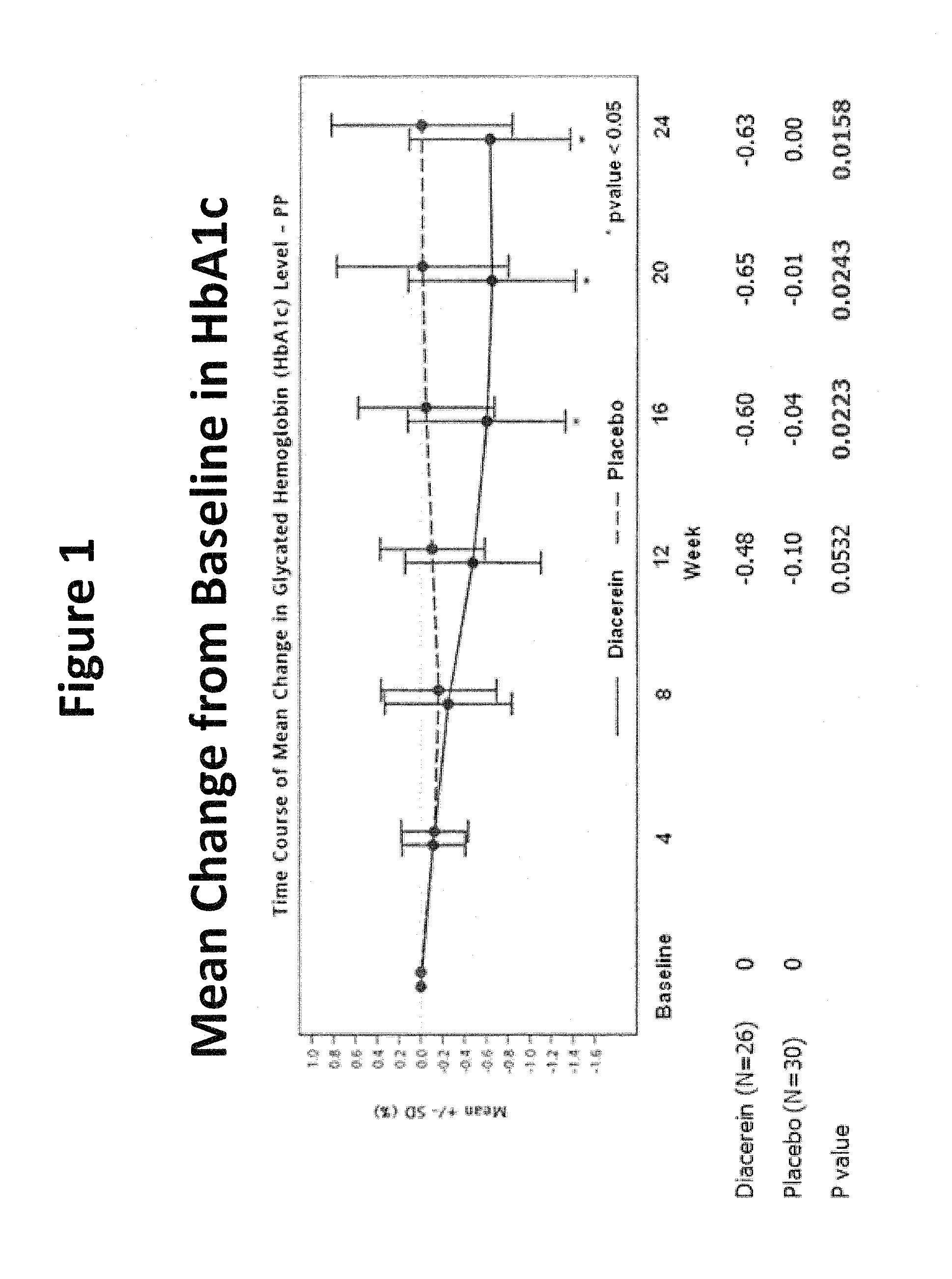
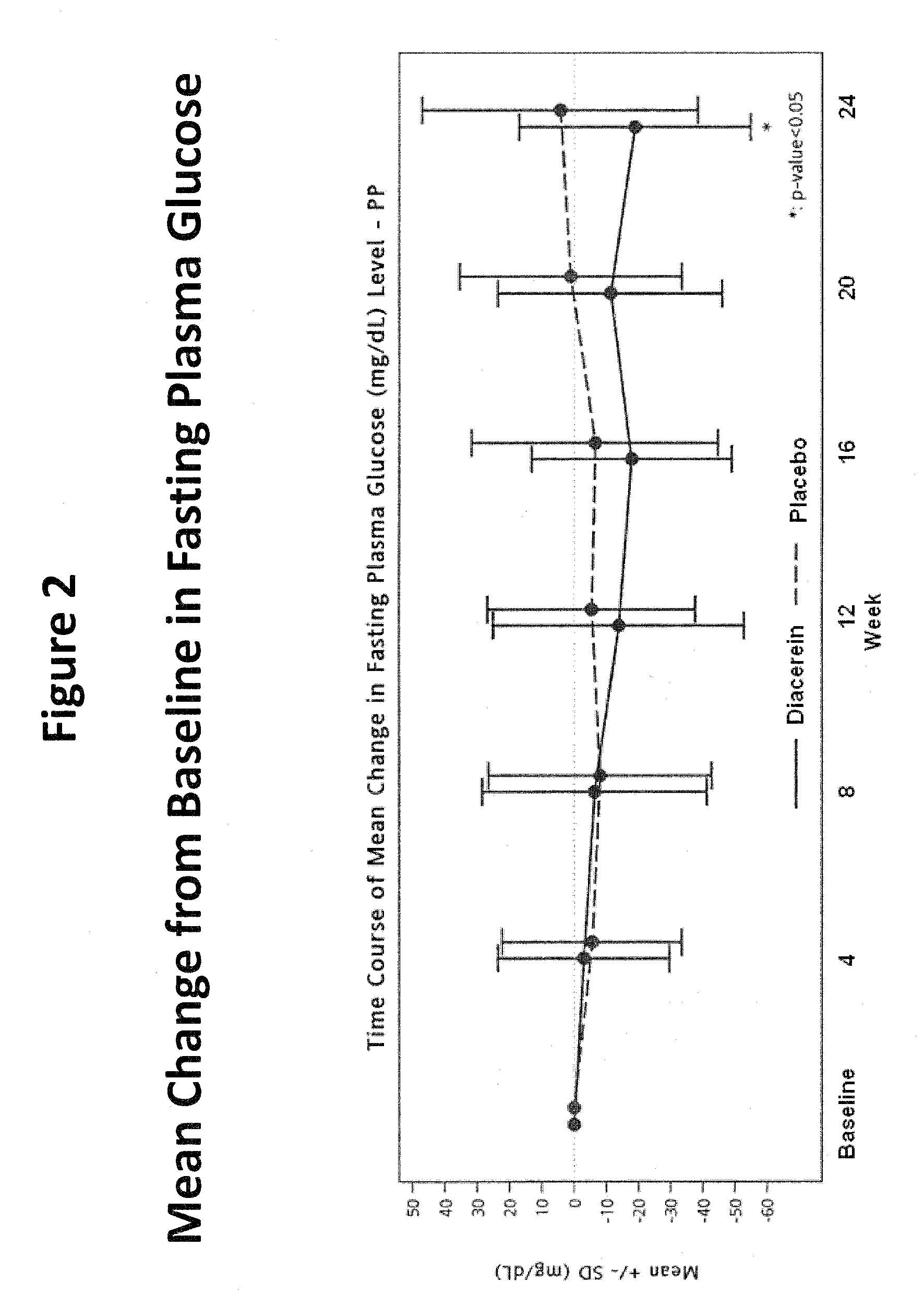
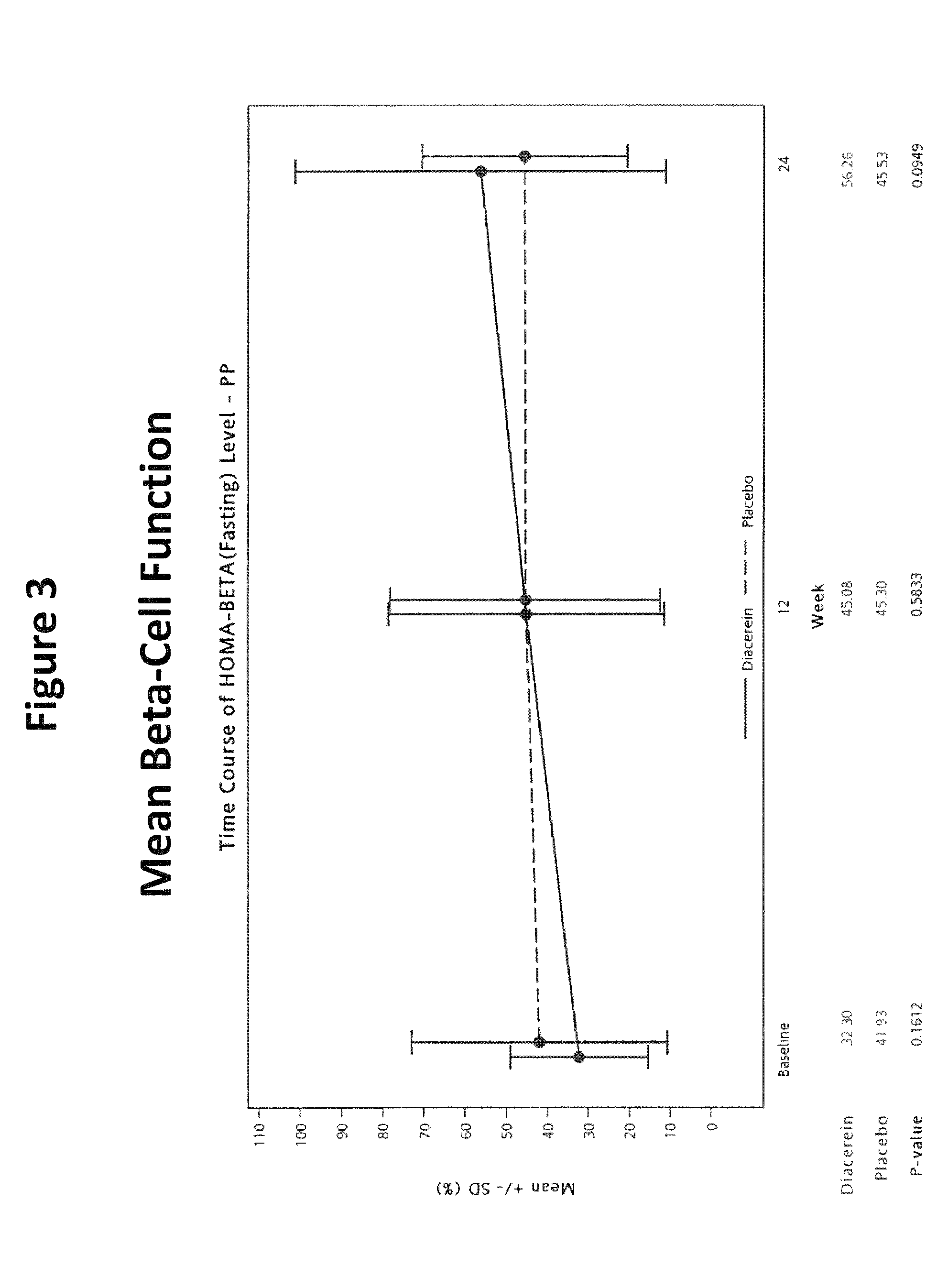
Examples
example 1
A Randomized, Double-Blind, Placebo-Controlled Study of Diacerein in Patients with Uncontrolled Type 2 Diabetes Mellitus
[0046]Objectives: To evaluate the efficacy and safety of diacerein for the treatment of type 2 diabetes mellitus (DM).
[0047]Primary Endpoints: To compare the efficacy of add-on diacerein with no add-on treatment (placebo) on glycosylated hemoglobin (HbA1c) after 24-week double-blind treatment in type 2 DM patients inadequately controlled by previous antidiabetic therapy.
[0048]Subjects: Male or female type 2 DM patients (BMI≦35 kg / m2) on a stable oral hypoglycemic monotherapy for at least 3 months prior to screening visit. The hemoglobin A1c (HbA1c) measurements taken at a screening visit were between 7% and 12%. Patients enrolled in the study were receiving one or more oral antihyperglycemic agents including sulfonylurea, biguanides, alpha-glucosidase inhibitors, thiazolidinediones (TZDs) and nonsulfonylurea insulin secretagogues.
[0049]Procedure: This was a randomi...
PUM
| Property | Measurement | Unit |
|---|---|---|
| resistance | aaaaa | aaaaa |
| insulin resistance | aaaaa | aaaaa |
| concentration | aaaaa | aaaaa |
Abstract
Description
Claims
Application Information
 Login to View More