Supercharge Your Innovation With Domain-Expert AI Agents!

Methods for the treatment of cancer and inflammatory diseases using cereblon as a predictor

a technology of cereblon and inflammatory diseases, applied in the direction of fluorescence/phosphorescence, instruments, peptides, etc., can solve the problems of limited treatment options, limited options for cancer treatment, and large unknown extent of human leukemia

Active Publication Date: 2016-06-14
CELGENE CORP
View PDF110 Cites 16 Cited by
  • Summary
  • Abstract
  • Description
  • Claims
  • Application Information

AI Technical Summary

Benefits of technology

This approach allows for the selection of patients who are more likely to respond effectively to these treatments, potentially increasing treatment efficacy and reducing toxicity by personalizing therapy based on CRBN expression levels.

Problems solved by technology

However, options for the treatment of cancer are limited.
For example, in the case of blood cancers (e.g., multiple myeloma), few treatment options are available, especially when conventional chemotherapy fails and bone-marrow transplantation is not an option.
Although viruses reportedly cause several forms of leukemia in animals, causes of leukemia in humans are to a large extent unknown.
However, uncontrolled growth of these cells leads to bone pain and fractures, anemia, infections, and other complications.
MDS is characterized by a cellular marrow with impaired morphology and maturation (dysmyelopoiesis), peripheral blood cytopenias, and a variable risk of progression to acute leukemia, resulting from ineffective blood cell production.
The approach for patients with relapsed or refractory disease relies heavily on experimental treatments followed by stem cell transplantation, which may not be appropriate for patients with a poor performance status or advanced age.
Thus, inhibition of HIF1 may slow or reverse tumor cell metabolism.
These events result in swelling, redness, warmth (altered heat patterns), and pus formation at the site of injury or infection.
This release of cytokines and prostaglandins increases the blood flow to the area of injury or infection, and may result in redness and warmth.
Some of these chemicals cause a leak of fluid into the tissues, resulting in swelling.
This protective process may stimulate nerves and cause pain.
When this delicately balanced interplay is disrupted, the inflammatory response may result in considerable damage to normal tissue and may be more harmful than the original insult that initiated the reaction.
All of these approaches may pose significant drawbacks for the patient.
Surgery, for example, may be contraindicated due to the health of a patient or may be unacceptable to the patient.
Additionally, surgery may not completely remove neoplastic tissue.
Radiation therapy is only effective when the neoplastic tissue exhibits a higher sensitivity to radiation than normal tissue.
Radiation therapy can also often elicit serious side effects.
Certain biological and other therapies are limited in number and may produce side effects such as rashes or swellings, flu-like symptoms, including fever, chills and fatigue, digestive tract problems or allergic reactions.
Despite availability of a variety of chemotherapeutic agents, chemotherapy has many drawbacks.
Almost all chemotherapeutic agents are toxic, and chemotherapy causes significant and often dangerous side effects including severe nausea, bone marrow depression, and immunosuppression.
Because of the drug resistance, many cancers prove refractory to standard chemotherapeutic treatment protocols.
Other diseases or conditions associated with, or characterized by, undesired angiogenesis are also difficult to treat.
However, NSAIDs are believed not to be capable of altering progression of the disease.
Moreover, NSAIDs frequently cause gastrointestinal side effects, affect the lower intestinal tract causing perforation or aggravating inflammatory bowel disease, produce renal toxicity, and prolong bleeding time.
The serious problem of untoward reactions resulting from prolonged corticosteroid therapy (e.g., osteoporosis, increased risk of infection, increased appetite, hypertension, edema, peptic ulcers, psychoses) greatly limits its long-term use.

Method used

the structure of the environmentally friendly knitted fabric provided by the present invention; figure 2 Flow chart of the yarn wrapping machine for environmentally friendly knitted fabrics and storage devices; image 3 Is the parameter map of the yarn covering machine
View more

Image

Smart Image Click on the blue labels to locate them in the text.
Viewing Examples
Smart Image
  • Methods for the treatment of cancer and inflammatory diseases using cereblon as a predictor
  • Methods for the treatment of cancer and inflammatory diseases using cereblon as a predictor
  • Methods for the treatment of cancer and inflammatory diseases using cereblon as a predictor

Examples

Experimental program
Comparison scheme
Effect test

Embodiment Construction

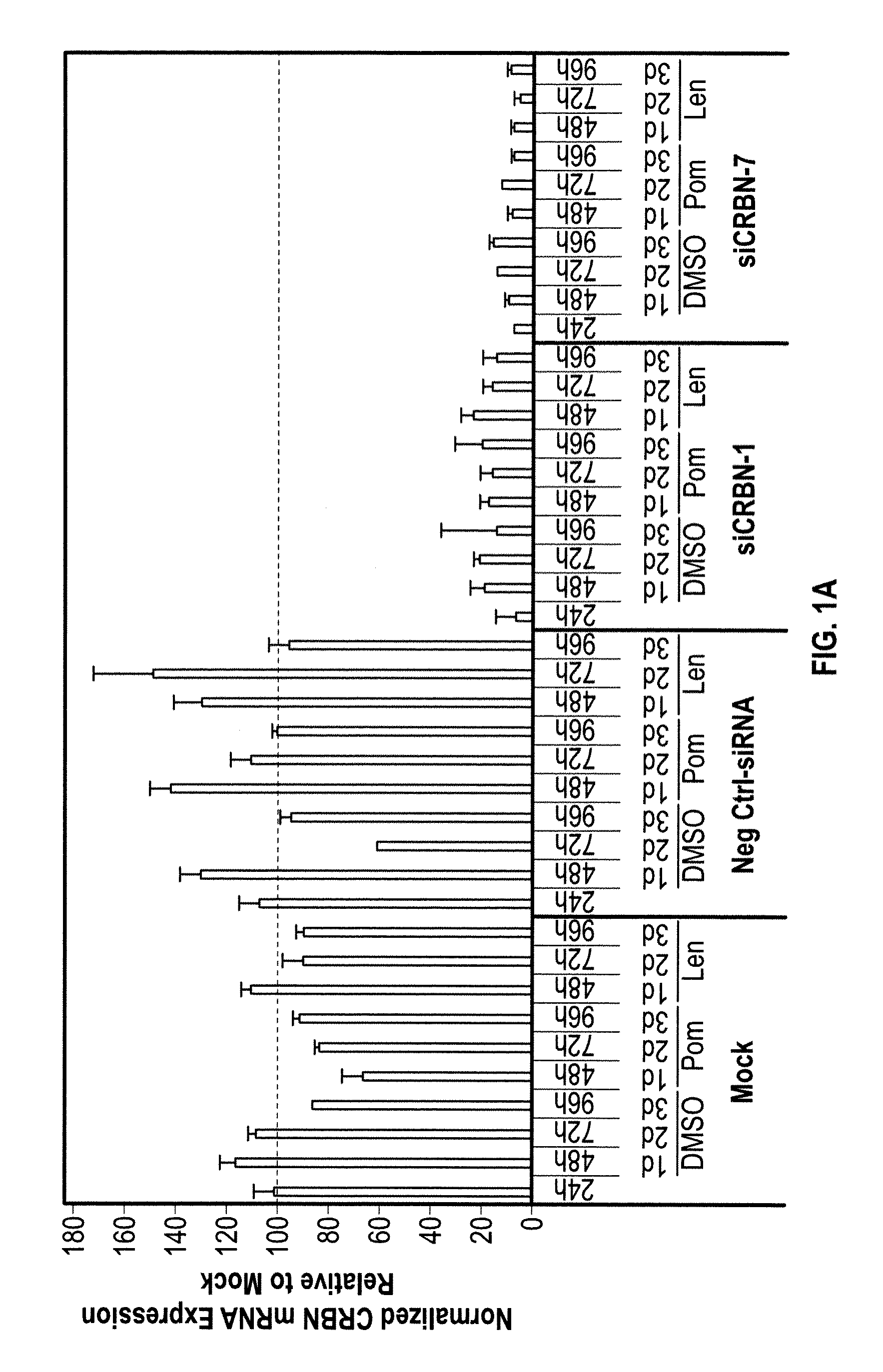
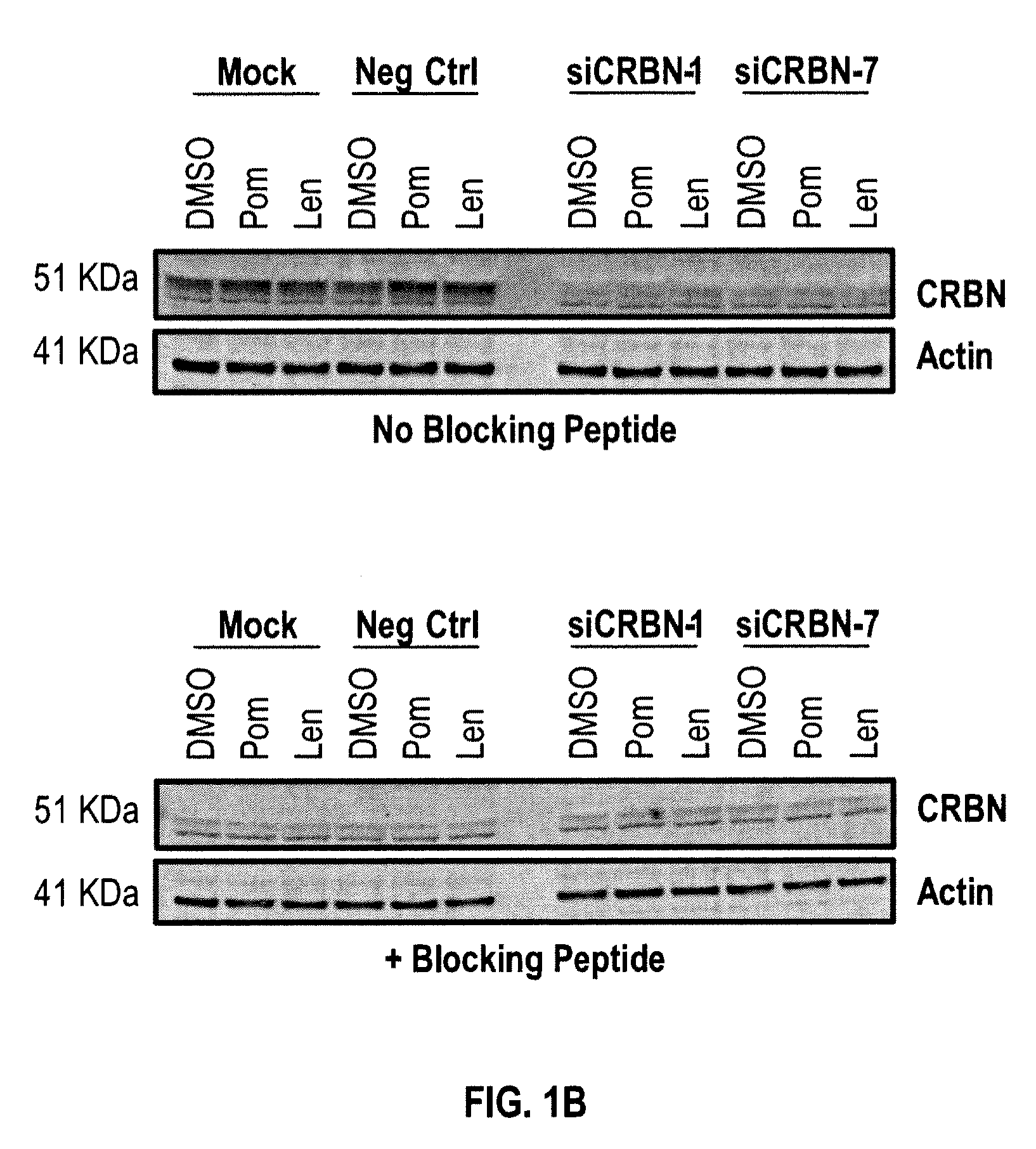
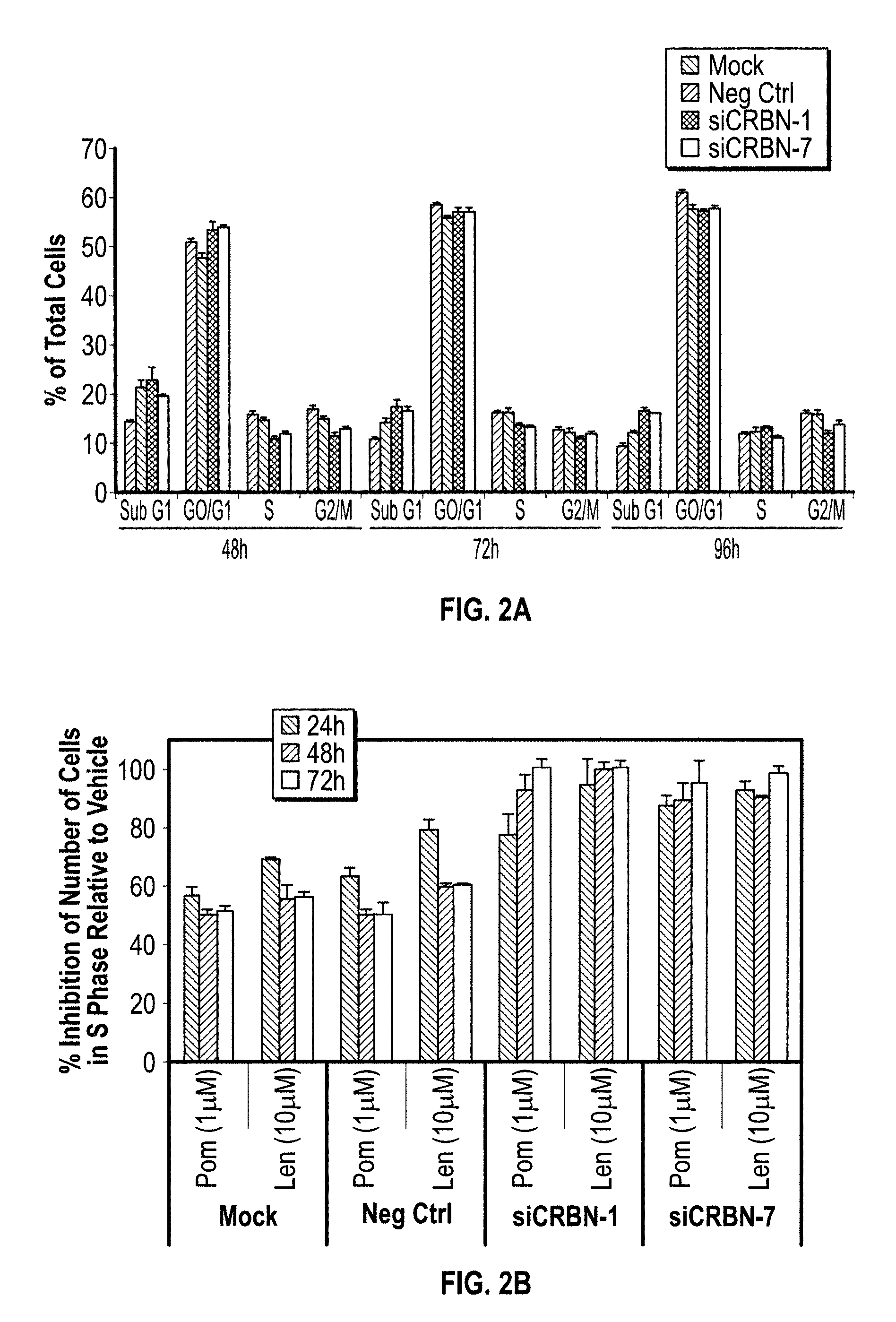
[0133]The methods provided herein are based, in part, on the discovery that cereblon is associated with the anti-proliferative activities of certain drugs, such as the compounds provided herein. In some embodiments, Cereblon (CRBN) may be utilized as a biomarker to indicate the effectiveness or progress of a disease treatment with a compound provided herein.

[0134]Without being bound to a particular theory, CRBN binding may contribute to or even be required for anti-proliferative or other activities of certain compounds, such as the compounds provided herein. In certain embodiments, the compounds provided herein bind directly to CRBN-DDB1 and / or the CRBN E3 ubiquitin-ligase complex. Mutations in CRBN could be associated with resistance to the compounds provided herein.

[0135]For example, the levels of CRBN were significantly lower in the pomalidomide-resistant cells line DF15R and the lenalidomide-resistant cells, H929 R10-1, H929 R10-2, H929 R10-3, H929 R10-4 and MM1 / R compared to th...

the structure of the environmentally friendly knitted fabric provided by the present invention; figure 2 Flow chart of the yarn wrapping machine for environmentally friendly knitted fabrics and storage devices; image 3 Is the parameter map of the yarn covering machine
Login to View More

PUM

No PUM Login to View More

Abstract

Uses of the protein cereblon as a predictor of clinical sensitivity to cancer, inflammatory diseases, and patient response to drug treatment.

Description

[0001]The present application claims priority to U.S. Provisional Patent Application Nos. 61 / 481,066, filed Apr. 29, 2011; 61 / 511,986, filed Jul. 26, 2011; and 61 / 579,600, filed Dec. 22, 2011; the entirety of each of which is incorporated herein by reference.SEQUENCE LISTING[0002]The instant application contains a Sequence Listing which has been submitted in ASCII format via EFS-Web and is hereby incorporated by reference in its entirety. Said ASCII copy, created on Jul. 5, 2012, is named 12827227.txt and is 119,198 bytes in size.1. FIELD[0003]Provided herein are uses of the protein cereblon as a predictor of clinical sensitivity to cancer and inflammatory diseases, and patient response to drug treatment.2. BACKGROUND[0004]2.1 Pathobiology of Cancer[0005]Cancer is characterized primarily by an increase in the number of abnormal cells derived from a given normal tissue, invasion of adjacent tissues by these abnormal cells, or lymphatic or blood-borne spread of malignant cells to regi...

Claims

the structure of the environmentally friendly knitted fabric provided by the present invention; figure 2 Flow chart of the yarn wrapping machine for environmentally friendly knitted fabrics and storage devices; image 3 Is the parameter map of the yarn covering machine
Login to View More

Application Information

Patent Timeline
no application Login to View More
Patent Type & Authority Patents(United States)
IPC IPC(8): G01N33/574C12Q1/68C07K16/18G01N21/64
CPCC07K16/18G01N33/57426G01N33/57484G01N33/5743C12Q1/6886G01N21/6428G01N2800/52G01N2800/60C12Q2600/106C12Q2600/156C12Q2600/158G01N33/574G01N33/50G01N33/53C07K2317/34C07K2317/51C07K2317/515G01N2333/47
Inventor LOPEZ-GIRONA, ANTONIASCHAFER, PETER H.GANDHI, ANITAMENDY, DEREKDANIEL, THOMAS O.
Owner CELGENE CORP
Features
  • R&D
  • Intellectual Property
  • Life Sciences
  • Materials
  • Tech Scout
Why Patsnap Eureka
  • Unparalleled Data Quality
  • Higher Quality Content
  • 60% Fewer Hallucinations
Social media
Patsnap Eureka Blog
Learn More