
Gas sensitization array sensor and its manufacture method
An array sensor and gas-sensitive technology, applied in the direction of instruments, scientific instruments, measuring devices, etc., can solve the problems of expensive production equipment, harsh production conditions, poor mechanical stability of devices, etc., and meet the requirements of mass production and production environment The effect of low and good gas sensitivity stability
- Summary
- Abstract
- Description
- Claims
- Application Information
AI Technical Summary
Problems solved by technology
Method used
Image

Examples
Embodiment 1
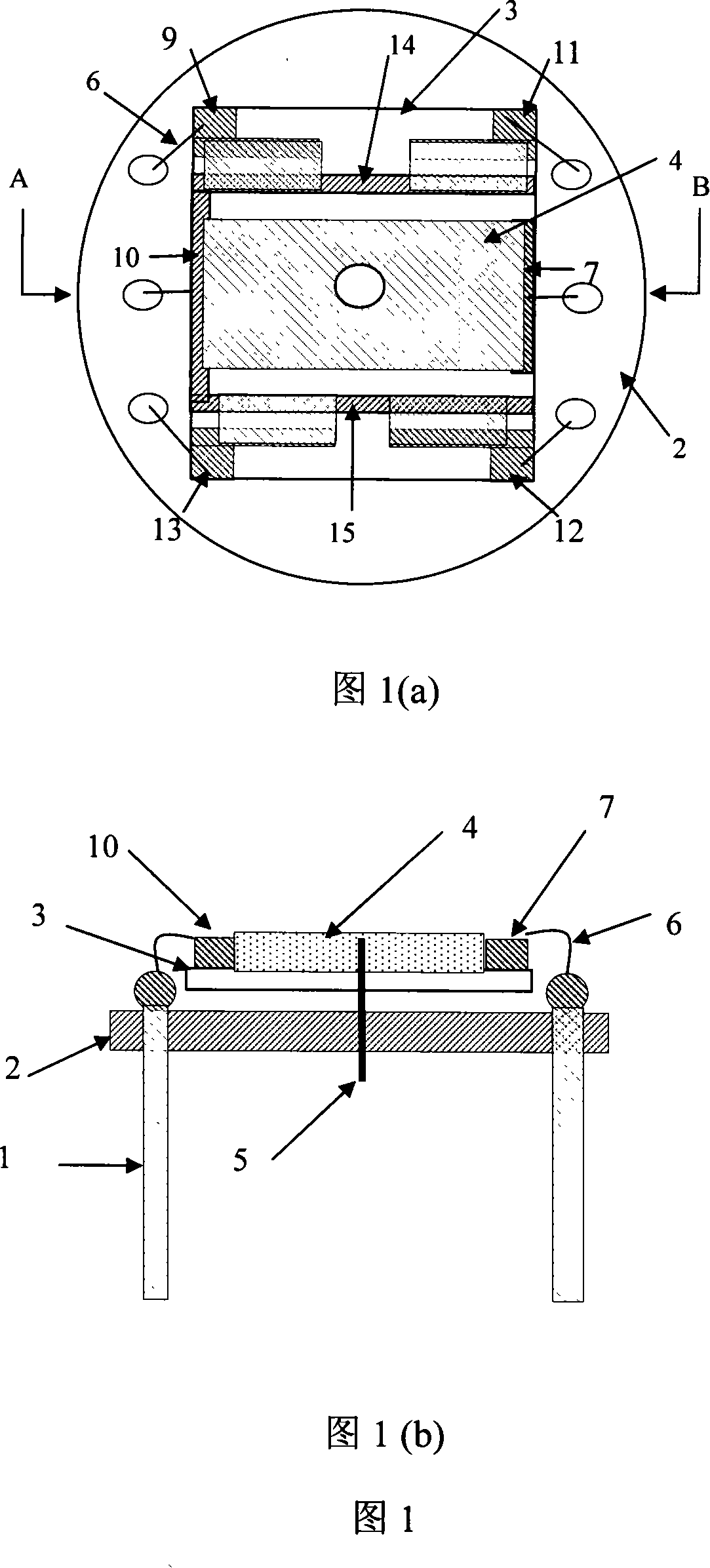
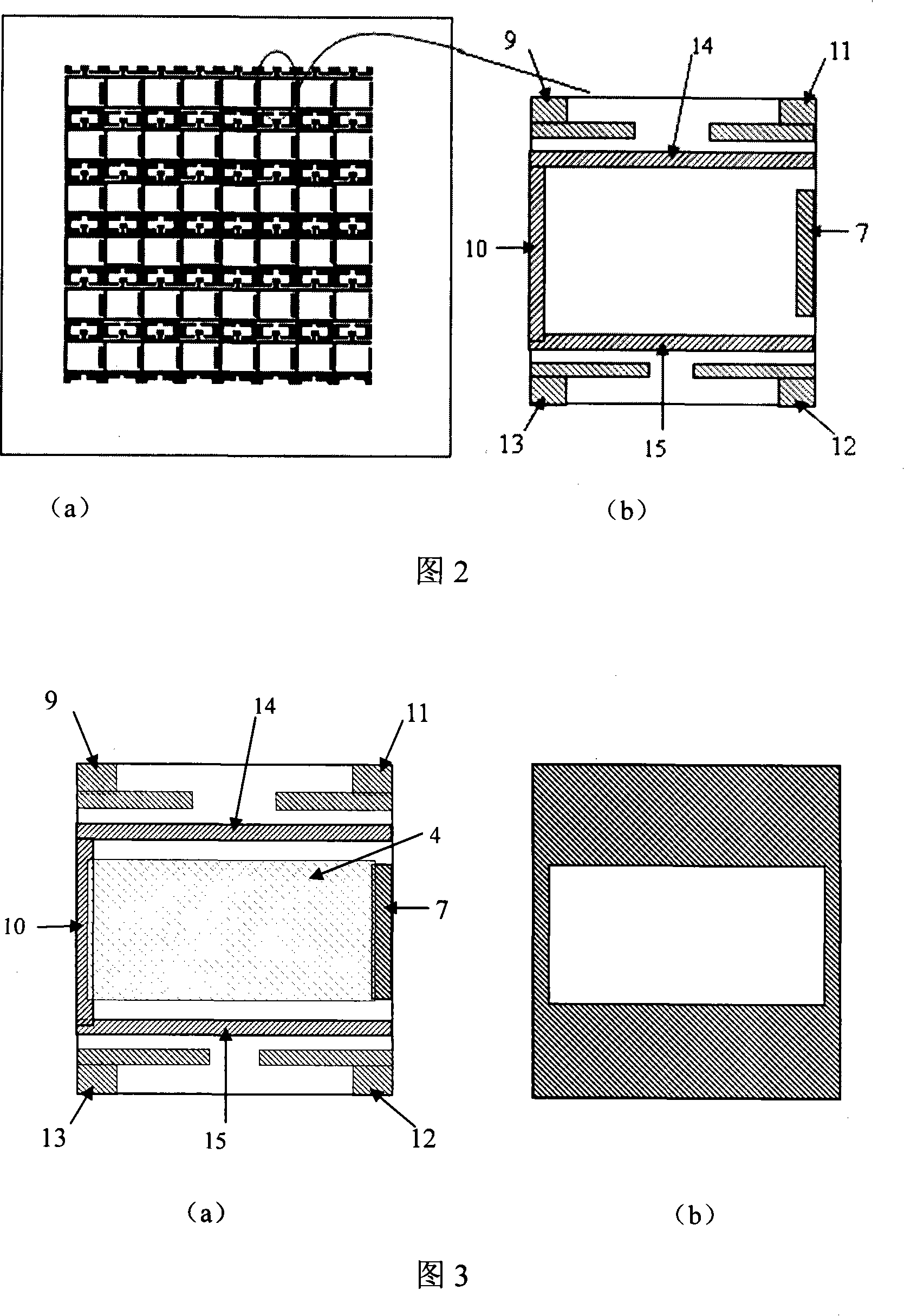
[0039] (1) Preparation of a substrate with electrodes and heaters. With 0.4mm thick Al 2 o 3 The ceramic is the substrate 3, and the positive electrode 7 of the array heater, the first, second, third, and fourth test electrodes 9, 11, 12, 13 and their return electrodes 10, The slurry film of the common electrode composed of 14 and 15. After drying, it was sintered at 900°C for 10 minutes in the air, and then slowly cooled to room temperature with the furnace to obtain a substrate with electrodes as shown in Figure 2. After screen-printing RuO using the screen shown in Figure 3(b) 2 After the slurry film is dried, it is sintered in the air at 850° C. for 15 minutes, and slowly cooled to room temperature with the furnace to obtain a substrate with electrodes and a heater as shown in FIG. 3( a ).
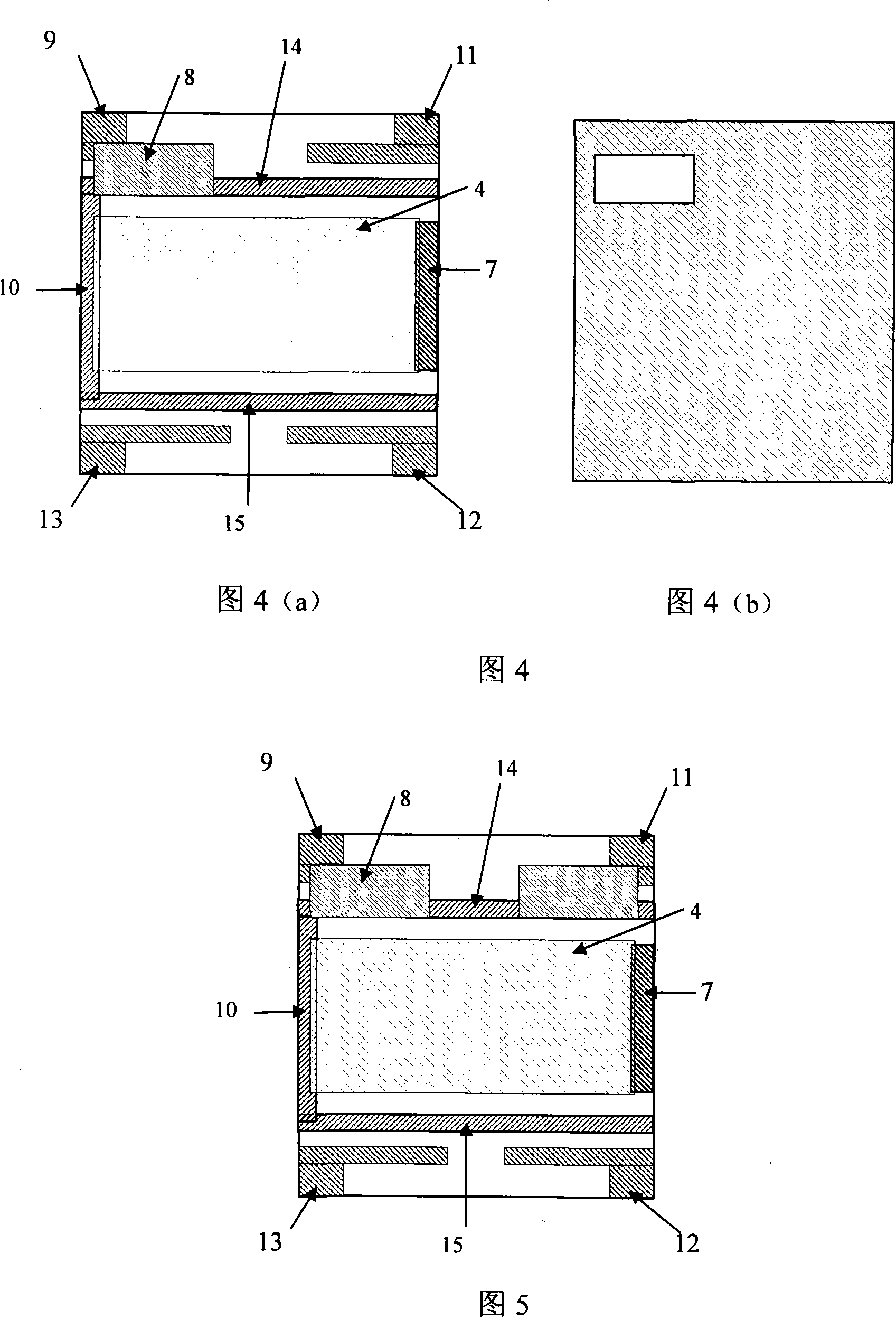
[0040] (2) Preparation of the sensitive layer 8 of the gas array. With tetrapod nano-ZnO, 10wt%TiO 2 Doped tetraacicular nano-ZnO, 5wt% Co 2 o 3 Doped tetraacicular nano-ZnO, 1...
Embodiment 2
[0044] A six-unit gas sensor array can be obtained by adding one test electrode between the 9th and 11th test electrodes and between the 12th and 13th test electrodes of the four-unit array in the first embodiment. The preparation steps are the same as those in Example 1, the gas sensor array substrate, heating film, electrode and sensitive layer materials, and the sintering process are shown in Table 1. Six-element gas sensor arrays with different gas sensitivity characteristics are available.
[0045] Table 1: Six-element gas sensor array substrate, heating film, electrode and sensitive layer materials, sintering process
[0046] Array substrate: aluminum nitride
[0047] The present invention is not limited to the above-mentioned embodiments, by adding different numbers of test electrodes between the first and second test electrodes, and between the third and fourth test electrodes, and printing a heating film and a metal oxide sensitive layer, it can be obtaine...
PUM
| Property | Measurement | Unit |
|---|---|---|
| thickness | aaaaa | aaaaa |
Abstract
Description
Claims
Application Information
 Login to View More