
Modified ardealite setting retarder for cement and its preparing process
A cement retarder, phosphogypsum technology, applied in the direction of climate sustainability, sustainable waste treatment, solid waste management, etc., can solve the problems of long natural drying storage time, small amount of phosphogypsum, slow cement speed, etc. , to achieve significant social benefits, short storage time, and promote the effect of cement coagulation
- Summary
- Abstract
- Description
- Claims
- Application Information
AI Technical Summary
Problems solved by technology
Method used
Image

Examples
Embodiment 11
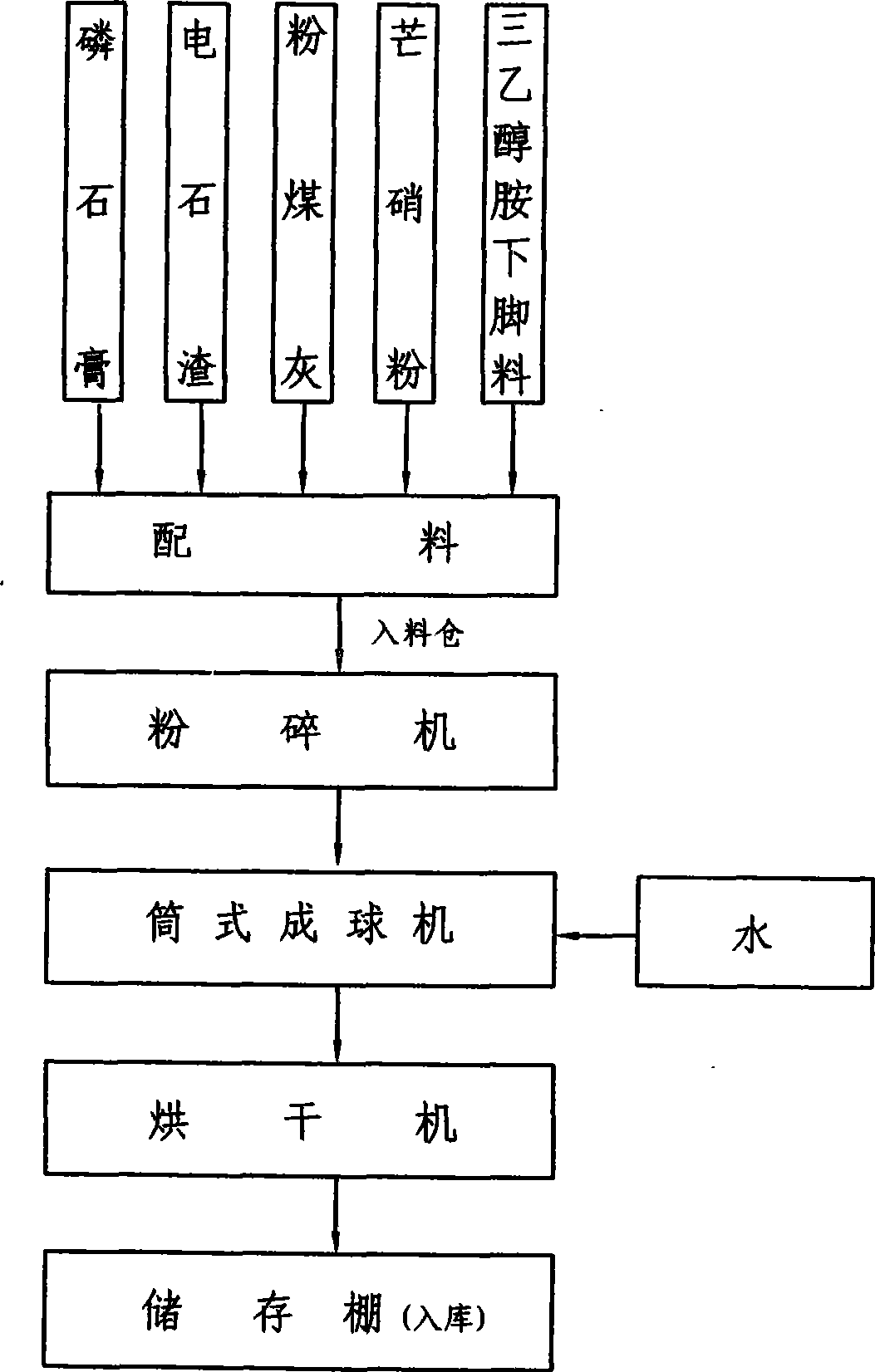
[0027] The preparation method of this modified phosphogypsum cement retarder, see figure 1 :
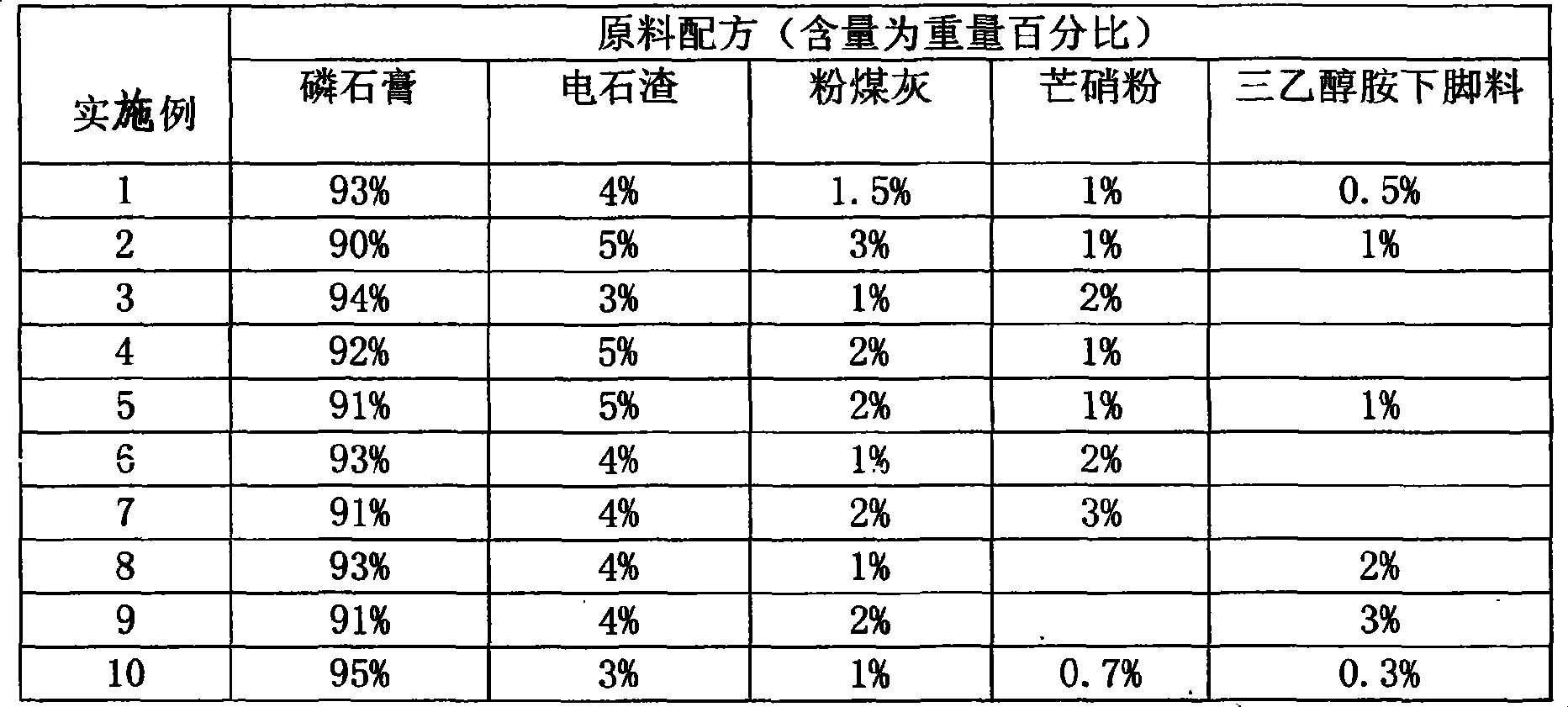
[0028] Select embodiment 1~10 batching, earlier with forklift, calcium carbide slag, fly ash, Glauber's salt powder (mineral powder) and / or triethanolamine amine leftovers are mixed homogeneously; Mix evenly according to the proportion, enter the hopper, and send the belt conveyor to the pulverizer for crushing until the particle size is ≤1mm. Add water, and further homogenize into balls (the balls contain 18% water), and the wet balls are sent to the dryer with a belt conveyor, dried with a dryer until the water content is 14%, and the discharge temperature is ≤100°C, and then conveyed by a belt The machine is sent to the storage shed for storage.
[0029] Send the wet material into the dryer and dry it until the water content is 14%. The drying temperature of the material discharged from the dryer is ≤100°C. The moisture in the ball is too large, and all the above-mentioned equi...
PUM
 Login to View More
 Abstract
Description
Claims
Application Information
 Login to View More