

Spider silk protein/polylactic acid composite nano fibre yarn and preparation method thereof
A composite nanofiber, spider silk protein technology, applied in fiber processing, filament/thread forming, cellulose/protein conjugated rayon, etc., can solve the problem of unable to obtain yarn, achieve uniformity improvement, diameter Reduced, good flexibility
- Summary
- Abstract
- Description
- Claims
- Application Information
AI Technical Summary
Problems solved by technology
Method used
Image

Examples
Embodiment 1
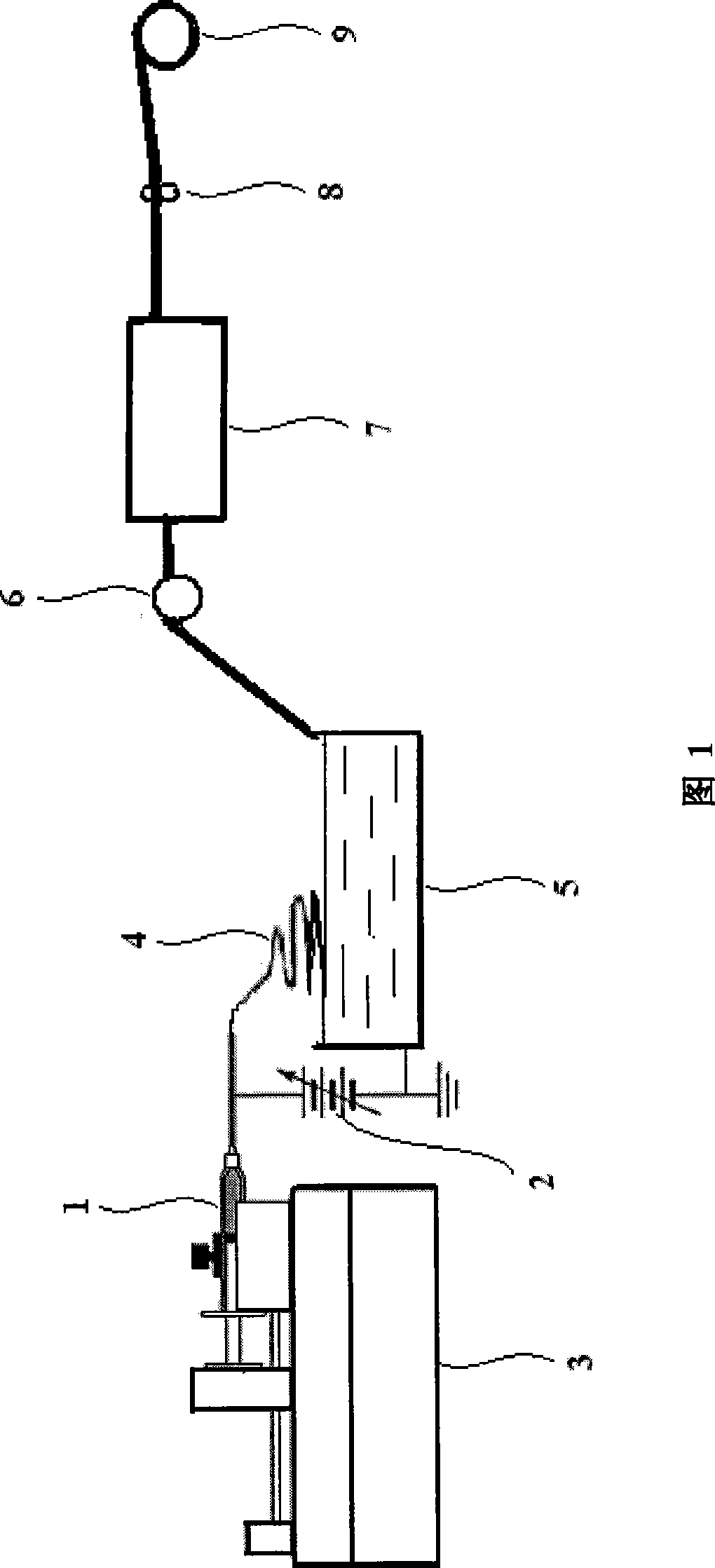
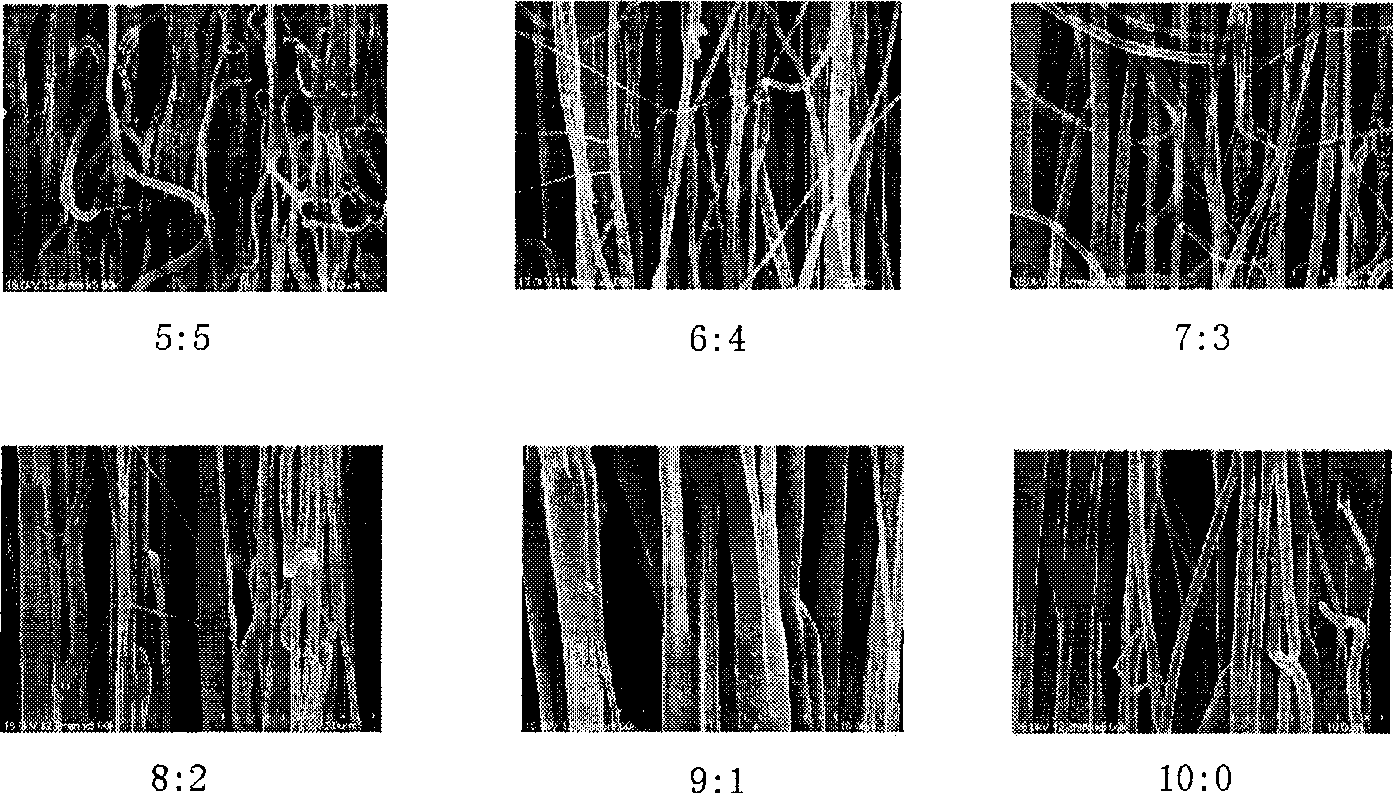
[0032] The preparation of different ratios of spider silk protein / polylactic acid composite nanofiber yarns comprises the following steps:
[0033] (1) Preparation of spinning solution: Dissolve pure and dry polylactic acid (PLA) in 99% hexafluoroisopropanol (HFIP) at room temperature, and after fully stirring and dissolving, a 9% by mass percentage is obtained. PLA solution; the tiger's bird spider silk is dissolved in 99% hexafluoroisopropanol solution, after being fully stirred and filtered with a metal filter, a 1% spider silk protein solution with a mass percentage of 1% is obtained, and then the two solutions are mixed Mix evenly according to a certain weight ratio to obtain spinning solution;
[0034] (2) Preparation of bath liquid: Dissolve the commercially available hydrophilic silicone softener of model KGF-903 produced by Nantong Chongchuan Keguang New Material Research Institute in deionized water to prepare a bath liquid with a mass percentage of 0.2% ;
[0035]...
Embodiment 2
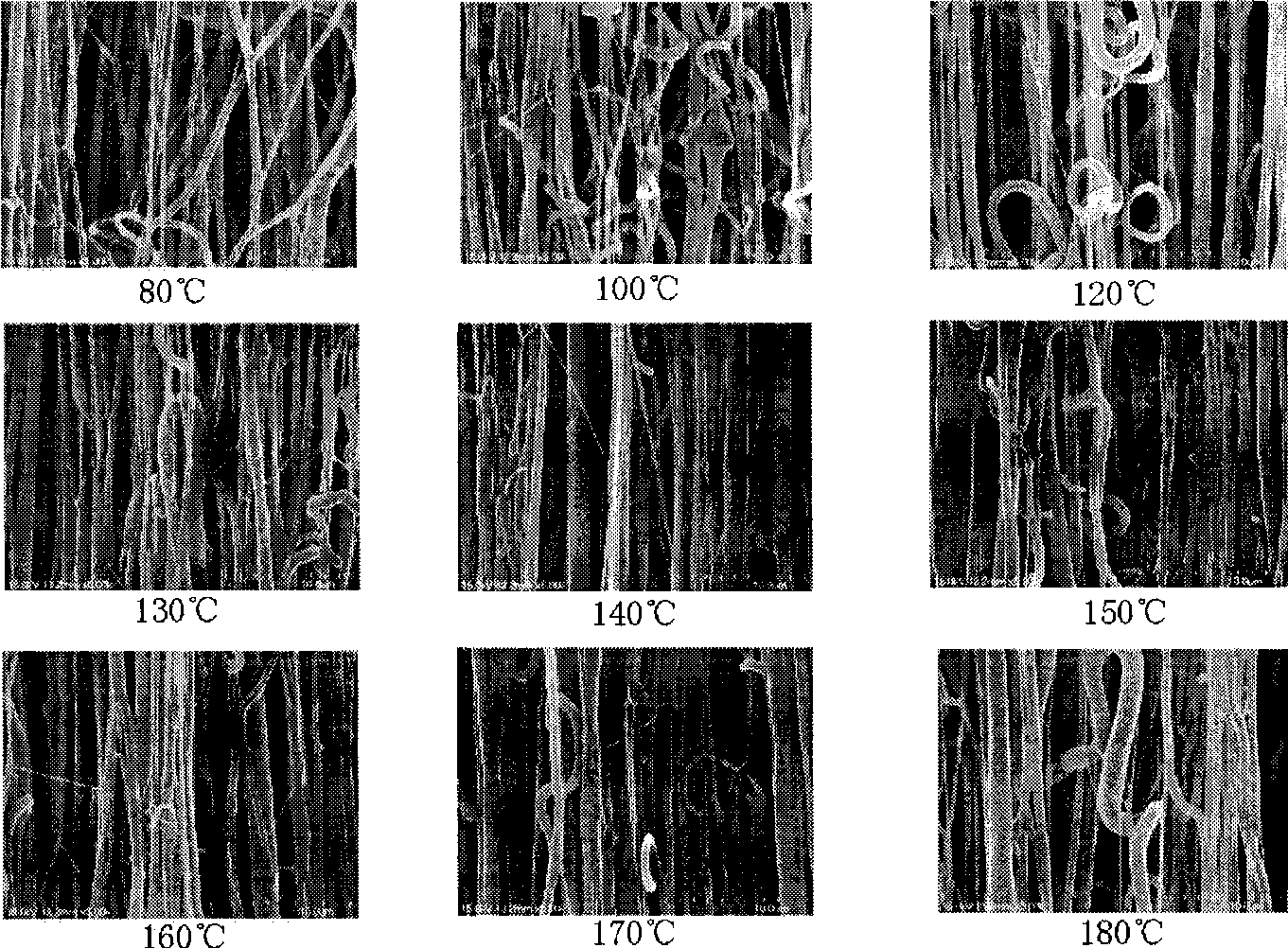
[0045] The preparation of the spider silk protein / polylactic acid composite nanofiber yarn under different heating zone temperatures comprises the following steps:
[0046] (1) Preparation of spinning solution: Dissolve pure and dry polylactic acid (PLA) in 99% hexafluoroisopropanol (HFIP) at room temperature, and after fully stirring and dissolving, a 9% by mass percentage is obtained. PLA solution; the tiger's bird spider silk is dissolved in 99% hexafluoroisopropanol solution, after being fully stirred and filtered with a metal filter, a 1% spider silk protein solution with a mass percentage of 1% is obtained, and then the two solutions are mixed Mix evenly at a weight ratio of 7:3 to obtain a spinning solution;
[0047] (2) Preparation of bath liquid: Dissolve the commercially available hydrophilic silicone softener of model KGF-903 produced by Nantong Chongchuan Keguang New Material Research Institute in deionized water to prepare a bath liquid with a mass percentage of 0...
Embodiment 3
[0056] The preparation of spider silk protein / polylactic acid composite nanofiber yarn comprises the following steps:
[0057] (1) Preparation of spinning solution: Dissolve pure and dry polylactic acid (PLA) in 99% hexafluoroisopropanol (HFIP) at room temperature, and after fully stirring and dissolving, a 9% by mass percentage is obtained. PLA solution; the tiger's bird tarantula silk is dissolved in 99% hexafluoroisopropanol solution, fully stirred and filtered with a metal filter to obtain a 0.8% spider silk protein solution by mass percentage, and then the two solutions are mixed Mix evenly at a weight ratio of 7:3 to obtain a spinning solution;
[0058] (2) Preparation of bath liquid: Dissolve the commercially available hydrophilic silicone softener of model KGF-903 produced by Nantong Chongchuan Keguang New Material Research Institute in deionized water to prepare a bath liquid with a mass percentage of 0.4% ;
[0059] (3) adopting the electrospinning method, adding t...
PUM
 Login to View More
 Abstract
Description
Claims
Application Information
 Login to View More