
Protein, coding genes and application thereof
A technology that encodes genes and proteins, applied in applications, genetic engineering, plant genetic improvement, etc., can solve problems such as structural damage, decreased selective permeability of plasma membranes, and plant cell destruction
- Summary
- Abstract
- Description
- Claims
- Application Information
AI Technical Summary
Problems solved by technology
Method used
Image

Examples
Embodiment 1
[0055] Embodiment 1, the acquisition of KcPCS1 gene
[0056] 1. Acquisition of KcPCS1
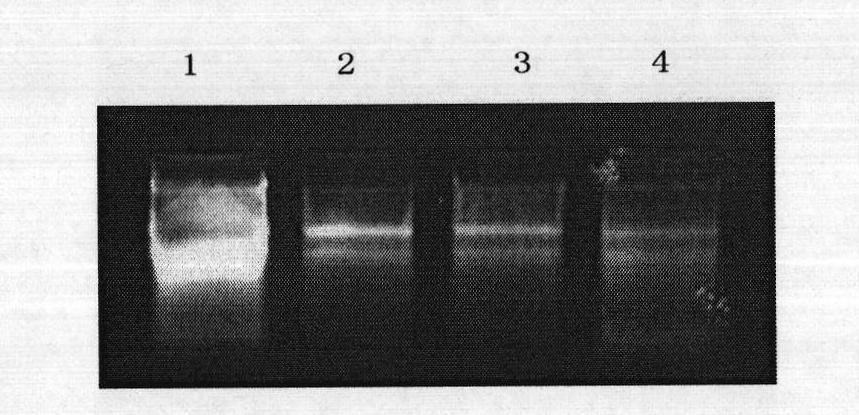
[0057] 1. Total RNA extraction from candelabra
[0058] a. The mortar, spoon, tweezers, and reagent bottles used for RNA extraction were all sterilized by dry heat at 240°C for more than 2 hours; Rase-free plastic tubes and tips were purchased from Invitrogen.
[0059] b. Take 0.5ml extraction buffer (100mmol L-1 Tris-HCl, pH 8.5; 500mmol L-1EDTA.500mmol L-1 NaCl; 20% SDS; 5mmol L-1 DTT, pH=8.5; 1.5 % (v / v) β-mercaptoethanol) preheated at 65°C in a 1.5ml centrifuge tube;
[0060] c. Take 0.2g young leaves of Kadelia candel (Kc), place them in liquid nitrogen, add an appropriate amount of PVP, grind them to powder, quickly transfer them to the extract, shake the centrifuge tube vigorously, and mix them evenly;
[0061] d. Place the centrifuge tube flat at room temperature for 5 minutes, centrifuge at 12,000 rpm at 4°C for 10 minutes, and carefully transfer the supernatant to a new centrif...
Embodiment 2
[0148] Example 2, detection of heavy metal resistance of transgenic yeast
[0149] 1. Obtaining of transgenic yeast
[0150] 1. Construction of yeast expression vector
[0151] The gene sequence (sequence 1) of artificially synthesized KcPCS1 is used as a template, and PCR amplification is carried out with the following primers:
[0152] YPCS-BamHI: 5'-AGGGGATCCATGGCGGTGCCGGGCATATACA-3' (the underlined sequence is the BamHI site, sequence 3)
[0153] YPCS-SalI: 5'-GGTGTCGACTGGAAGCAATAGAGGGCGAGGAG-3' (the underlined sequence is the SalI site, sequence 4)
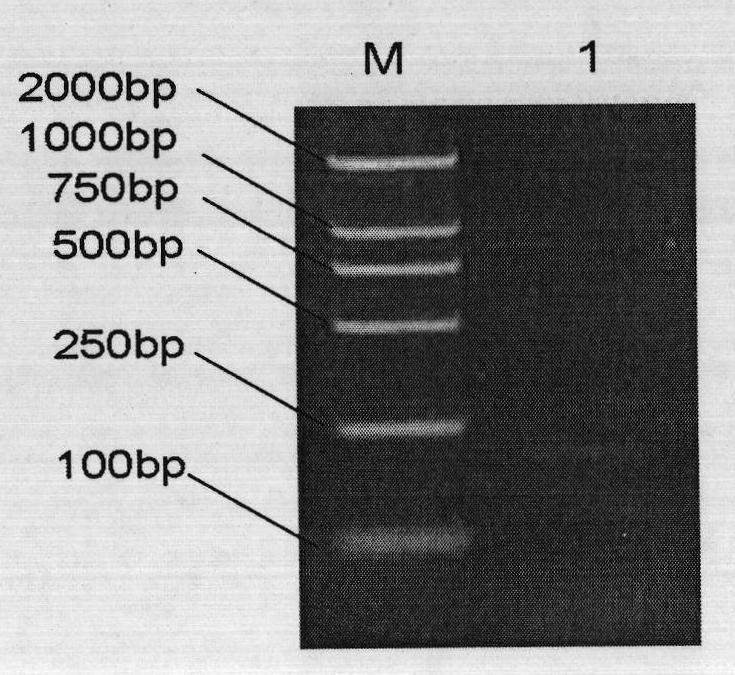
[0154] Take 1 μg of the above PCR product and digest it with BamHI / SalI double enzymes, and connect the obtained fragment with the pFL61 vector fragment that has also been digested with BamHI / SalI double enzymes, and transform the obtained ligation product into Escherichia coli DH5α to obtain a transformant, and extract the transformant The plasmid was identified by BamHI / SalI double enzyme digestion, and a fragment of abo...
PUM
| Property | Measurement | Unit |
|---|---|---|
| density | aaaaa | aaaaa |
Abstract
Description
Claims
Application Information
 Login to View More