

Method for culturing submerged plant seeds
A technology of submerged plants and plant hormones, which is applied in the fields of botanical equipment and methods, chemical instruments and methods, and seed immunity to achieve the effect of promoting germination and promoting the transformation of nutrients
- Summary
- Abstract
- Description
- Claims
- Application Information
AI Technical Summary
Problems solved by technology
Method used
Image

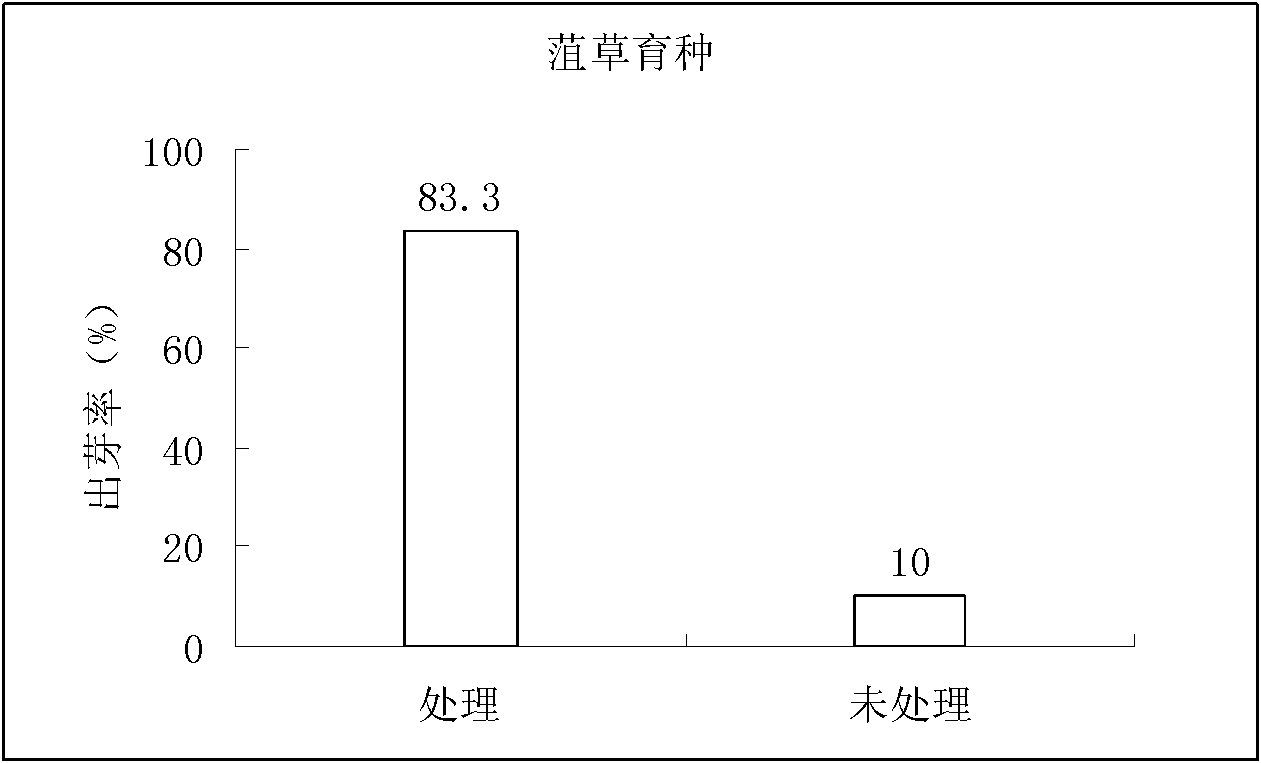
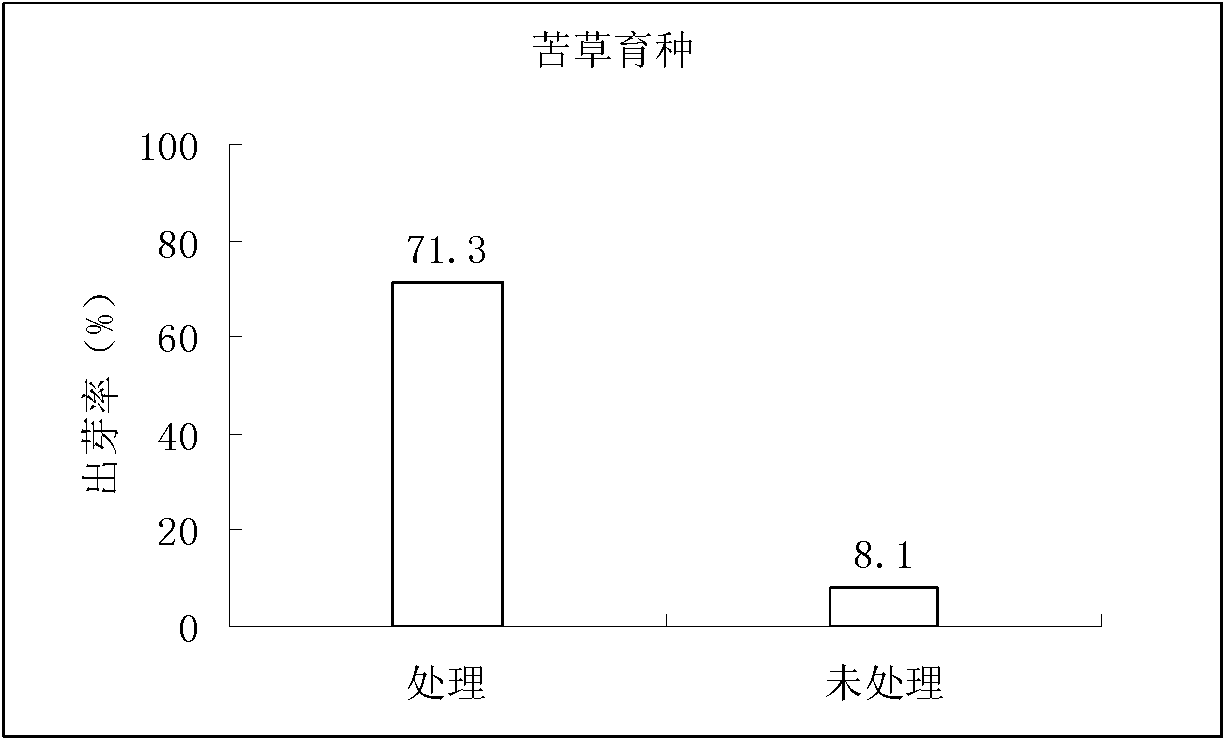
Examples
Embodiment 1
[0027] Example 1: Potamogeton crispus seed breeding
[0028] (1) The breeding steps are as follows:
[0029] Pre-treatment: Firstly, 30 Potamogeton seeds are soaked in 0.5% sodium hypochlorite solution for 4 hours, then rinsed with water and air-dried naturally; then, placed in an environment of 25°C for 3 days, and then placed in an environment of 4°C for 1 day , And then stored in an environment of 30 ℃ for 2 days; finally, put the seeds in the aqueous solution of the medicine and keep the temperature at 20 ℃ for 24 hours, the composition and content of the medicine: 1mg / L gibberellic acid GA3, based on the weight of trace elements Calculated concentration is 0.05mg / L H 3 BO 3 , MnCl 2 And ZnSO 4 .
[0030] Substrate embedding: The composition and composition ratio of the substrate are as follows: clay occupies 50% of the total mass of the substrate, sandy soil 20%, humus soil 10%, river and lake bottom mud 10%, and river bank soil 10%; add water to the substrate until the substra...
Embodiment 2
[0033] Example 2: Breeding of Vallisneria seeds
[0034] (1) The breeding steps are as follows:
[0035] Pre-treatment: First, soak 30 bitter grass seeds in 0.01% dimethoate solution for 2 hours, rinse with water and air dry; then, put them in an environment of 25°C for 1 day and then put them in an environment of 4°C for 24 hours. Then store the seeds in an environment of 30°C for 12 hours; finally, put the seeds in an aqueous solution of the medicine and keep the temperature at 20°C and soak for 12 hours. The composition and content of the medicine are: 2mg / L indole acetic acid; based on the weight of trace elements, FeCl with a concentration of 0.01mg / L 3 , H 3 BO 3 , MnCl 2 And ZnSO 4 .
[0036] Substrate embedding: The composition and composition ratio of the substrate are as follows: clay occupies 50% of the total mass of the substrate, sandy soil 20%, humus soil 10%, river and lake bottom mud 10%, and river bank soil 10%. Add water to the substrate until the substrate become...
PUM
 Login to View More
 Abstract
Description
Claims
Application Information
 Login to View More