Seed-specific promoter and application thereof
A specific, grain-based technology, applied in applications, angiosperms/flowering plants, introduction of foreign genetic material using vectors, etc., can solve the problems of gene silencing, difference in expression activity, and inability of expression activity to meet genetic engineering, etc. Effects of highly tissue-specific expression
- Summary
- Abstract
- Description
- Claims
- Application Information
AI Technical Summary
Problems solved by technology
Method used
Image



Examples
experiment example 1
[0031] Experimental example 1. Discovery and sequence analysis of a specific promoter
[0032] 1. Discovery of the promoter sequence
[0033] 1. DNA extraction kit (Tiangen) was used to extract genomic DNA from seedlings of oat variety Jizhangyan No. 1 germinated in the dark.
[0034] 2. Design a pair of primers according to the conserved region of the existing promoter (GENBANKACCESSION NO.AY795082, see sequence 2 in the sequence listing) as follows:
[0035]F1 (upstream primer): 5'-cg aagctt tggaaagtcattttgcctc-3';
[0036] R1 (downstream primer): 5'-gc ccatgg gagattgtagaaggtggattgg-3'.
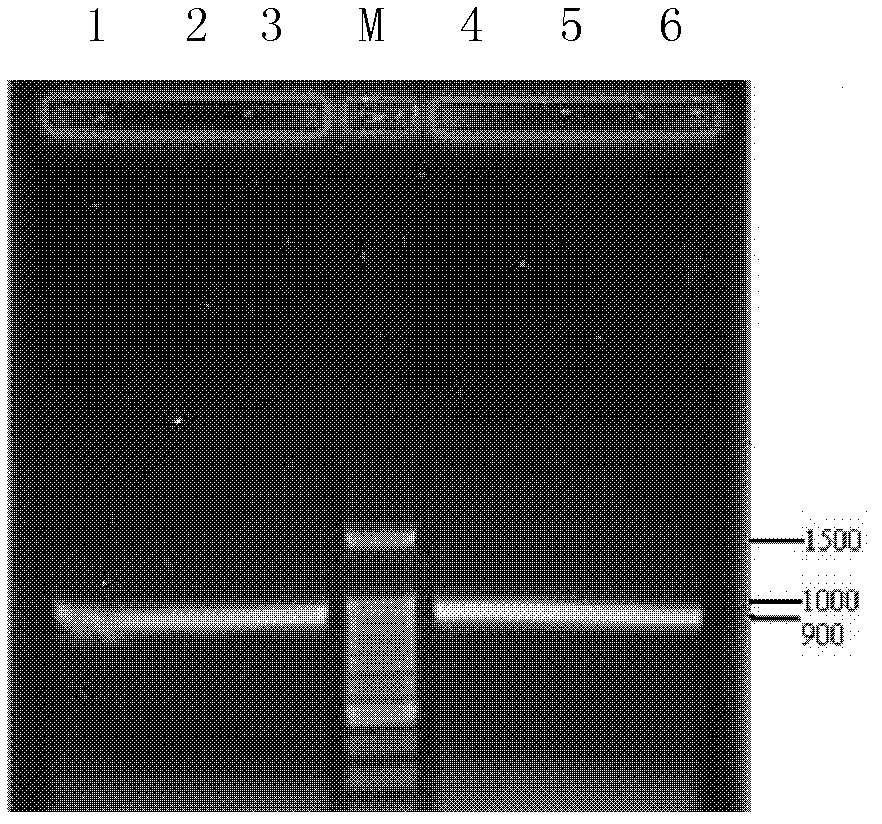
[0037] 3. Using the genomic DNA in step 1 as a template, perform PCR amplification with the primer pair designed in step 2 to obtain a PCR amplification product.
[0038] PCR system (20μl): containing 50ng genomic DNA, 10pmol upstream primers, 10pmol downstream primers, 250μM each of dNTPs, 2μl 10×buffer (50mM KCl, 10mM Tris-HCl, 1.5mM MgCl 2 , pH 8.3) and 2.0U pfu polymerase (Dalia...
experiment example 2
[0044] Experimental example 2, construction of recombinant plasmid
[0045] 1. Construction of recombinant plasmid A
[0046] (1) Using the recombinant plasmid pTglo as a template, PCR amplification is performed with a primer pair composed of F1 and R1 to obtain a PCR amplification product.
[0047] (2) Restriction endonucleases HindIII and NcoI double digest the PCR amplified product of step (1), and reclaim the digested product.
[0048] (3) Plasmid pCAMBIA3301 was double digested with restriction endonucleases HindIII and NcoI, and the vector backbone (about 11076bp) was recovered.
[0049] (4) Ligate the digestion product of step (2) with the carrier backbone of step (3) to obtain a ligation product.
[0050] (5) The ligation product of step (4) is subjected to PCR identification (using a primer pair composed of F1 and R1), enzyme digestion identification (using HindIII and NcoI double enzyme digestion) and sequencing identification in sequence to obtain recombinant plas...
Embodiment 3
[0062] Embodiment 3, the acquisition of transgenic plants
[0063] Prepare transgenic plants with recombinant plasmid A, recombinant plasmid B and recombinant plasmid C respectively (each plasmid transforms 2000 scutellaria):
[0064] 1. Separation and pretreatment of wheat scutellum
[0065] Collect immature wheat K35 seeds (scutellum size 1mm) pollinated 14 days, process 30 seconds with 75% (volume ratio) ethanol aqueous solution, 0.1% (g / 100mL) mercury chloride (HgCl 2 ) aqueous solution for 10 minutes, the immature embryos were removed with a dissecting needle in a sterile operating table, and the embryos were inoculated in dedifferentiation medium with the hypocotyl facing down. On the next day, the hypocotyl was excised from the contact point between the hypocotyl and the scutellum of the seed with a No. 15 blade under a microscope to obtain the scutellum. Put the scutellums from which the hypocotyls were removed on the dedifferentiation medium respectively, keep the s...
PUM
 Login to View More
 Abstract
Description
Claims
Application Information
 Login to View More
PatSnap Eureka turns technology decisions into work you can execute. Powered by our Innovation Knowledge Graph, it runs expert workflows across engineering, life sciences, materials and intellectual property. Get your review-ready output in minutes.


