Laminate

A laminated body, polycarbonate resin technology, applied in the field of laminated bodies, can solve the problems of unusable, low heat resistance, etc., achieve less defects, good calendering and transferability, surface hardness and impact resistance excellent effect

CN102762380AActive Publication Date: 2012-10-31MITSUBISHI CHEM CORP
18 Cites 3 Cited by

Patent Information

Authority / Receiving Office
CN · China
Patent Type
Applications(China)
Current Assignee / Owner
Publication Date
2012-10-31

Smart Images

  • Figure 1
    Figure 1
  • Figure 2
    Figure 2
  • Figure 3
    Figure 3
Patent Text Reader

Abstract

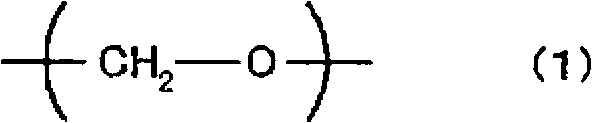
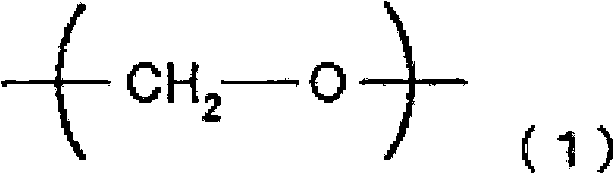
Disclosed is a laminate that exhibits excellent surface hardness, impact resistance, punch-out workability, and resistance to yellowing. Said laminate, which is suitable for use as a display cover or construction material, is characterized in that a polycarbonate resin layer (layer A) and an aromatic polycarbonate resin layer (layer B) are laminated together. The polycarbonate resin layer (layer A) contains a structural unit derived from a dihydroxy compound having, in part of the structure thereof, the site represented by formula (1). (However, the site represented by formula (1) is not part of -CH2-O-H.)
Need to check novelty before this filing date? Find Prior Art

Description

technical field

[0001] The present invention relates to a laminate containing polycarbonate resin, and particularly relates to a combination of surface hardness that cannot be achieved with an aromatic polycarbonate resin sheet and resistance that cannot be achieved with an acrylic resin or a laminate with an acrylic resin disposed on the surface layer. Laminates suitable for display covers due to impact and press workability, and suitable for carports, resin windows and A laminate of building materials such as soundproof walls. Background technique

[0002] As a display cover substrate, aromatic polycarbonate resins are widely used instead of glass sheets. Aromatic polycarbonate resins are excellent in transparency, impact resistance, press workability, heat resistance, low specific gravity, and low cost, but their surface hardness is very low. The light transmittance or reflective properties will be insufficient. In particular, the surface hardness generally tends to be...

Examples

Embodiment

[0177] Hereinafter, the present invention will be described in detail through examples, but the present invention is not limited thereto.

[0178] Resins used in Examples are as follows.

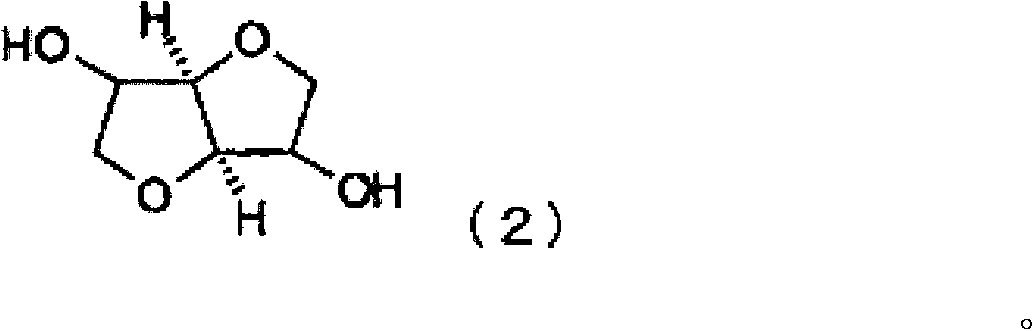
[0179] (A-1 and A-2) As the resin constituting the A layer in the present invention, the mole % of the structural unit derived from isosorbide and the structural unit derived from 1,4-cyclohexanedimethanol is as described in Table 1 polycarbonate resin. (Glass transition temperature of A-1: ​​120°C, reduced viscosity of A-1: ​​0.56dl / g, glass transition temperature of A-2: 101°C, reduced viscosity of A-2: 0.57dl / g)

[0180] (B-1) The resin constituting the layer B of the present invention is "Iupilon S3000" manufactured by Mitsubishi Engineering-Plastics, which is an aromatic polycarbonate resin. (Glass transition temperature=150℃, reduced viscosity 0.49dl / g, viscosity average molecular weight=20,000)

[0181] On the other hand, in the comparative example, the following resins were used i...