
Radar moving target radon-fractional Fourier transform long-time phase-coherent accumulation detection method
A fractional Fourier, coherent accumulation technology, applied in radio wave measurement systems, instruments, etc., can solve the problems of uncomfortable signal processing, signal accumulation efficiency and low signal noise, affecting the accumulation effect, etc., to improve the output signal noise ( noise) ratio, suppressing background clutter and noise, and improving estimation accuracy
- Summary
- Abstract
- Description
- Claims
- Application Information
AI Technical Summary
Problems solved by technology
Method used
Image

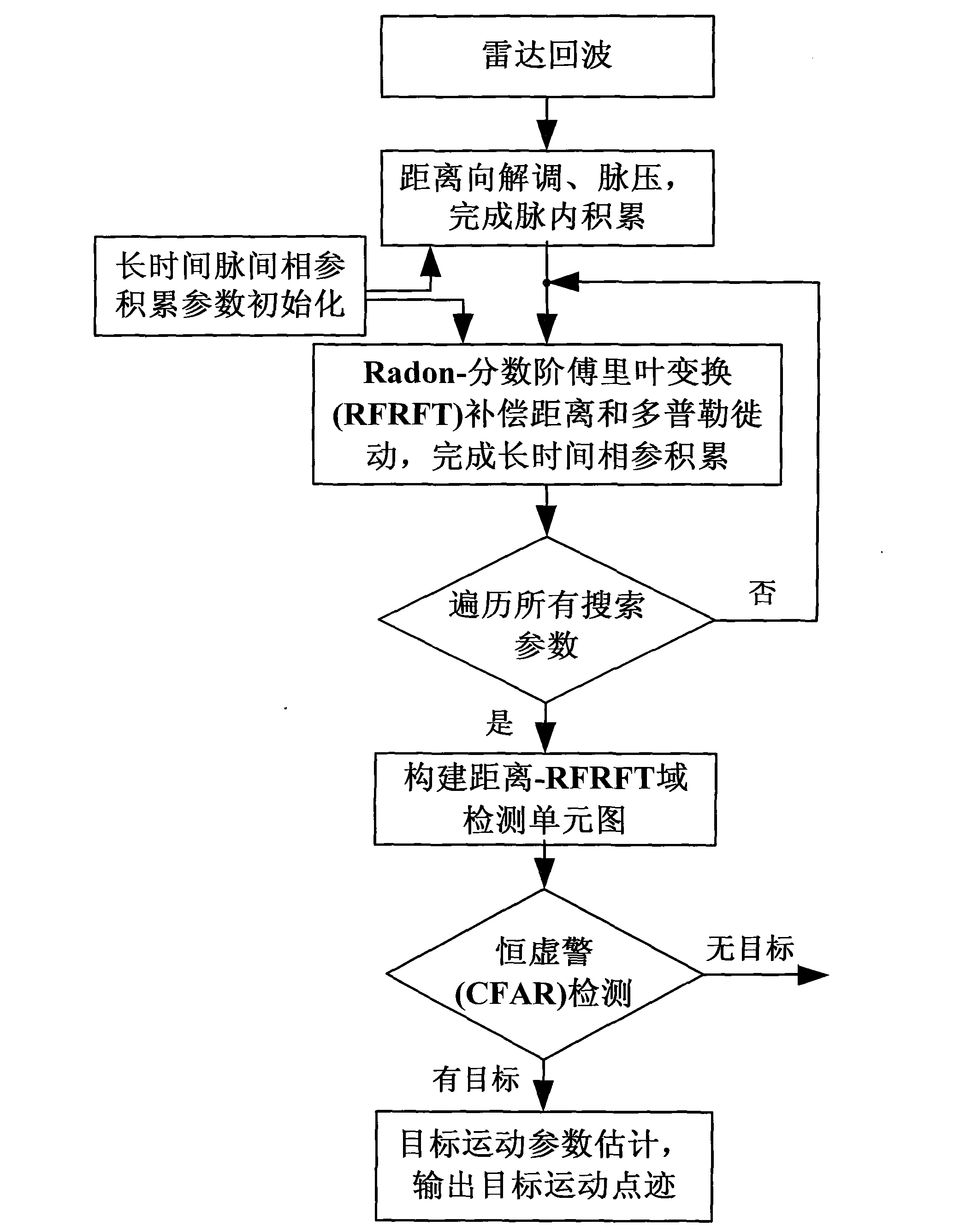

Examples
Embodiment Construction
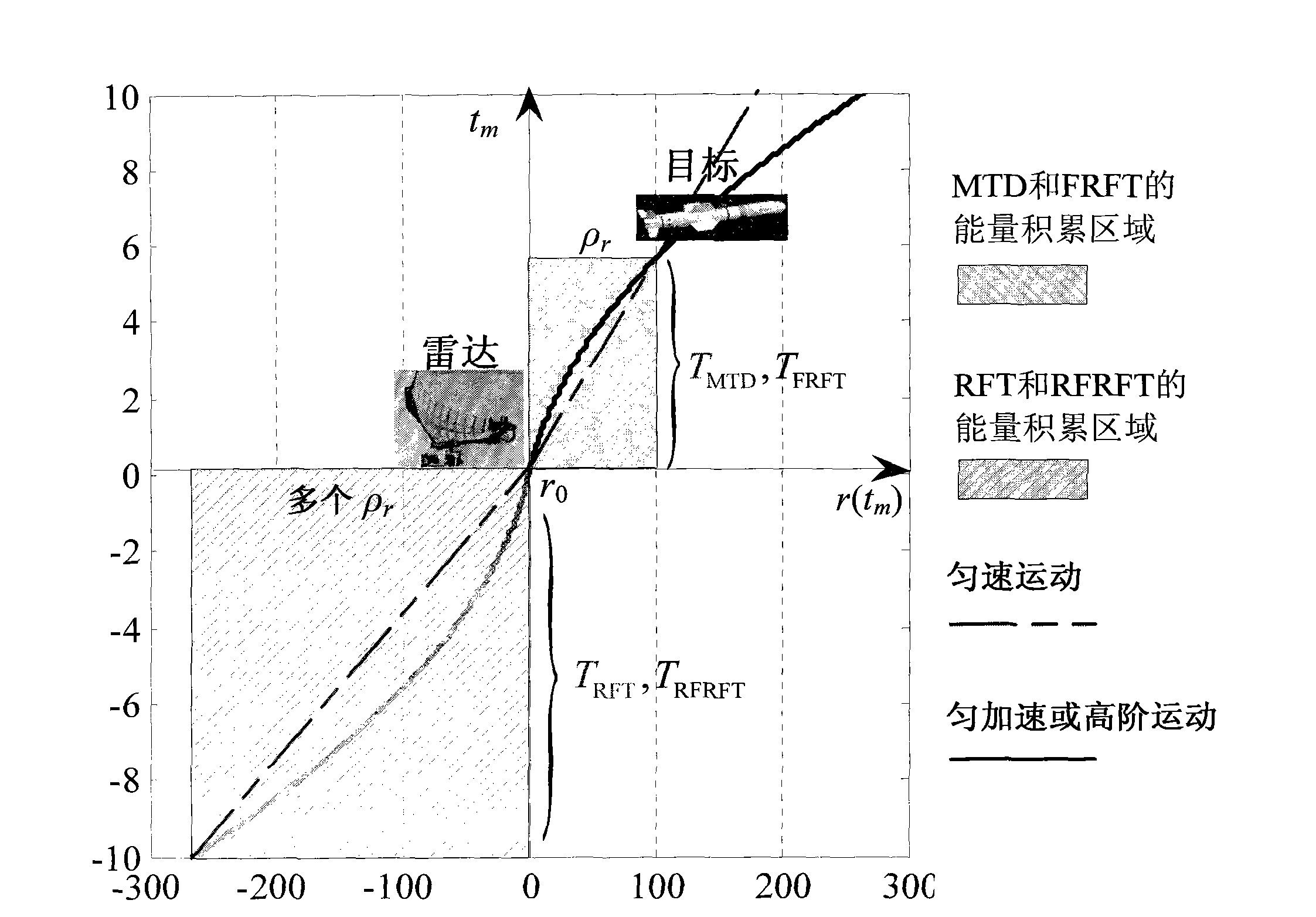
[0027] In order to explain the range migration and Doppler migration effects involved in the present invention, the following derivation is first made.
[0028] In order to obtain high resolution and reduce the effective bandwidth, it is assumed that the coherent system radar transmits a linear frequency modulation (Linear Frequency Modulation, LFM) signal
[0029] s t ( t ) = rect ( t T p ) exp { j 2 π [ f c t + 1 2 kt 2 ] }
[0030] In the formula, rect ( u ) = ...
PUM
 Login to View More
 Abstract
Description
Claims
Application Information
 Login to View More