
Shigella multivalent conjugate vaccine
A technology that combines vaccines and Shigella, applied in antibacterial drugs, bacterial antigen components, antibody medical components, etc., can solve the problems of immune interference between antigens, immune interference, etc.
- Summary
- Abstract
- Description
- Claims
- Application Information
AI Technical Summary
Problems solved by technology
Method used
Image

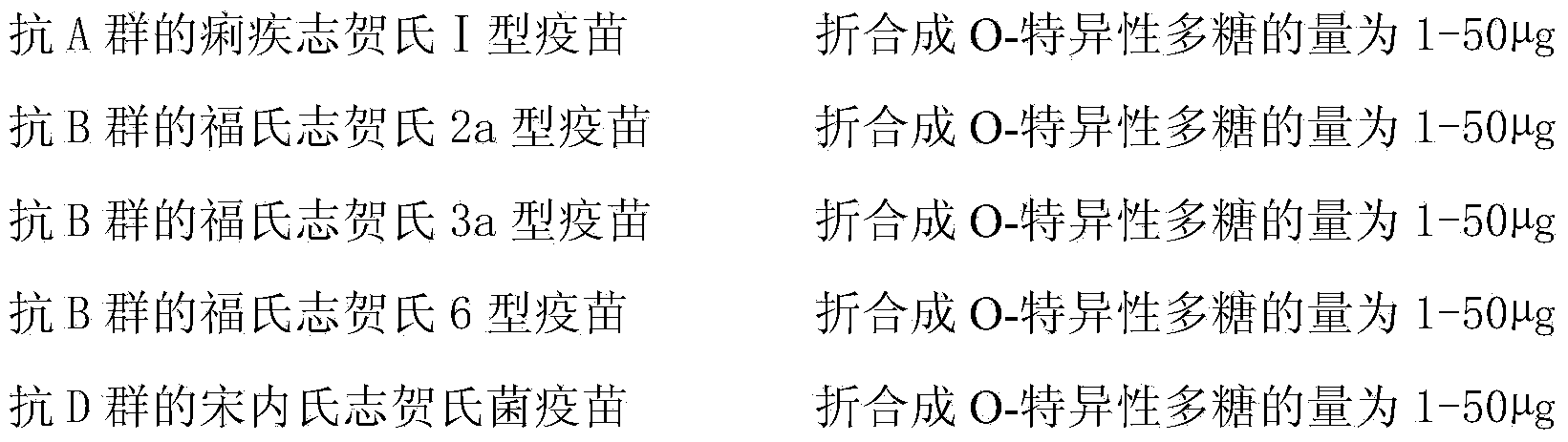
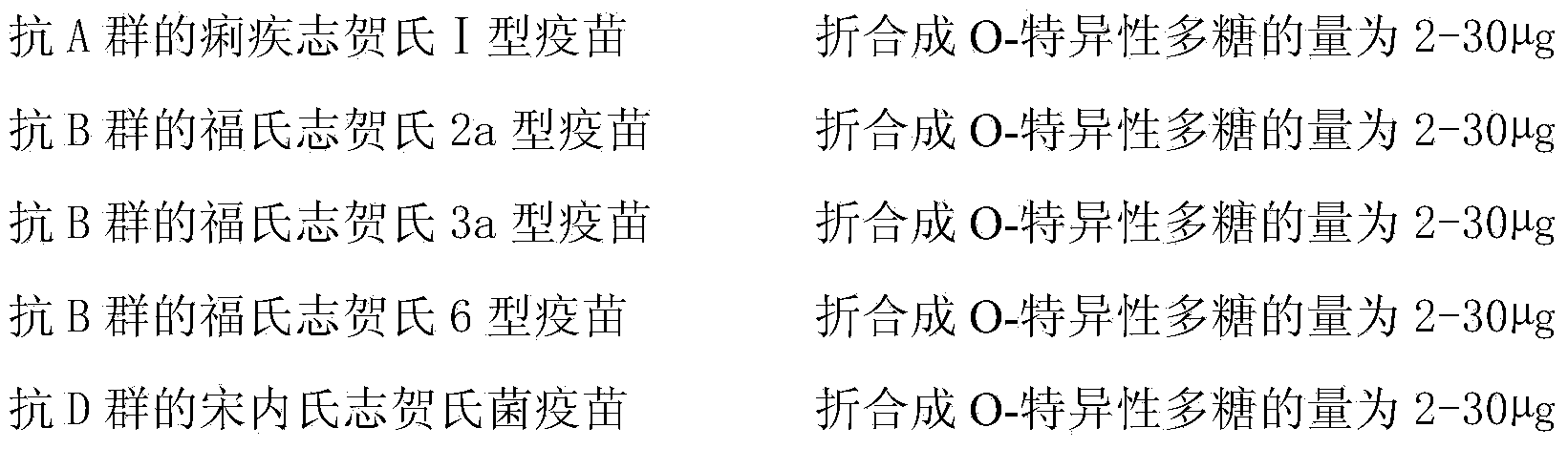
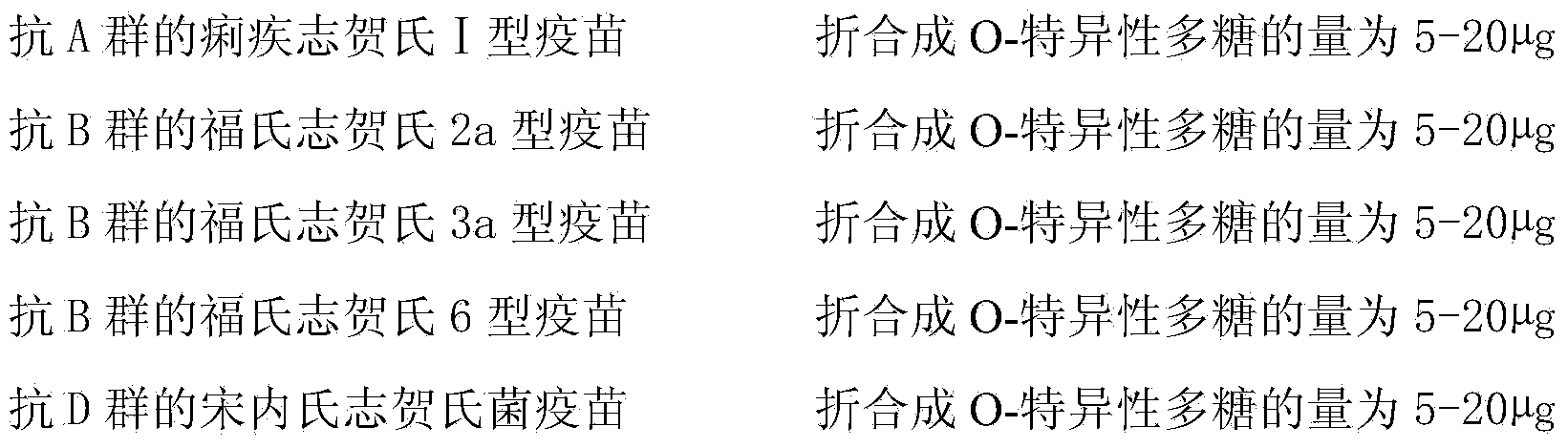
Examples
Embodiment 1
[0049] Fermentation of Shigella
[0050] Open the Shigella species, inoculate in 2 soytone slant, culture at 35-37°C for 12-24 hours, expand in two 500ml liquid medium, culture at 35-37°C on a shaker for 6-12 hours, Expand the seeds in 10-20L liquid medium, culture on a shaker at 35-37°C for 4-8 hours, inoculate in a fermenter containing 300-500L liquid medium, and cultivate at 35-37°C until the growth reaches the end of logarithmic growth or Stable period, during which the pH was maintained at neutral, Gram staining microscopic examination and pure bacteria experiment. The pollution-free culture is sterilized by adding formaldehyde with a final concentration of 0.5-2%, and the bacteria are separated by a continuous flow centrifuge.
Embodiment 2
[0052] lipopolysaccharide extraction
[0053] Use purified water to suspend the bacteria into a 10% bacterial suspension, add 1:1 to 95% phenol aqueous solution, stir thoroughly at 68°C for 1 hour, centrifuge, separate and harvest the water phase, and add water to the phenol phase to the original volume, Extract at 68°C for 30 minutes, centrifuge, and separate the aqueous phase. Combine the two aqueous phases, add ethanol to a concentration of 25%, supplement some salt ions, centrifuge, and remove the precipitate. Add ethanol to the supernatant to a concentration of 75%, and centrifuge to collect the precipitate. After washing with absolute ethanol and acetone, drain.
Embodiment 3
[0055] O-specific polysaccharide extraction
[0056] Dissolve lipopolysaccharide at a concentration of 1% in 1% glacial acetic acid solution, bathe in boiling water for 60-90 minutes, centrifuge at 60,000-80,000 g for 4 hours, collect the supernatant, freeze-dry, dissolve with purified water, and collect the supernatant by centrifugation. The centrifuged supernatant was purified water as the mobile phase, and was subjected to Sephadex G-25 gel chromatography to collect V 0 The nearby polysaccharide fraction, after lyophilization, is the O-specific polysaccharide.
PUM
 Login to View More
 Abstract
Description
Claims
Application Information
 Login to View More