[0002] Due to various problems such as process deviation, design defects, and temperature drift, the characteristics of the temperature sensor often have large deviations when the chip is manufactured, and its temperature index needs to be corrected. At this time, it is necessary to accurately know the external ambient temperature. The current general temperature sensor The accuracy is 0.5 degrees Celsius. For a chip whose temperature calibration target accuracy is 0.5 degrees Celsius, it obviously cannot meet the calibration requirements. It is necessary to design a temperature sensor device with higher accuracy calibration; the current chip temperature calibration platform is developed based on 8-bit MCU. , its
program code cannot be updated online, its own
processing ability is not strong and there is no information prompt, etc., which bring difficulties to temperature calibration, low
operating frequency of MCU and slow instruction execution speed are not conducive to the maintenance and program
upgrade of subsequent developers; based on ATE test The temperature calibration platform of the
machine improves the speed and efficiency of the calibration to a certain extent, but the language versatility of the test
machine and the portability of the program are poor, which brings great inconvenience to the maintenance of subsequent personnel. Expensive, inconvenient to move and carry, which brings some practical problems to users; MCU cannot be programmed online, and the
automation level of the platform is low. Every time the chip needs to be taken out, resulting in increased
workload and low work efficiency; The calibration mode is single, and only one chip can be tested and calibrated; the
USB communication chip purchased externally requires an
external circuit, which will affect the cost and system reliability, and the development of the host
computer software is limited by the API functions provided by the manufacturer. , the level of support for higher versions of windows system is not high, and the
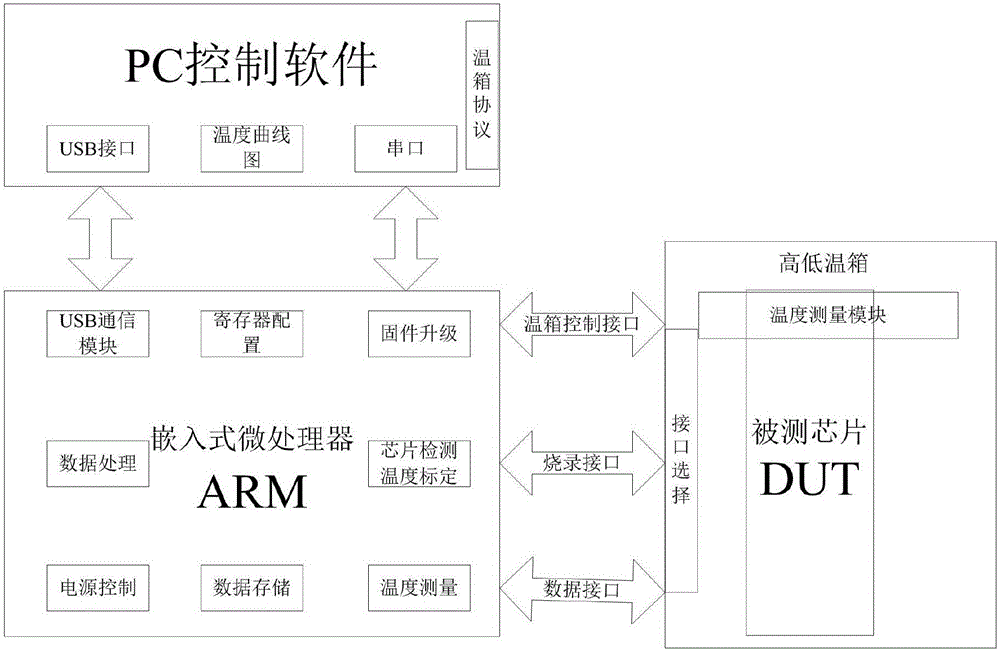
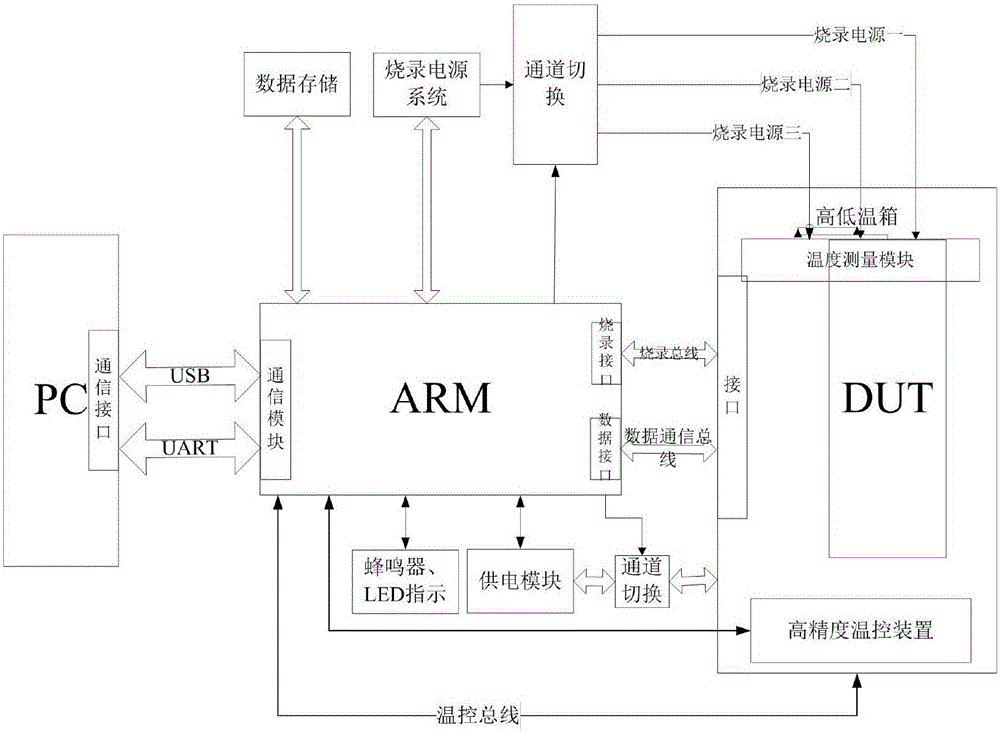
operability and versatility are poor, resulting in high development and maintenance costs; this project is proposed under such a background, aiming to develop a 32-bit ARM embedded
Microprocessor development, it can perform high-precision temperature calibration on multiple chips, and can choose the temperature calibration mode of test mode and
mass production mode at the same time. cycle, improve staff efficiency
[0003] The current test and calibration device based on the 8-bit MCU architecture temperature calibration device has a small internal program and data storage space, and the
peripheral interface is not rich, so it needs to purchase
USB modules and chips. The
operating frequency is not high, resulting in simple
software hierarchical design and
data processing. The speed is slow, the program modularization and
reusability design is not complete, the
coupling between modules is too strong, it is impossible to quickly develop a new temperature test and calibration system, and a lot of repetitive work increases the cost of manpower,
material resources and time resources; The
test equipment based on the test
machine is expensive and inconvenient to carry. The temperature calibration on the
client side is limited. The program development of the test machine is complicated and the support for general C language and
assembly language is not enough, resulting in difficulty in development and subsequent maintenance. It is more complicated; the traditional temperature calibration equipment is only used in the test mode, and the use mode or scene is single. For customers with a large amount of development who need a large number of temperature calibrations, they will be restricted by actual conditions; the API function
library used by the
control software, Restricted by USB chip manufacturers; the complexity of hardware system
upgrade maintenance and repair is high, the product development model is affected by traditional development ideas, and the cost of
external circuit hardware systems is high
[0004] Therefore, controlling the enabling or canceling of the dead battery function is the key to normal communication with most current devices, and there is currently no related technology to solve the problem



 Login to View More
  Login to View More