[0003] The traditional production process of post-tensioned prestressed concrete track slabs is to pour and vibrate first, and then stretch after reaching the predetermined strength. Since the production is carried out with a single mold, there are many defects in the process of pouring and vibrating: 1. It is a single mold for production, which must be evenly installed in the workshop at a certain distance. It occupies a large area, and the fabric distribution process cannot be carried out with the help of the ground. It can only use the mode of hoisting the hopper by the upper truss
truck. Due to the large area and large number of molds, This leads to frequent operation of the truss
truck, long transportation time, troublesome transportation, etc. At the same time, once a link fails, it cannot continue, causing the concrete temperature,
humidity and
slump in the mixing
station or hopper to fail to meet the standard or even solidify, resulting in greater loss
The second is that it is troublesome to fabricate a single mold, and the cross-operation in the whole workshop is frequent, resulting in a long fabricating time, the entire
production cycle is greatly lengthened, and the work efficiency is extremely low; at the same time, it consumes a lot of manpower and
material resourcesThe third is that in the process of using the truss
truck to lift the cloth, it is difficult to ensure the uniformity of the cloth. It needs to be repeated several times, and it needs to be manually leveled with tools later. The
process operation is troublesome, time-consuming and labor-intensive, and the cost is greatly increased.
Fourth, vibrating concrete is achieved by directly vibrating the mold installed on the mold bottom plate or fixed support. Long-term use has a great
impact on the
size change of the mold, which needs to be measured and adjusted regularly; even the vibration greatly shortens the service life of the mold
Fifth, each mold needs 6 to 8 motors to vibrate. Since the mold is directly installed on the concrete floor, the wires of the motors are staggered and intertwined, forming a great potential safety
hazardSixth, the vibrating motor directly installed on the mold leaks into the indoor space, causing a lot of
noise pollution during the working process
Seventh, the entire pouring and vibrating process requires a lot of manpower and
material resources, basically relying entirely on manual operations, the degree of intelligence is not high, and the quality is difficult to guarantee, and there are great human interference factors
The pouring and vibrating process also has certain defects: First, although the distribution
machine can walk along the preset track on the ground, 8 molds form a group, and the amount of concrete used at one time is large, so it still needs the distribution
machine to pick up materials repeatedly, or The external hopper is transported and fed repeatedly by means of girder trucks
The second is that the distribution
machine covers a large area, resulting in a large equipment volume, a large
footprint, and high cost. It is difficult to install and place during use.
Third, concrete vibration is still achieved by directly vibrating the mold installed on the mold bottom plate or fixed support. Long-term use has a great
impact on the
size change of the mold, which needs to be measured and adjusted regularly; even the vibration greatly shortens the service life of the mold
Fourth, the vibrating motor directly installed on the mold leaks into the indoor space, causing a lot of
noise pollution during the working process
Fifth, the pouring and vibrating process is actually performed by two different equipment in sequence according to the process, which cannot be integrated into an operation, and the degree of intelligence is not high, and the
traceability of video and data cannot be realized
[0007] The applicant searched patents related to the pouring and vibration process of the track slab, but did not find a system that can combine pouring and vibration into one set, all of which are independent single equipment, and there are still defects in the environment of the automated
production line based on the application : First, the previous distributing machine and vibrating equipment were independent equipment, which could not realize the uniformity and continuity of the process. Both of them needed to be completed by manual operation, which was inefficient and costly
Second, it is impossible to realize the intelligent and streamlined
operation mode of this process
Third, the rationalization, high efficiency, and construction stability of the vibration of the cloth still need to be further improved.



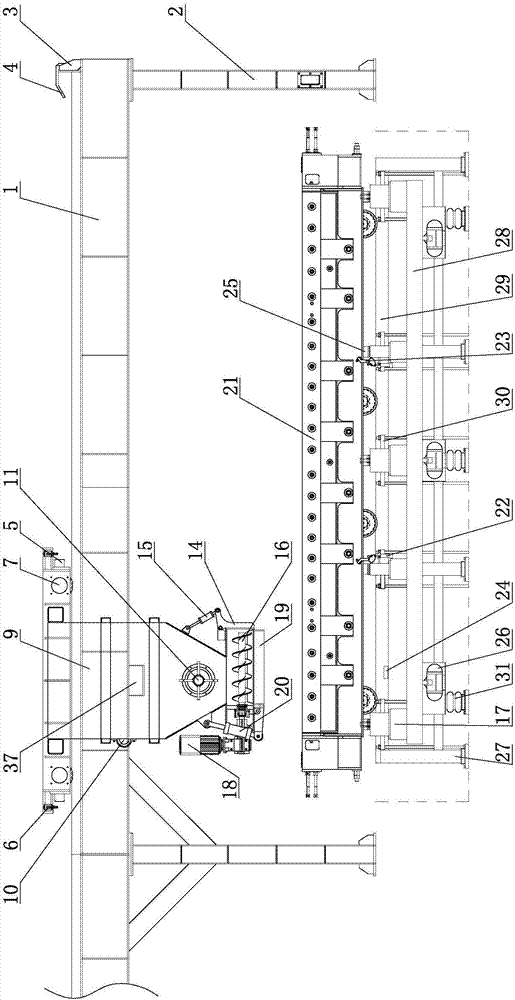
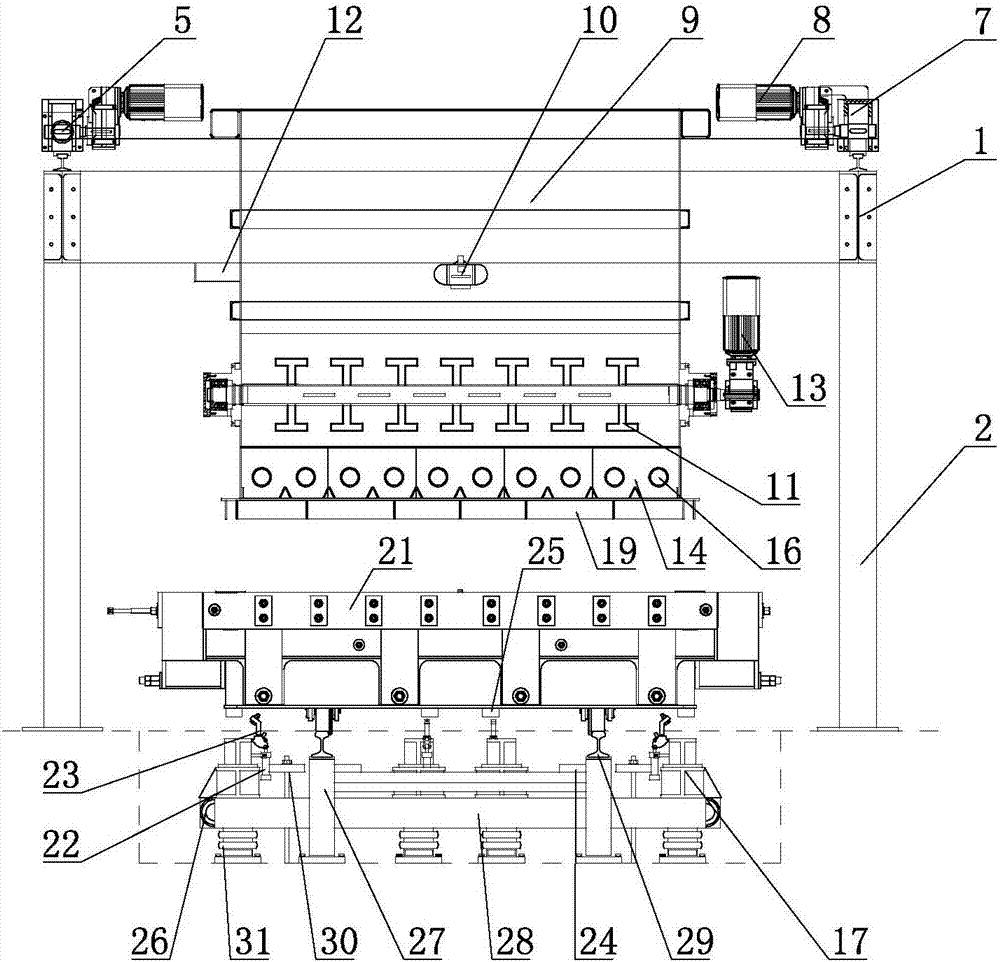
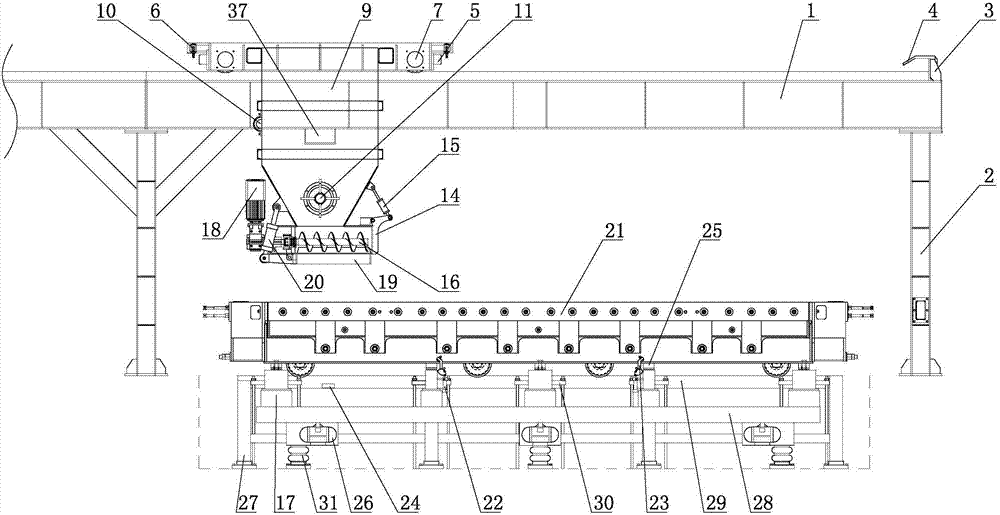
 Login to View More
  Login to View More