
Carbon nanodot with fluorescence, photoacoustic and photothermal effects and synthesis method thereof
A technology of carbon nano-dots and photothermal effect, applied in the field of material chemistry, can solve the problems of single fluorescence imaging of carbon nano-dots, and achieve the effects of integrated diagnosis and treatment, good biocompatibility, and good water dispersibility
- Summary
- Abstract
- Description
- Claims
- Application Information
AI Technical Summary
Problems solved by technology
Method used
Image

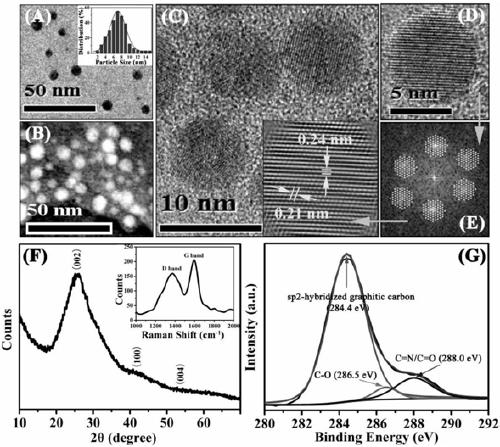
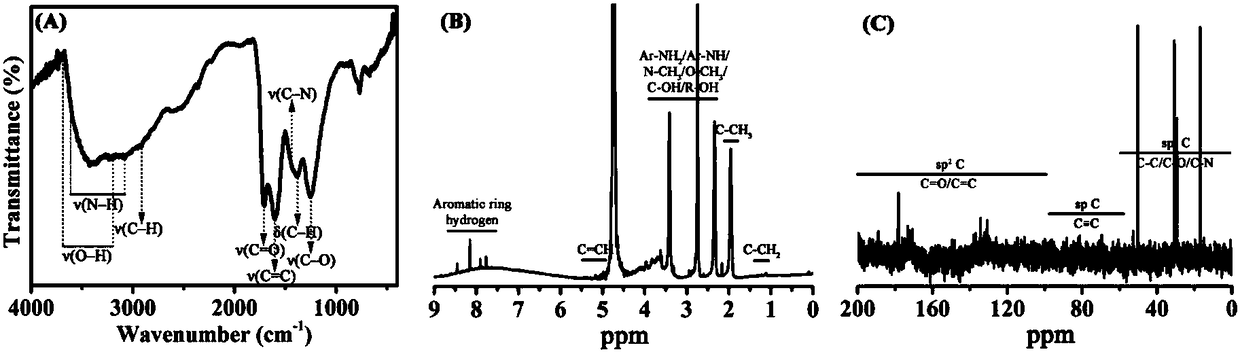
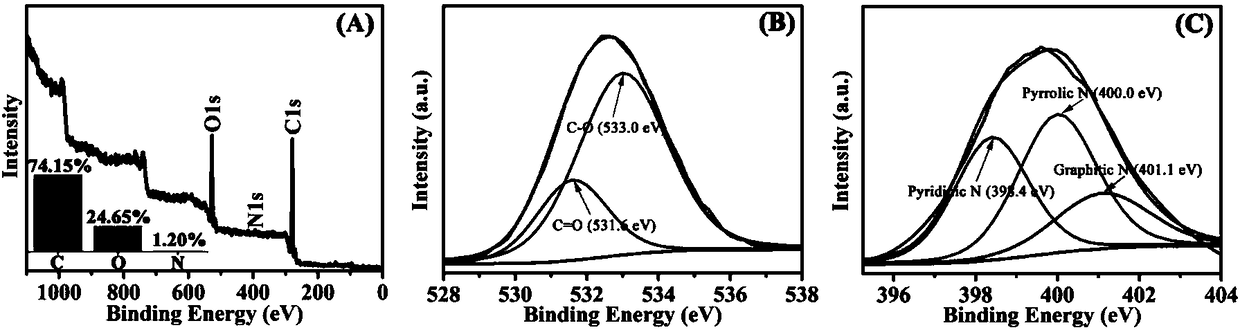
Examples
Embodiment 1
[0038] The mixed solution of F-127, phenol, formalin and NaOH was reacted at 50°C for 17h, the reaction liquid was diluted, and heated in the reaction kettle (130°C) for 24h, the yellow precipitate was collected and washed with water to dry; Mix and stir the yellow powder with the catalyst, collect the dry powder, put it into a tube furnace, react at 350°C for 3 hours, ultrasonically disperse the obtained brown powder solution, centrifuge at high speed and dialyze to remove residual impurities, and freeze-dry to obtain a fluorescent, Carbon nanodots for photoacoustic and photothermal effects.
Embodiment 2
[0040] The mixed solution of F-127, phenol, formalin and NaOH was reacted at 66°C for 17h, the reaction liquid was diluted, and heated in the reaction kettle (130°C) for 24h, the yellow precipitate was collected and washed and dried; Mix and stir the yellow powder with the catalyst, collect the dry powder, put it into a tube furnace, react at 350°C for 3 hours, ultrasonically disperse the obtained brown powder solution, centrifuge at high speed and dialyze to remove residual impurities, and freeze-dry to obtain a fluorescent, Carbon nanodots for photoacoustic and photothermal effects.
Embodiment 3
[0042] The mixed solution of F-127, phenol, formalin and NaOH was reacted at 80°C for 17h, the reaction solution was diluted, and heated in the reaction kettle (130°C) for 24h, the yellow precipitate was collected and washed with water to dry; Mix and stir the yellow powder with the catalyst, collect the dry powder, put it into a tube furnace, react at 350°C for 3 hours, ultrasonically disperse the obtained brown powder solution, centrifuge at high speed and dialyze to remove residual impurities, and freeze-dry to obtain a fluorescent, Carbon nanodots for photoacoustic and photothermal effects.
PUM
| Property | Measurement | Unit |
|---|---|---|
| Particle size | aaaaa | aaaaa |
Abstract
Description
Claims
Application Information
 Login to View More