
3D NAND memory and forming method thereof
A 3D NAND and memory technology, which is applied in the direction of semiconductor devices, electrical solid state devices, electrical components, etc., can solve problems affecting memory performance, and the characteristic size of gate spacers is easy to fluctuate, so as to ensure stability and improve performance.
- Summary
- Abstract
- Description
- Claims
- Application Information
AI Technical Summary
Problems solved by technology
Method used
Image

Examples
no. 1 example 3D
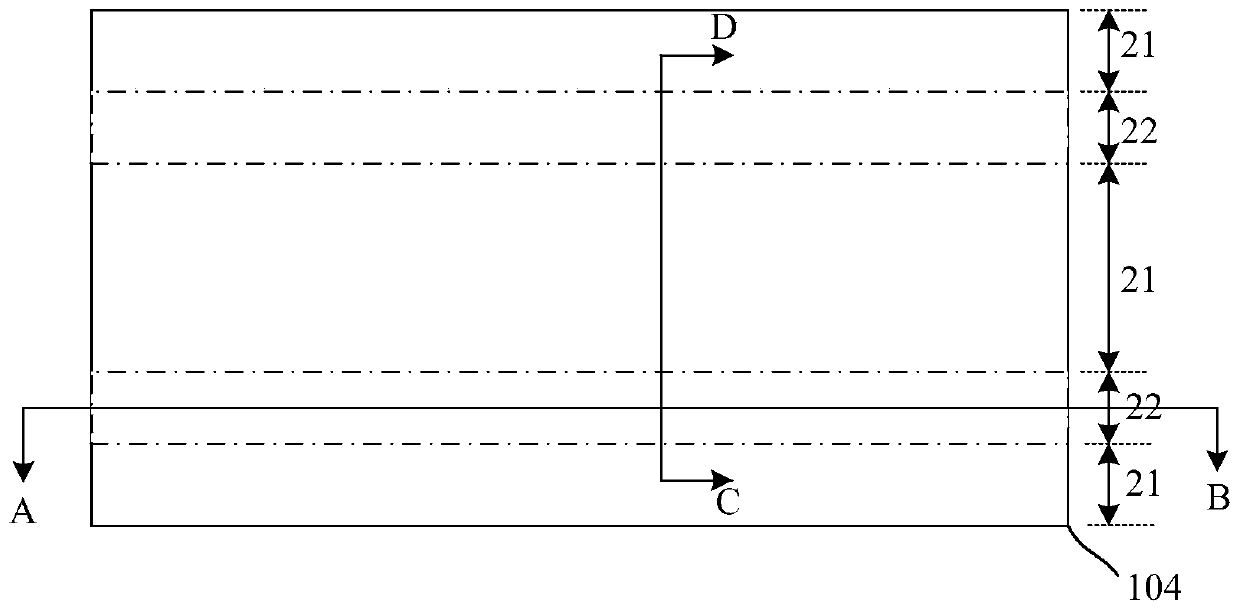
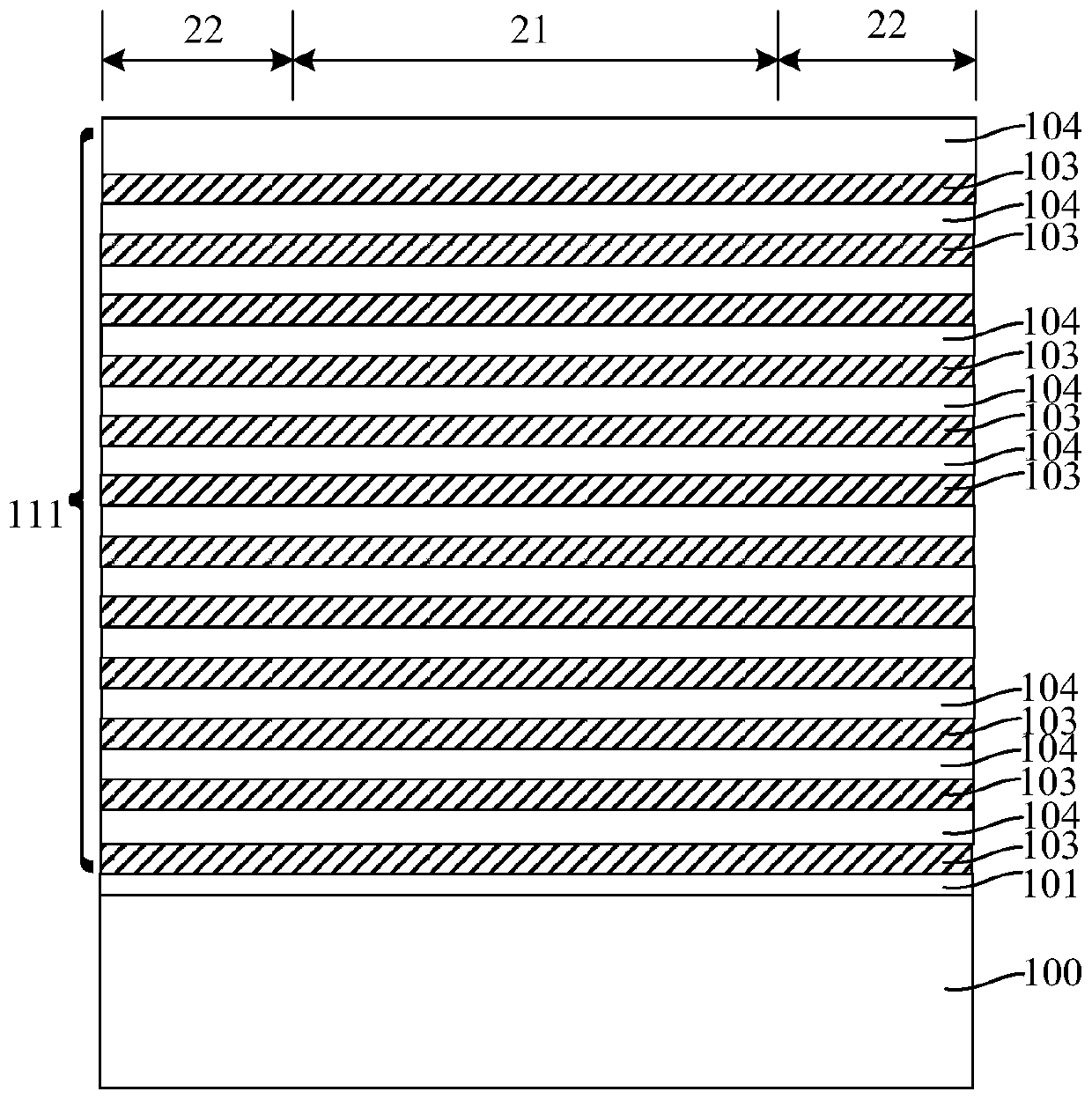
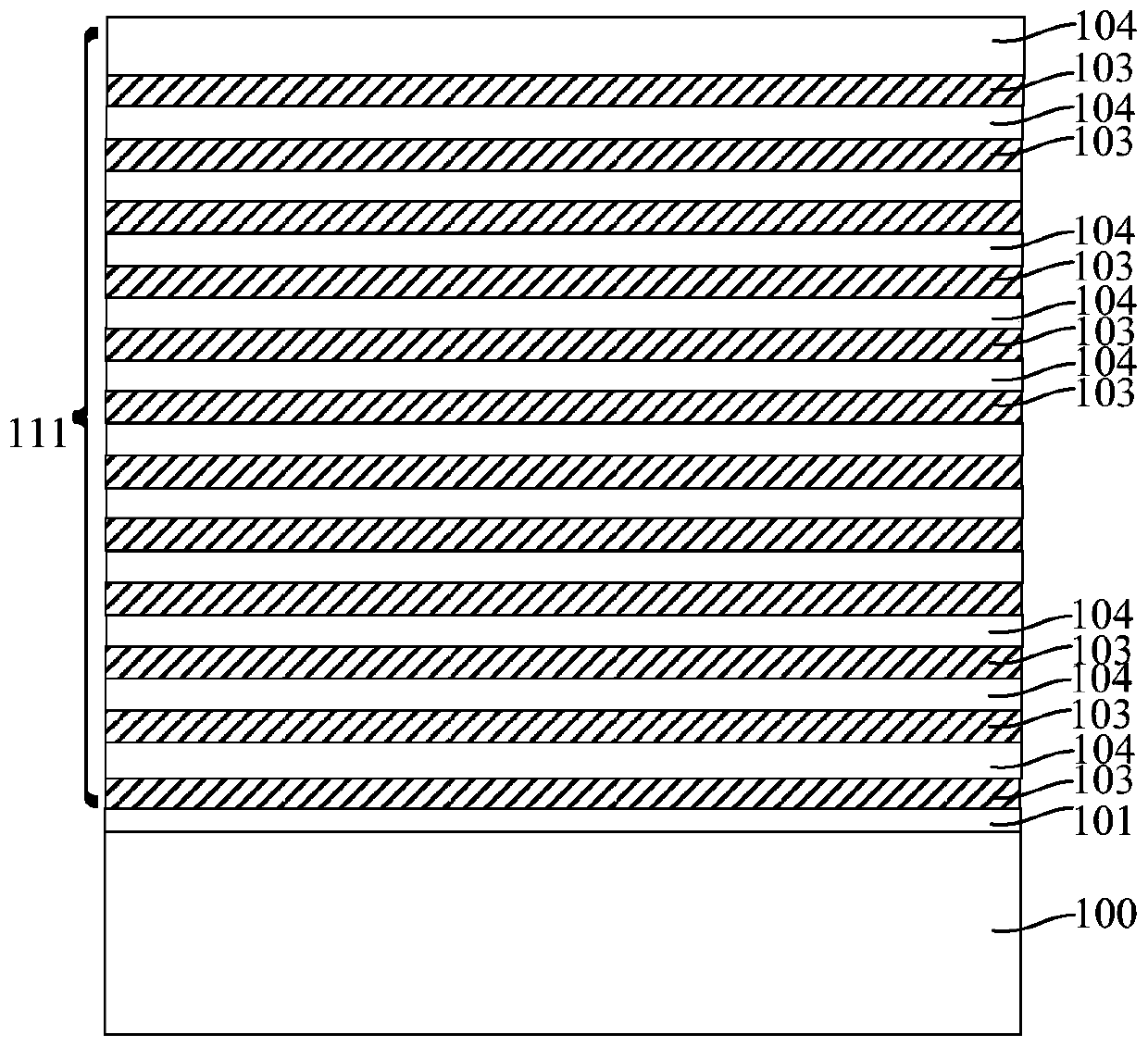
[0048] Figure 1-Figure 21 It is a structural schematic diagram of the 3D NAND formation process according to the first embodiment of the present invention.
[0049] refer to Figure 1-Figure 3 , figure 2 for figure 1 A schematic cross-sectional view along the cutting line AB, image 3 for figure 1 A schematic cross-sectional structure along the cutting line CD, providing a semiconductor substrate 100, on which a stacked structure 111 in which sacrificial layers 103 and isolation layers 104 are alternately stacked is formed, and the stacked structure 111 includes several parallel gates The spacer region 22 , and the through hole region 21 is formed between adjacent gate spacer regions 22 .
[0050] The material of the semiconductor substrate 100 can be single crystal silicon (Si), single crystal germanium (Ge), or silicon germanium (GeSi), silicon carbide (SiC); it can also be silicon on insulator (SOI), germanium on insulator (GOI); or other materials, such as III-V g...
PUM
 Login to View More
 Abstract
Description
Claims
Application Information
 Login to View More