
Preparation method and application of core-shell P-CoFe2O4(at)GCN photocatalyst
A p-cofe2o4, photocatalyst technology, applied in physical/chemical process catalysts, chemical instruments and methods, water/sludge/sewage treatment, etc. Harm, low photocatalytic efficiency and other problems, to achieve the effect of improving photocatalytic performance, modifying photocatalytic activity, and simple preparation process
Patent Information
- Authority / Receiving Office
- CN · China
- Current Assignee / Owner
- Publication Date
- 2019-08-20
- Estimated Expiration
- Not applicable · inactive patent
Smart Images
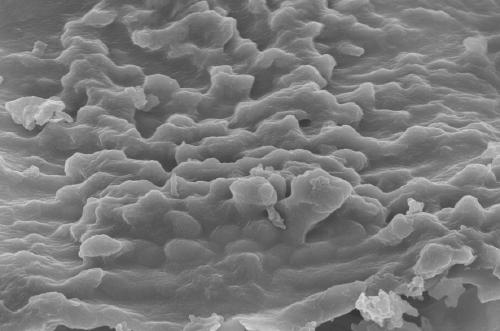
Figure 1
Abstract
Description
technical field
[0001] The invention belongs to the technical field of composite materials, and relates to a graphite carbon nitride photocatalyst, in particular to a core-shell type P-CoFe 2 o 4 The preparation method and application of @GCN photocatalyst. Background technique
[0002] Pharmaceuticals and personal care products (PPCPs) are an emerging pollutant. With the advancement of science and technology, this type of synthetic chemical substance is widely used all over the world. Due to improper handling, this kind of substance is continuously introduced into the In the ecological environment, thus entering the water body, researchers have detected trace amounts of antibiotic pollutants from natural water bodies, which will cause serious harm to human health. Among them, tetracycline antibiotics are one of the PPCPs. Due to their low price, they are widely used in livestock and poultry farming, and their usage accounts for more than half of the total antibiotics. Te...
Examples
Embodiment 1
[0028] A core-shell type P-CoFe 2 o 4 The preparation method of @GCN photocatalyst comprises the following steps:
[0029] a) Fully mix cobalt nitrate and ferric nitrate in equal volume for 0.5h according to the molar concentration ratio of 1:1, the reaction temperature is 35°C, and the stirring rate is 500r·min -1 ;
[0030] b) Slowly add 2mol / L potassium hydroxide solution dropwise to the fully mixed solution until complete precipitation, and react at 80°C for 3h, then rinse with absolute ethanol and distilled water several times, and dry at 60°C for 16h, Strong magnetic nanoparticles CoFe can be prepared 2 o 4 ;
[0031] c) Weigh the prepared CoFe 2 o 4 Add to 80 ml of distilled water, add thiourea and melamine polyphosphate to the mixed solution, fully stir for 5 hours, the stirring rate is 500r·min -1 , CoFe 2 o 4 , The mass ratio of thiourea and melamine polyphosphate is 0.05:1:0.2;
[0032] d) Dry the mixed solution at 80°C for 12 hours after solid-liquid sep...
Embodiment 2
[0037] A core-shell type P-CoFe 2 o 4 The preparation method of @GCN photocatalyst comprises the following steps:
[0038] a) Fully mix cobalt sulfate and ferric chloride in equal volumes at a molar concentration ratio of 1:2 for 0.5h, the reaction temperature is 45°C, and the stirring rate is 600r·min -1 ;
[0039] b) Slowly add 2mol / L ammonia solution dropwise to the fully mixed solution until complete precipitation, and react at 90°C for 4h, then rinse with absolute ethanol and distilled water for several times, and dry at 70°C for 18h. Preparation of strong magnetic nanoparticles CoFe 2 o 4 ;
[0040] c) Weigh the prepared CoFe 2 o 4 Add it to 80 ml of distilled water, add urea and phytic acid to the mixed solution, stir thoroughly for 80 hours, and the stirring rate is 700r·min -1 , CoFe 2 o 4 , The mass ratio of urea and phytic acid is 0.08:1:0.5;
[0041] d) Dry the mixed solution at 90°C for 16 hours after solid-liquid separation, and grind it into powder;
...
Embodiment 3
[0045] A core-shell type P-CoFe 2 o 4 The preparation method of @GCN photocatalyst comprises the following steps:
[0046] a) Fully mix cobalt chloride and ferric chloride in equal volumes according to the molar concentration ratio of 1:2 for 1.0h, the reaction temperature is 55°C, and the stirring rate is 800r·min -1 ;
[0047] b) Slowly add 2mol / L sodium hydroxide solution dropwise to the fully mixed solution until complete precipitation, and react at 90°C for 5h, then rinse with absolute ethanol and distilled water several times, and dry at 80°C for 24h, Strong magnetic nanoparticles CoFe can be prepared 2 o 4 ;
[0048] c) Weigh the prepared CoFe 2 o 4 Add to 80 ml of distilled water, add melamine and melamine polyphosphate to the mixed solution, fully stir for 10h, the stirring speed is 1000r·min -1 , CoFe 2 o 4 , The mass ratio of melamine and melamine polyphosphate is 0.1:1:1;
[0049] d) The mixed solution in step c) is subjected to solid-liquid separation, ...