Unlock instant, AI-driven research and patent intelligence for your innovation.
Organic silicon coupling agent and preparation method thereof
What is Al technical title?
Al technical title is built by PatSnap Al team. It summarizes the technical point description of the patent document.
An organosilicon coupling agent and catalyst technology, applied in organic chemistry, chemical instruments and methods, organic compound/hydride/coordination complex catalysts, etc. Addition reaction is limited and other problems, to achieve the effect of large steric hindrance, avoid agglomeration, improve selectivity and activity
Pending Publication Date: 2019-09-13
DEEPCHEM TECH (BEIJING) CO LTD
View PDF11 Cites 4 Cited by
Summary
Abstract
Description
Claims
Application Information
AI Technical Summary
This helps you quickly interpret patents by identifying the three key elements:
Problems solved by technology
Method used
Benefits of technology
Problems solved by technology
However, the applicable hydrosilylation reaction of Karstedt's catalyst is still very limited, and the types of substrates that can be catalyzed by Karstedt's catalyst are limited, so the types of coupling agents that are catalyzed by it are also less
In addition, many common olefins common in industry, such as styrene, acrylic acid, and acrylamide, have low yields when using Karstedt’s catalyst to prepare coupling agents, and the reaction products are complex, and there is no way to purify them.
Method used
the structure of the environmentally friendly knitted fabric provided by the present invention; figure 2 Flow chart of the yarn wrapping machine for environmentally friendly knitted fabrics and storage devices; image 3 Is the parameter map of the yarn covering machine
View more
Image
Smart Image Click on the blue labels to locate them in the text.
Viewing Examples
Smart Image
Click on the blue label to locate the original text in one second.
Reading with bidirectional positioning of images and text.
Smart Image
Examples
Experimental program
Comparison scheme
Effect test
Embodiment 1
[0046] Embodiment 1: the synthesis of platinum-containing catalyst COP1-Pt
[0047] By adding COP1-T 7mg (6*10 -4 mmol) of anhydroustetrahydrofuran solution containing 0.93mg (2.4*10 -3 mmol) 1 ml of anhydroustetrahydrofuran solution of sodium tetrachloroplatinate (II), stirred for 12 hours, then added 325 mg of dimethylphenylsilane for reduction, and stirred at room temperature for 12 hours to prepare a catalyst solution.
Embodiment 2
[0048] Embodiment 2: Preparation of organosilicon coupling agent
[0049] Take 10mmol of triethoxysilane, add 10mmol of styrene to it, stir evenly, add 0.17ml of the catalyst solution in Example 1, react for 10 hours under the protection of argon in a siliconeoil bath at 50°C, and cool to obtain the product, which is subjected to GC -MS detection, isolated yield 90%, 1H NMR (300MHz, CDCl3) δ0.97 (t, 2H), 1.23 (t, 9H), 2.74 (t, 2H), 3.84 (q, 6H), 7.30-7.14 (m,5H).
[0051] Embodiment 3: Preparation of organosilicon coupling agent
[0052] Take 1mmol of triethoxysilane, add 1mmol of 2-vinylpyridine to it, stir evenly, add 1.5ml of the catalyst solution in Example 1 (concentrated to 0.15ml), and react for 10 hours, cooled to obtain the product, the product was detected by GC-MS, and the isolated yield was 96%. 1H NMR (300MHz, CDCl3) δ1.14(t, 2H), 1.22(t, 9H), 2.90(t, 2H), 3.82(q, 6H), 7.09(t, 1H), 7.19(d, 1H) , 7.58(t,1H), 8.51(d,1H).
the structure of the environmentally friendly knitted fabric provided by the present invention; figure 2 Flow chart of the yarn wrapping machine for environmentally friendly knitted fabrics and storage devices; image 3 Is the parameter map of the yarn covering machine
Login to View More
PUM
Login to View More
Abstract
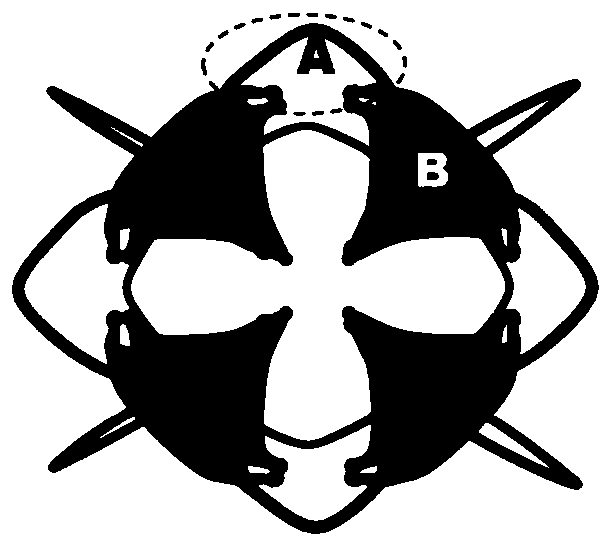
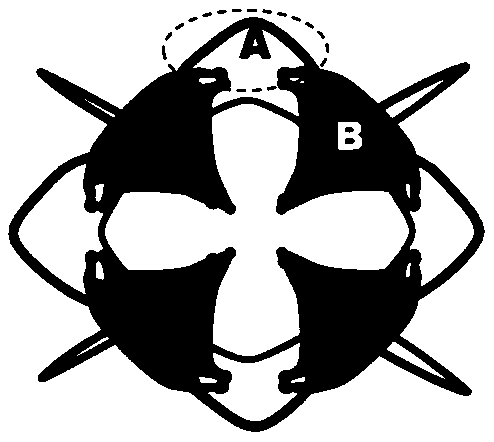
The invention provides an organic siliconcoupling agent and a preparation method thereof. The method is characterized in that a silane group-containing molecule and an alkylene group-containing molecule undergo a hydrosilylation reaction under the catalysis of a highly selectivehydrosilylation catalyst to generate the organic siliconcoupling agent. The highly selectivehydrosilylation catalystutilizes alkene and platinum atoms to form a weak coordination bonds in order to facilitate the activation of the platinum atoms, an organic cage ligand avoids the agglomeration of the platinum atoms,and a spatial three-dimensional structure formed by the complex catalyst can produce a very large steric hindrance, so the selectivity of the hydrosilylation product is greatly improved. The preparation method of the invention is used to prepare the novel coupling agent by a hydrosilylation reaction which cannot be catalyzed by a Karstedt's catalyst.
Description
technical field [0001] The invention relates to the technical field of coupling agent preparation, in particular to an organosilicon coupling agent and a preparation method thereof. Background technique [0002] Silicone coupling agents can have a significant impact on the performance of composite materials in very small amounts. They can simultaneously interact with inorganic materials, such as glass, cement and metal, and organic materials to improve the interface between the two. The acting force promotes the adhesion between them, thereby improving the mechanical properties, insulation and anti-aging performance of the composite material. Organosilicon coupling agents are mainly prepared by the platinum-catalyzed hydrosilylation of trialkoxysilane or trichlorosilane to olefins. Since the reaction was discovered in 1947, a large number of organosilicon families [0003] [0004] Researchers are committed to developing catalysts with high activity, high selectivity and...
Claims
the structure of the environmentally friendly knitted fabric provided by the present invention; figure 2 Flow chart of the yarn wrapping machine for environmentally friendly knitted fabrics and storage devices; image 3 Is the parameter map of the yarn covering machine
Login to View More
Application Information
Patent Timeline
Application Date:The date an application was filed.
Publication Date:The date a patent or application was officially published.
First Publication Date:The earliest publication date of a patent with the same application number.
Issue Date:Publication date of the patent grant document.
PCT Entry Date:The Entry date of PCT National Phase.
Estimated Expiry Date:The statutory expiry date of a patent right according to the Patent Law, and it is the longest term of protection that the patent right can achieve without the termination of the patent right due to other reasons(Term extension factor has been taken into account ).
Invalid Date:Actual expiry date is based on effective date or publication date of legal transaction data of invalid patent.

 Login to View More
  Login to View More