Supercharge Your Innovation With Domain-Expert AI Agents!

Superabsorbent polymer and method for its preparation

A superabsorbent, polymer technology, applied in the field of superabsorbent polymers, can solve the problems of superabsorbent polymers that have not yet been developed, small surface area superabsorbent resins, difficult to mass-produce, etc., and achieve excellent initial absorption. Volume, dry and soft touch, fast absorption

Active Publication Date: 2022-06-28
LG CHEM LTD
View PDF7 Cites 0 Cited by
  • Summary
  • Abstract
  • Description
  • Claims
  • Application Information

AI Technical Summary

Problems solved by technology

However, since suspension polymerization uses an organic solvent, there are problems that it is difficult to mass-produce and the production cost increases due to an additional step of recovering the organic solvent
Since solution polymerization does not use organic solvents, superabsorbent polymers can be produced economically in large quantities, but there is a problem that by pulverizing the polymers, amorphous particles are obtained, and thus superabsorbent polymers with relatively small surface areas are obtained. sex resin
However, superabsorbent polymers exhibiting sufficient initial absorbent capacity have not yet been developed

Method used

the structure of the environmentally friendly knitted fabric provided by the present invention; figure 2 Flow chart of the yarn wrapping machine for environmentally friendly knitted fabrics and storage devices; image 3 Is the parameter map of the yarn covering machine
View more

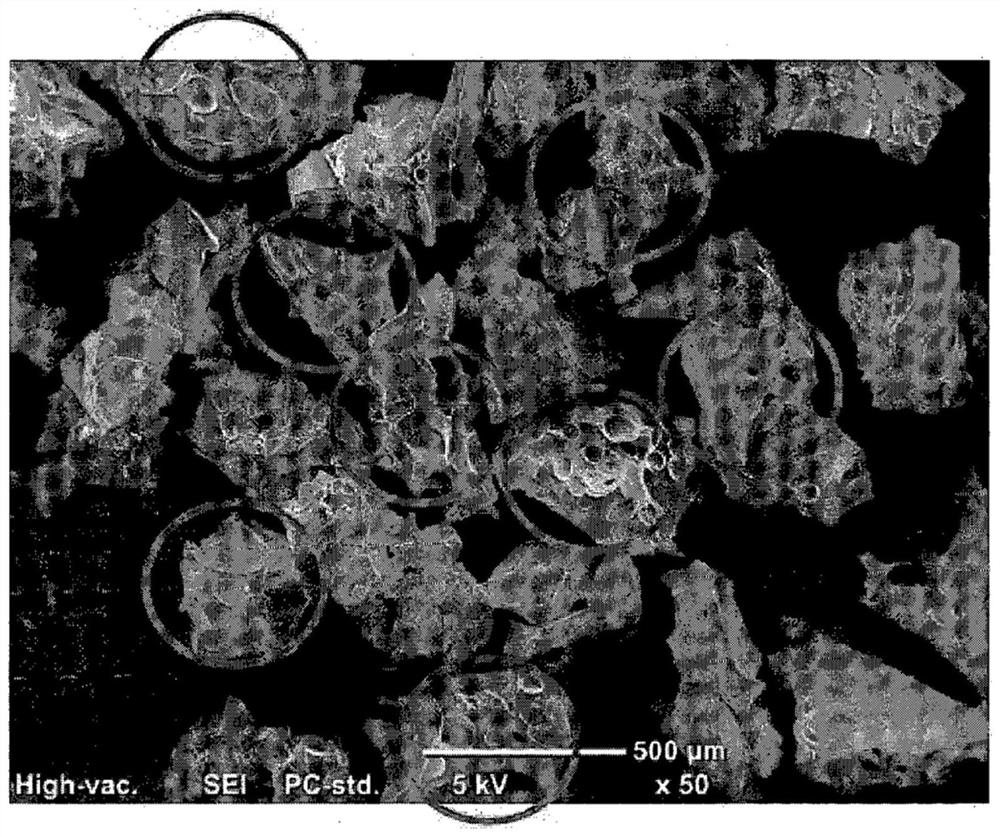
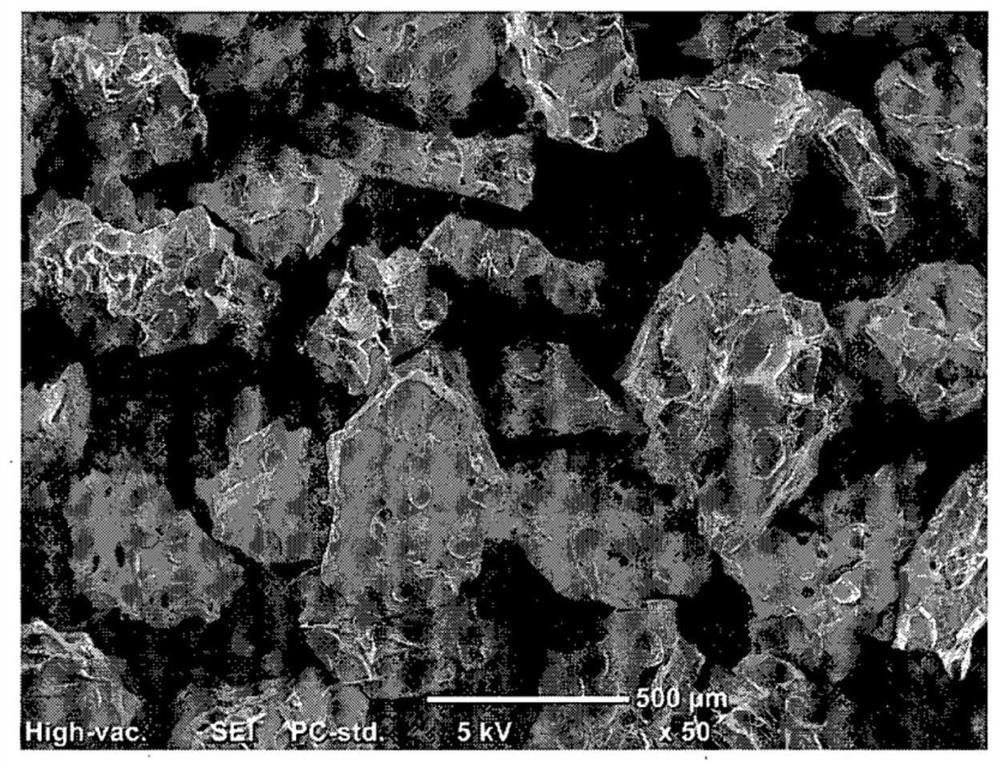
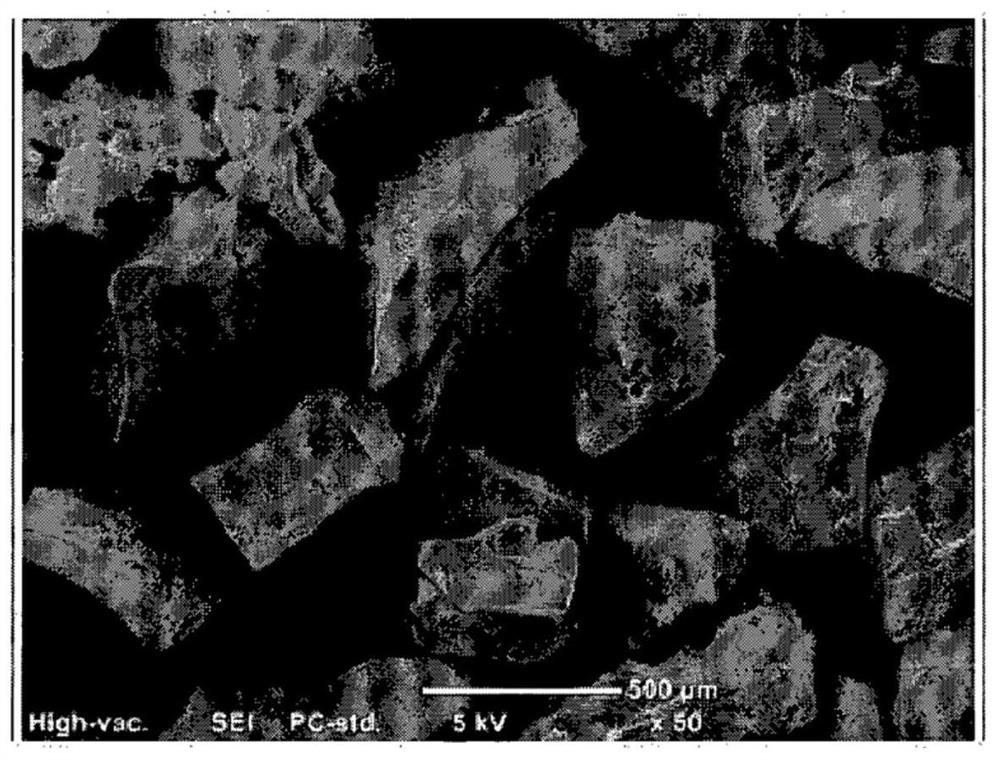
Image

Smart Image Click on the blue labels to locate them in the text.
Viewing Examples
Smart Image
  • Superabsorbent polymer and method for its preparation
  • Superabsorbent polymer and method for its preparation
  • Superabsorbent polymer and method for its preparation

Examples

Experimental program
Comparison scheme
Effect test

preparation example 1

[0098] Preparation Example 1: Preparation of Encapsulated Blowing Agent

[0099] An encapsulated blowing agent was prepared with a core-shell structure, the core being isobutane and the shell being formed from a copolymer of acrylate and acrylonitrile. Isobutane may be included in an amount of 25% by weight based on the total weight of the encapsulated blowing agent.

[0100] The average diameter of the encapsulated blowing agent was 13 μm. The diameter of each encapsulated blowing agent was measured by optical microscopy as the mean Feret diameter. The average diameter of the encapsulated blowing agent was determined and defined as the average diameter of the encapsulated blowing agent.

[0101] 0.2 g of the encapsulated blowing agent was applied to a glass petri dish and then kept on a hot plate preheated to 150°C for 10 minutes. The encapsulated blowing agent was gradually expanded by heat and observed with an optical microscope, and the maximum expansion rate in air a...

preparation example 2

[0104] Preparation Example 2: Preparation of Encapsulated Foaming Agent

[0105] An encapsulated blowing agent was prepared with a core-shell structure (the core was isobutane and the shell was formed from a copolymer of acrylate and acrylonitrile). Isobutane may be included in an amount of 25% by weight based on the total weight of the encapsulated blowing agent.

[0106] The encapsulated blowing agent had an average diameter of 15 μm, a maximum expansion rate in air of about 9 times, and a maximum expansion size of about 90 μm to 180 μm.

preparation example 3

[0107] Preparation Example 3: Preparation of Encapsulated Blowing Agent

[0108] An encapsulated blowing agent was prepared with a core-shell structure (the core is isopentane and the shell is formed from a copolymer of acrylate and acrylonitrile). Isopentane was included in an amount of 20% by weight based on the total weight of the encapsulated blowing agent.

[0109] The encapsulated blowing agent had an average diameter of 40 μm, a maximum expansion rate in air of about 12 times, and a maximum expansion size of about 400 μm to 540 μm.

the structure of the environmentally friendly knitted fabric provided by the present invention; figure 2 Flow chart of the yarn wrapping machine for environmentally friendly knitted fabrics and storage devices; image 3 Is the parameter map of the yarn covering machine
Login to View More

PUM

PropertyMeasurementUnit
diameteraaaaaaaaaa
diameteraaaaaaaaaa
diameteraaaaaaaaaa
Login to View More

Abstract

This invention relates to superabsorbent polymers. The superabsorbent polymer contains a certain amount or more of polymer particles formed of macropores, and thus can exhibit a large surface area and excellent initial absorption capacity. Therefore, when the superabsorbent polymer is used, it can provide a hygienic material such as a diaper or a sanitary napkin capable of rapidly absorbing body fluids and imparting a dry and soft touch.

Description

technical field [0001] CROSS-REFERENCE TO RELATED APPLICATIONS [0002] This application claims priority to and the benefit of Korean Patent Application No. 10-2017-0113134, filed with the Korean Intellectual Property Office on September 5, 2017, the disclosure of which is incorporated herein by reference in its entirety. [0003] The present invention relates to superabsorbent polymers that exhibit excellent initial absorption capacity. Background technique [0004] Super absorbent polymer (SAP) is a synthetic polymer material capable of absorbing about 500 times to about 1000 times its own weight in water, and various manufacturers name it by different names such as SAM (Super absorbent polymer). Absorbency Material, superabsorbent material), AGM (Absorbent Gel Material, absorbent gel material), etc. Such superabsorbent polymers began to be practically used in hygiene products, and now they are widely used in the production of hygiene products (such as children's diaper...

Claims

the structure of the environmentally friendly knitted fabric provided by the present invention; figure 2 Flow chart of the yarn wrapping machine for environmentally friendly knitted fabrics and storage devices; image 3 Is the parameter map of the yarn covering machine
Login to View More

Application Information

Patent Timeline
no application Login to View More
Patent Type & Authority Patents(China)
IPC IPC(8): C08J9/14C08K9/10C08J3/24C08J3/12C08J9/16C08J9/224
CPCC08J3/12C08J3/24C08J9/16C08J9/224C08K9/10C08J9/32C08J2201/026C08J2203/204C08J2205/022C08J2205/044A61L15/60B01J20/267B01J20/28011C08J2333/02C08J2203/22C08J2207/12B01J2220/68B01J20/28085C08J9/141C08J3/245C08J2300/14A61F13/00B01J20/261B01J20/28004
Inventor 金起贤金圭八金琪哲李琗俄李相琪
Owner LG CHEM LTD
Features
  • R&D
  • Intellectual Property
  • Life Sciences
  • Materials
  • Tech Scout
Why Patsnap Eureka
  • Unparalleled Data Quality
  • Higher Quality Content
  • 60% Fewer Hallucinations
Social media
Patsnap Eureka Blog
Learn More