3D printing photosensitive resin and preparation method and application thereof
A photosensitive resin, 3D printing technology, applied in the field of 3D printing and light curing, can solve the problem of brittleness of photosensitive resin, achieve the effect of good toughness, good heat resistance, and expand the application field
- Summary
- Abstract
- Description
- Claims
- Application Information
AI Technical Summary
Problems solved by technology
Method used
Image

Examples
preparation example Construction
[0058] The preparation method of the present invention will be further described in detail in conjunction with specific examples below. It should be understood that the following examples are only for illustrating and explaining the present invention, and should not be construed as limiting the protection scope of the present invention. All technologies realized based on the above contents of the present invention are covered within the scope of protection intended by the present invention.
[0059] The experimental methods used in the following examples are conventional methods unless otherwise specified; the reagents and materials used in the following examples can be obtained from commercial sources unless otherwise specified.
[0060] In the description of the present invention, it should be noted that the test process of tensile strength is completed with reference to ASTM D638. The test process of tensile elongation at break is completed with reference to ASTM D638. Th...
Embodiment 1
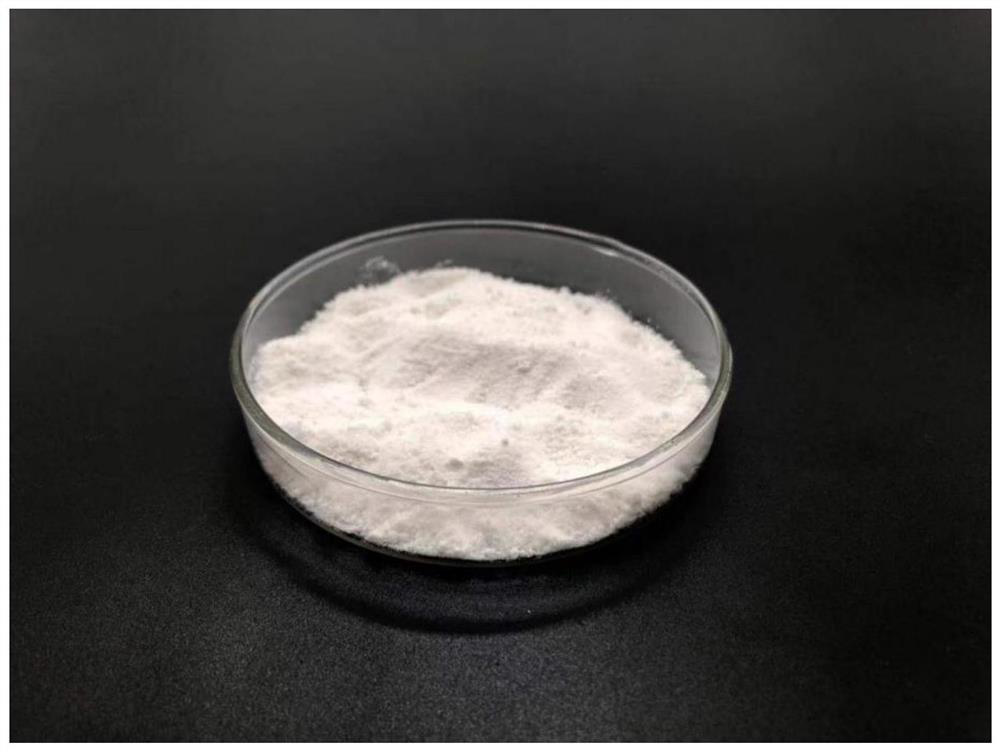
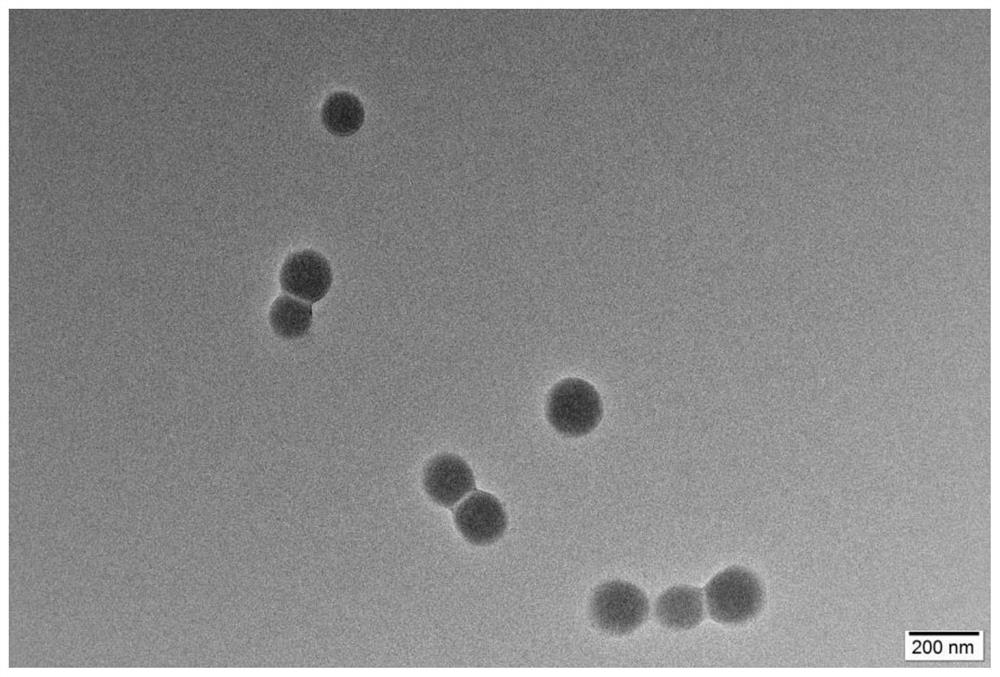
[0062] Preparation of silicone core-shell nanoparticles:
[0063] Octamethylcyclotetrasiloxane (30g), methyltriethoxysilane (5g), OP-10 1g, sodium dodecylbenzenesulfonate 1g, distilled water 300g, mixed at a speed of 12000r / min for 10min, The mixed solution was added into a four-necked flask, 0.4 g of KPS was added, and stirred at 80° C. for 2 h to generate polysiloxane nanoparticles with a conversion rate of about 86%.
[0064] Sodium bicarbonate was added to adjust the mixture to neutrality, KPS (0.3 g) was added, and after stirring for 30 min, 31.8 g of methyl methacrylate was added dropwise at a rate of 10 ml / h, and reacted at 80° C. for 2 hours. 3 g of glycidyl methacrylate was added dropwise at a rate of 10 ml / h, and reacted at 80° C. for 1 hour, and nitrogen protection was used throughout the above reaction. Add CaCl 2 The solution was demulsified, filtered and washed with hot distilled water for 3 times, then freeze-dried for 48 hours for later use, and about 42 g of...
Embodiment 2
[0069] The preparation of organosilicon core-shell nanoparticles is the same as in Example 1.
[0070] 40 parts of prepolymer epoxy resin (DER331, Dow Chemical), 10 parts of prepolymer epoxy acrylate (CN104NS, Sartomer), 20 parts of reactive diluent ethoxylated trimethylolpropane triacrylate, Mix 13 parts of reactive diluent 3-ethyl-3-hydroxyoxetane, 6 parts of reactive diluent pentaerythritol triacrylate (SR444NS, Sartomer), heat to 80°C and stir until transparent; add 5 parts of the above The prepared modified silicone core-shell nanoparticles were stirred at a high speed at 25°C for 6h (rotating speed 2500r / min); adding 2 parts of photoinitiator 1-hydroxycyclohexyl phenyl ketone, photoinitiator diphenyl-(4 - 4 parts of phenylthio)phenylsulfonium hexafluoroantimonate, heated to 60° C. with a constant temperature magnetic stirring device, and stirred for 1 hour in the dark to prepare a resin for later use.
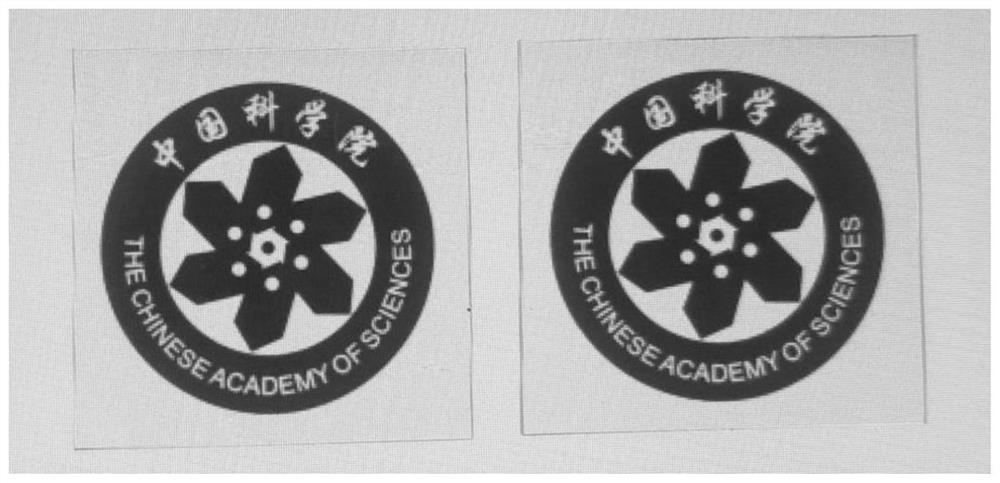
[0071] Use a 355nm SLA 3D printer for 3D printing.
PUM
| Property | Measurement | Unit |
|---|---|---|
| particle size | aaaaa | aaaaa |
| wavelength | aaaaa | aaaaa |
| impact strength | aaaaa | aaaaa |
Abstract
Description
Claims
Application Information
 Login to View More
PatSnap Eureka turns technology decisions into work you can execute. Powered by our Innovation Knowledge Graph, it runs expert workflows across engineering, life sciences, materials and intellectual property. Get your review-ready output in minutes.


