

Super-long slow-release polycarboxylate superplasticizer as well as preparation method and application
A slow-release polycarboxylate and superplasticizer technology, which is applied in the field of polycarboxylate superplasticizers, can solve the problems of loss of fluidity, poor dispersion and retention effect, and inability to fully meet the requirements of concrete for maintaining fluidity for a long time , to avoid evaporation and small slump loss
- Summary
- Abstract
- Description
- Claims
- Application Information
AI Technical Summary
Problems solved by technology
Method used
Image

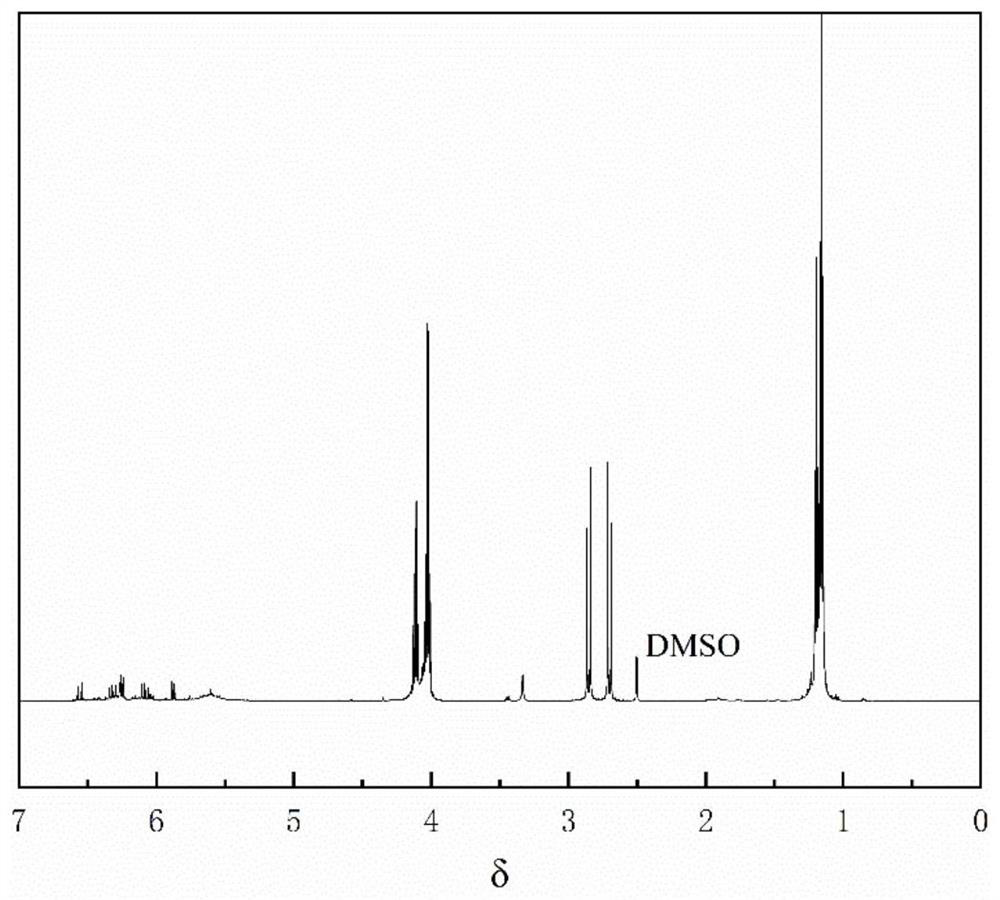
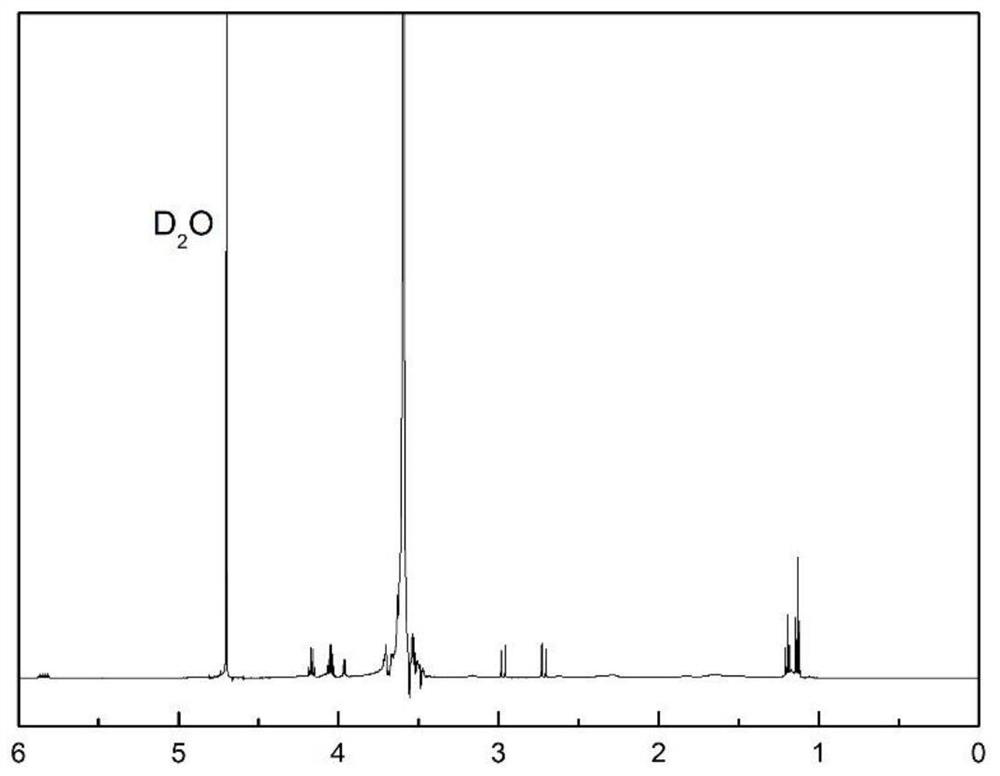
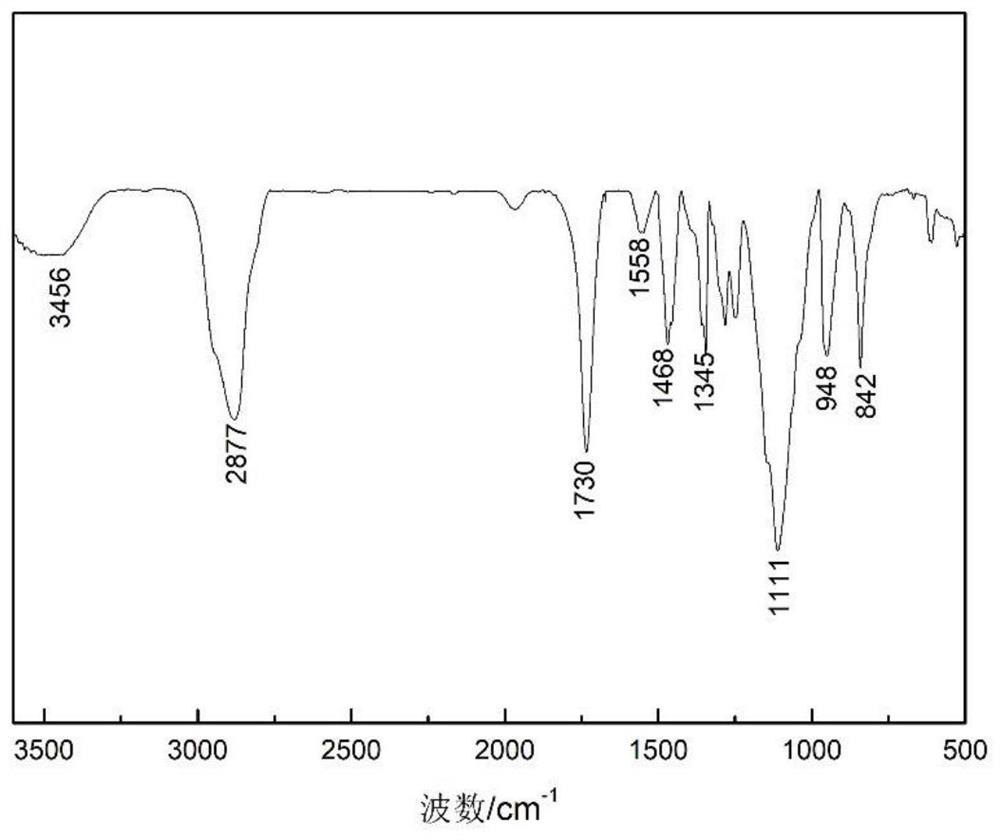
Examples
Embodiment 1
[0024] First place 15g of triethyl citrate in a three-necked flask, use DCM as a solvent, then add triethylamine, the mass of triethylamine is equimolar to (meth)acryloyl chloride, slowly drop and dissolve in two Acryloyl chloride of methyl chloride, the molar ratio of acryloyl chloride to triethyl citrate is 1:1.3, about 1 hour after the dropwise addition, the temperature is raised to 25°C, stirred for 5 hours, and then filtered with suction. The product after the above reaction was washed three times with distilled water, dehydrated with anhydrous magnesium sulfate, suction filtered and distilled. The resulting reddish-brown liquid is triethyl citrate with a polymerizable double bond. Add 0.3g of H 2 o 2 , heated to 45°C. A certain amount of mixed solution A (0.15g thioglycolic acid, 0.12g Vc and a small amount of water) and a certain proportion of mixed solution B (3gAA, 1.82g triethyl ester with a polymerizable double bond and a small amount of water) were slowly added ...
Embodiment 2
[0026] First place 15g of trimethyl citrate in a three-necked flask, use dichloromethane as solvent, then add triethylamine, the quality of triethylamine is 1.1 times that of acryloyl chloride, and slowly drop it in an ice-water bath to dissolve in dichloromethane Acryloyl chloride of methane, the molar ratio of acryloyl chloride to trimethyl citrate is 1:1.4, after about 1 hour of dropwise addition, stir at 25°C for 4 hours, and filter with suction. The product after the above reaction was washed three times with distilled water, dehydrated with anhydrous magnesium sulfate, suction filtered and distilled. The resulting reddish-brown liquid is trimethyl citrate with a polymerizable double bond. Add 0.3g of H 2 o 2 , heated to 45°C. A certain amount of mixed solution A (0.15g mercaptoacetic acid, 0.12gVc and a small amount of water) and a certain proportion of mixed solution B (3gAA, 1.82g trimethyl citrate with polymerizable double bonds and A small amount of water), final...
Embodiment 3
[0028] First place 12g of triethyl citrate in a three-necked flask, use dichloromethane as a solvent, then add triethylamine, the quality of triethylamine is 1.1 times that of methacryloyl chloride, slowly drop it in ice bath conditions and dissolve in two Methacryloyl chloride of methyl chloride, the molar ratio of methacryloyl chloride to triethyl citrate is 1:1.3, after about 1 hour of dropwise addition, stir at 30°C for 5 hours, and filter with suction. The product after the above reaction was washed three times with distilled water, dehydrated with anhydrous magnesium sulfate, suction filtered and distilled. The resulting reddish-brown liquid is triethyl citrate with a polymerizable double bond. Add 0.3g of H 2 o 2 , heated up to 50°C. Slowly add a certain amount of mixed solution A (0.15g thioglycolic acid, 0.12gVc and a small amount of water) and a certain proportion of mixed solution B (3gAA, 2.79g triethyl citrate with polymerizable double bonds and a small amount...
PUM
 Login to View More
 Abstract
Description
Claims
Application Information
 Login to View More