Parallel direct writing device based on ten-thousand-beam independent controllable laser dot matrix generation

A technology of laser dot matrix and writing device, which is applied to the exposure device of photoengraving process, optics, opto-mechanical equipment, etc., can solve the problems of uniformity of dot matrix intensity, deterioration of sub-spot quality, small number of beam arrays, and difficulty in independent control, etc. Achieve the effects of good writing structure uniformity, high intensity uniformity, and optimized spot quality

CN114019763APending Publication Date: 2022-02-08ZHEJIANG LAB +1
0 Cites 0 Cited by

Patent Information

Authority / Receiving Office
CN · China
Patent Type
Applications(China)
Current Assignee / Owner
Publication Date
2022-02-08

Smart Images

  • Figure 1
    Figure 1
  • Figure 2
    Figure 2
  • Figure 3
    Figure 3
Patent Text Reader

Abstract

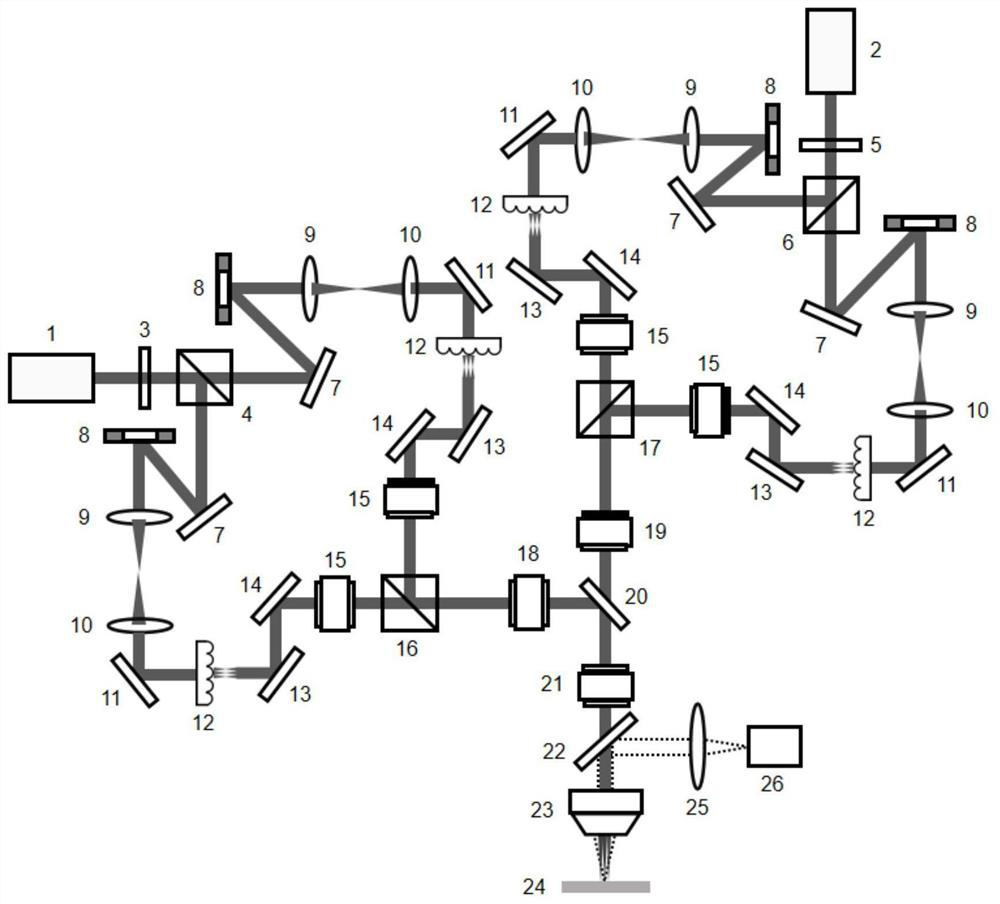
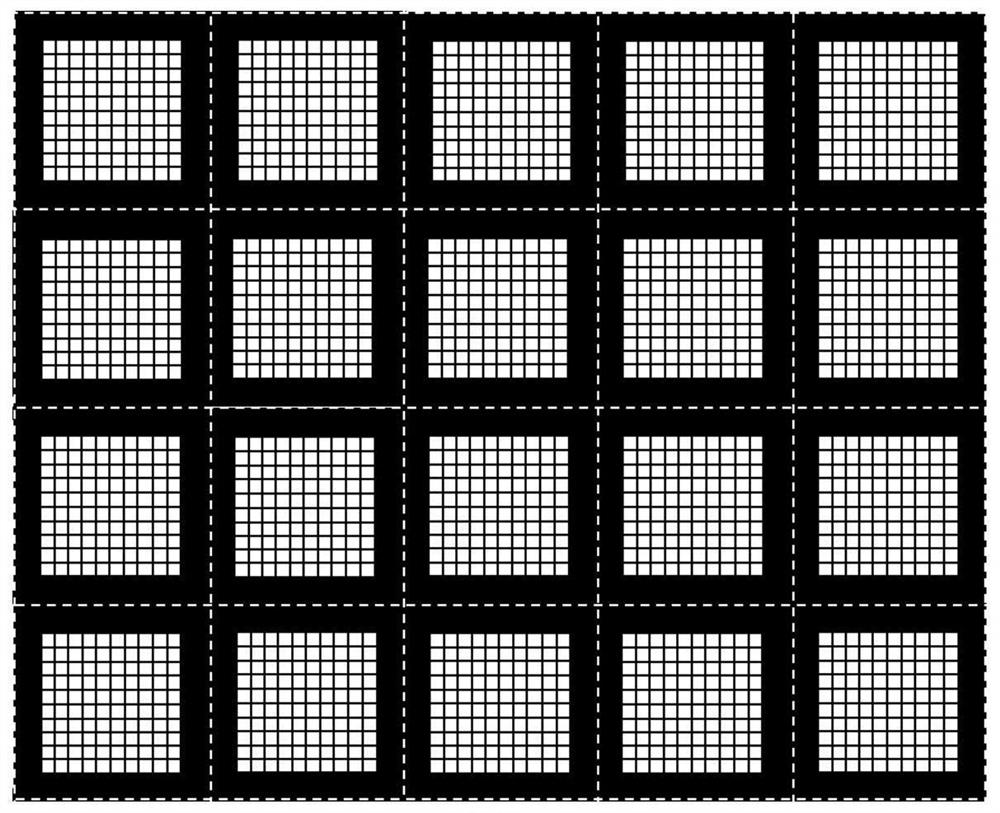
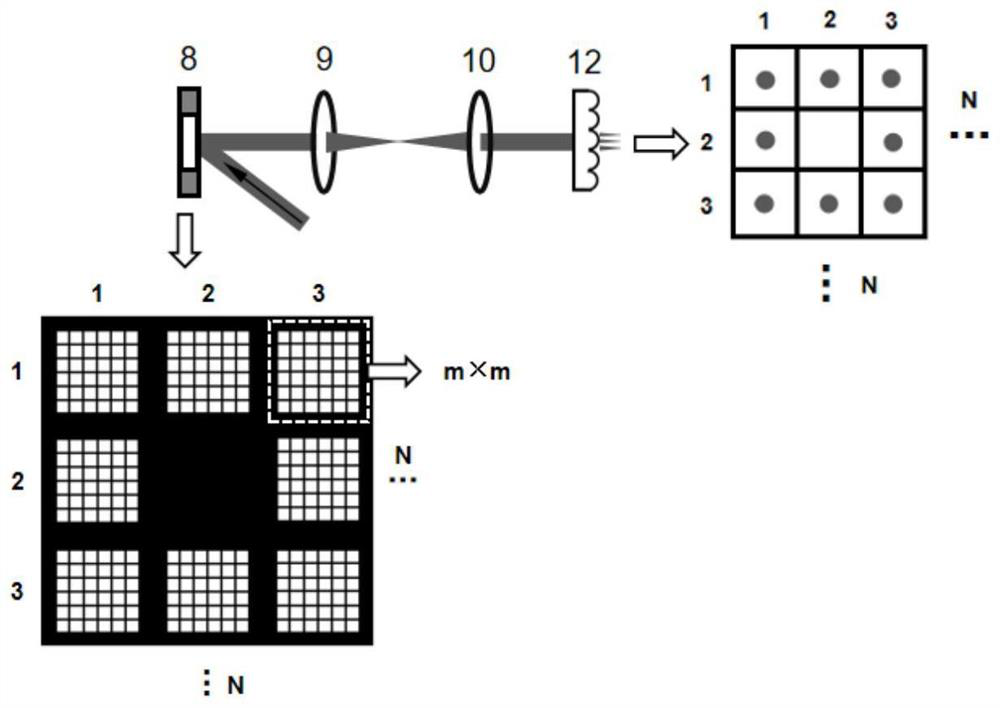
The invention discloses a parallel direct writing device based on ten-thousand-beam independent controllable laser dot matrix generation. The device mainly comprises four identical light paths; each light path comprises a core element digital micromirror array DMD and a core element micro-lens array MLA and is used for generating thousand-beam independent controllable inscribing dot matrixes; the DMD in each light paths equally divides an effective pixel area into M * N sub-arrays; one sub-array corresponds to one sub-light spot; the M * N sub-light spots emitted from the DMD coincide with the M * N micro-lens of the MLA in space to generate an M * N thousand-beam focus array, and the M * N thousand-beam focus array is finally imaged on the focal plane of the objective lens; the generation of the ten-thousand-beam inscribing dot matrix is finally realized through the splicing of the four thousand-beam dot matrixes; the high-quality complex three-dimensional microstructure can be quickly processed; and the method can be applied to the fields of super-resolution photoetching and the like.
Need to check novelty before this filing date? Find Prior Art

Description

technical field

[0001] The invention belongs to the field of micro-nano processing, and more specifically relates to a parallel direct writing device and method based on the generation and independent control of tens of thousands of laser dot arrays. Background technique

[0002] Two-photon laser direct writing technology has always been a research hotspot in three-dimensional micro-nano processing technology due to its high resolution, true three-dimensional processing capability, low thermal influence, and wide range of processing materials. With the development of laser direct writing technology towards industrial applications, how to realize high-precision and simultaneous high-speed, complex and large-area writing is a key problem that needs to be urgently solved in today's laser direct writing technology.

[0003] In order to effectively improve the efficiency of laser direct writing, researchers try to improve the optical processing method, that is, use multiple beams...

Examples

Embodiment Construction

[0023]In order to make the object, technical solution and advantages of the present invention more clear, the present invention will be further described in detail below in conjunction with the accompanying drawings and embodiments. It should be understood that the specific embodiments described here are only used to explain the present invention, but not to limit the present invention.

[0024] Such as figure 1 As shown, the present invention provides a parallel direct writing device based on tens of thousands of independently controllable laser lattices. Light source 2, the first light source 1 passes through the first half-wave plate 3 and the first polarization beam splitter PBS 4 and is divided into beam one and light beam two, and the second light source 2 passes through the second half-wave plate 5 and the second polarization beam splitter PBS 6 is divided into light beam three and light beam four, and the four light beams then enter into light path one, light path two...