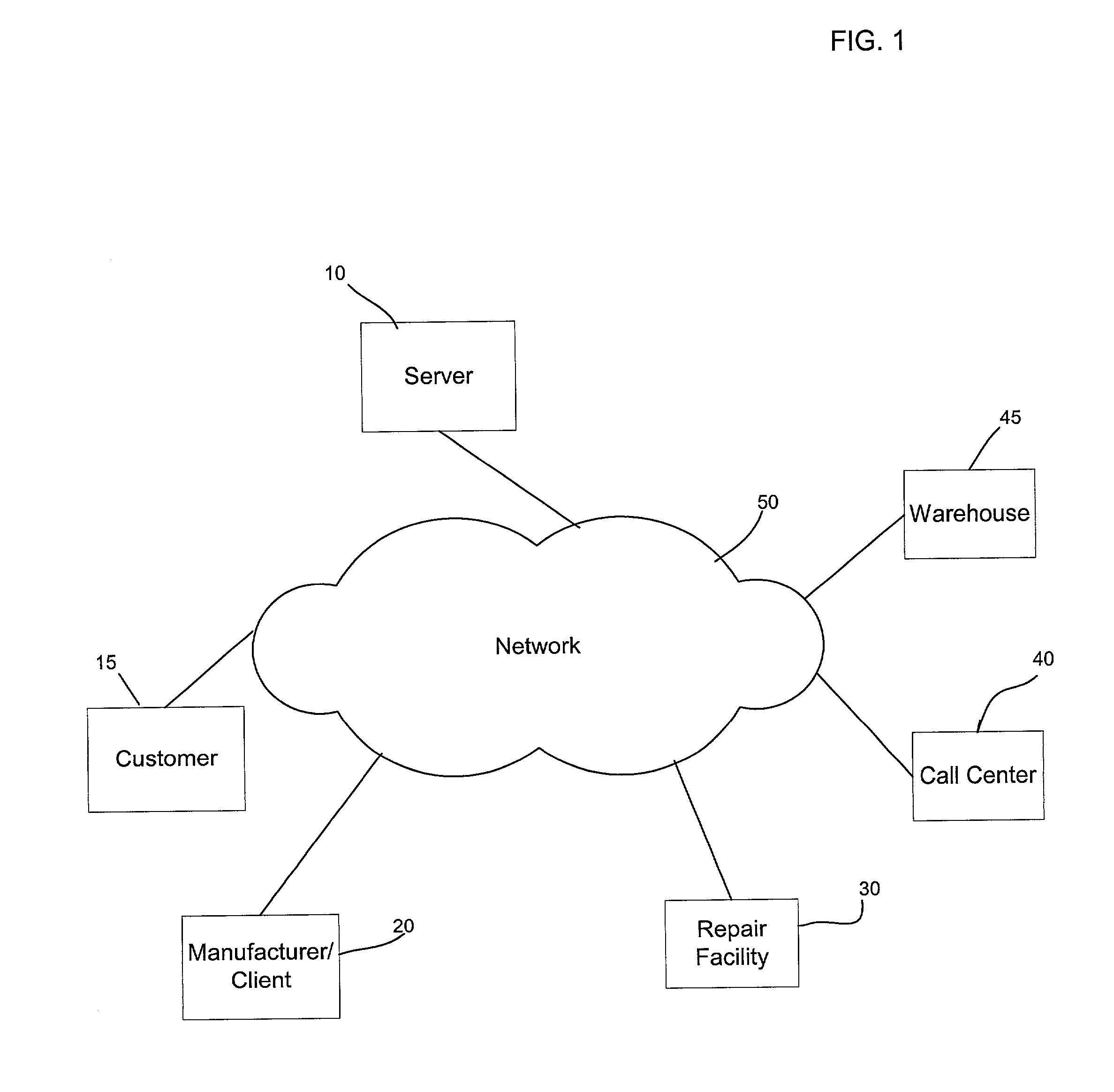
[0008] The preferred embodiments provide a
computerized system, method, and program for providing a multi-functional customer and product
management tool over a common network, such as
the Internet, available to various parties such as the
client / manufacturer, repair facility, call center, and the warehouse. To this end, a common customer
record for each customer is generated in a
database which can be updated to include information such as customer contact and purchase history information. In addition, a common product
record for each product is generated in a database which can be updated to include information such as general product and warehouse inventory information. Both the customer and product records are then made available to a user depending on the functionality of the
management tool chosen by the user. In addition, the
management tool allows the user depending on the chosen functionality of the management tool to update customer and product information. Moreover, the management tool keeps track of all additions and modifications to customer and product information to provide better
customer support and error detection. In addition, the preferred embodiments of the management tool provide a back-end e-commerce solution to process and control all aspects of the purchase and shipping process. Lastly, the preferred embodiments of the management tool is able to act as a
decision support system by providing reports to assist managers in making executive decisions.
[0062] Another feature of the warranty administration module 250 is its ability to be interlinked with the
Credit Card Processing Module 260. If a customer wishes to purchase an extended warranty plan or encounter a pay for support situation, the
Credit Card Processing module 260 can access the database
record 62a, b, . . . or n, to retrieve the
credit card information stored in
Credit Card Info field 122. The Credit Card module 260 can charge or charge-back the
credit card for the amount authorized by the customer. In addition, the
credit card module 260 incorporates a universal translation bridge to be able to process the credit card through any of the major credit card servicers on the network 50. Moreover, as in the warranty module 250, the credit card
processing module 260 can provide a convenient
payment process with any of the other modules in the management tool 5.
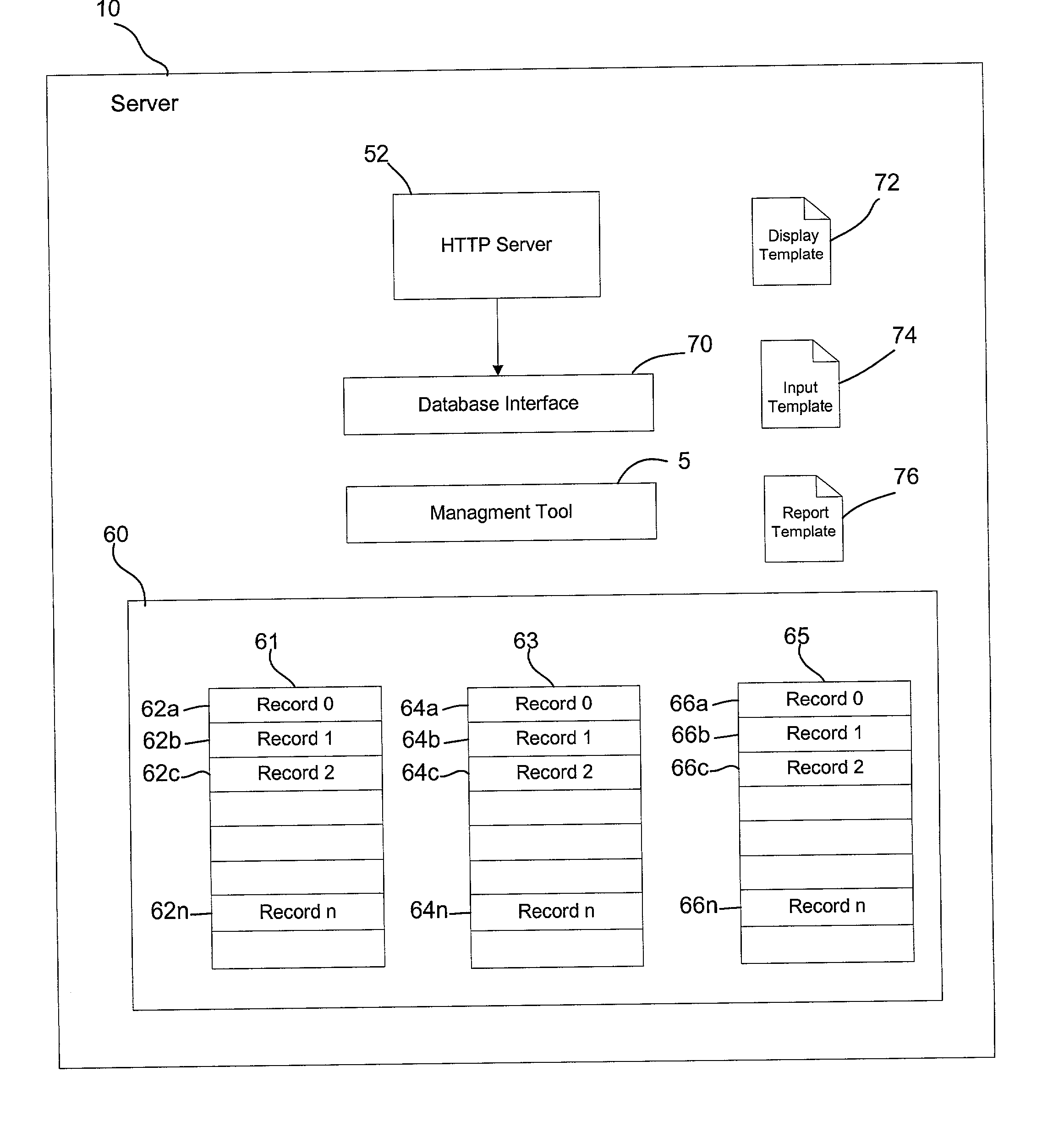
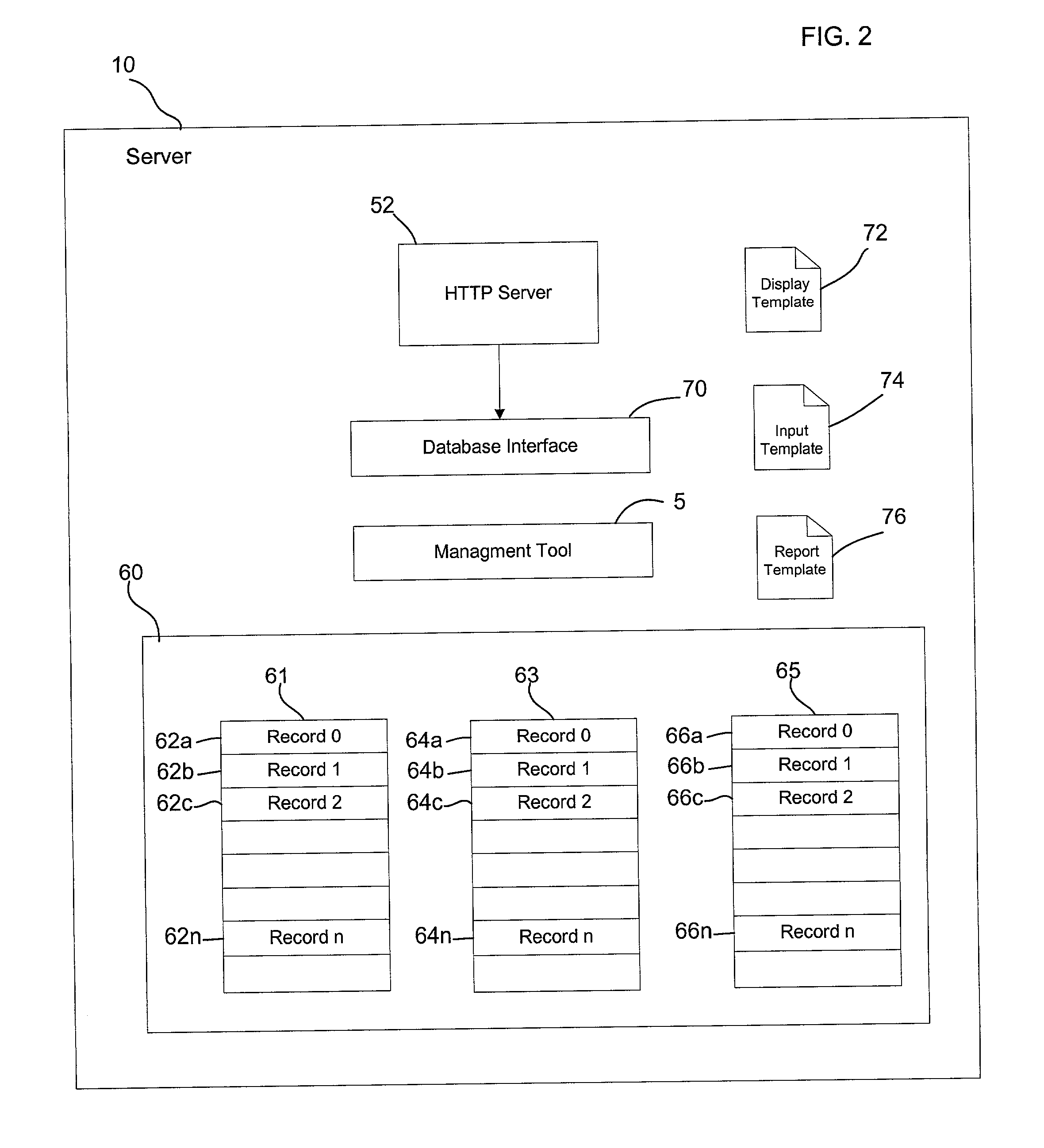
[0068] FIG. 9 illustrates the
program logic implemented in the HTTP
server 52 and
database interface 70 to administer the
Reporting System module 280 according to the preferred embodiments. The report module 280 can be accessed by the manufacturer / client 20 to report in real-time to bring the most
mission critical operating and sales figures to executive managers. The reporting module 280 is thus able to aid as a
decision support system to assist management in making executive decisions that might make the business more efficient and effective (e.g. changing the vendor on a product that receives a high percentage of RMAs, or changing seasonal strategies based on sales figures or customer interaction drivers). Although the type of report generated can be varied as the report templates 76, examples of reports can be seen in FIGS. 21 and 22. Typically the process of generating a report starts at block 900 where the HTTP
server 52 receives a request from the manufacturer / client computer 20 to access the
Reporting System module 280 from a user who has already logged into the reporting module 280 using a secured identification and
password via the secured network 50. In response, the HTTP
server 52 requests (at block 902) the
database interface 70 to access the report template 76 and build one or more
HTML report pages. The
database interface program 70 queries (at block 906) the database tables 61 and / or 65 for the predefined report parameters and then inserts (at block 908) the returned information into the report template. The database interface 70 will then build one or more linked
HTML web pages (at block 908) based on a report template 76 furnishing report information to the user such as Sales Report by
Date Range, RMA report
by product, Inventory Report by SKU, Parts Request by Date, Average e-mail request ratio by month, Geographical Sales Report, etc. Thus, the generated report pages can include information from such fields as Customer ID Info 112, Purchase Info 114, Return Info 120, E-mail Correspondence 124, Warranty Info 126, Shipping Info 128, Product Info 152, Location 154, Quantity 156, Order Info 158, and
Invoice Info 160.


 Login to View More
  Login to View More