
Honeycomb optical window deposition shield and method for a plasma processing system
- Summary
- Abstract
- Description
- Claims
- Application Information
AI Technical Summary
Benefits of technology
Problems solved by technology
Method used
Image

Examples
Embodiment Construction
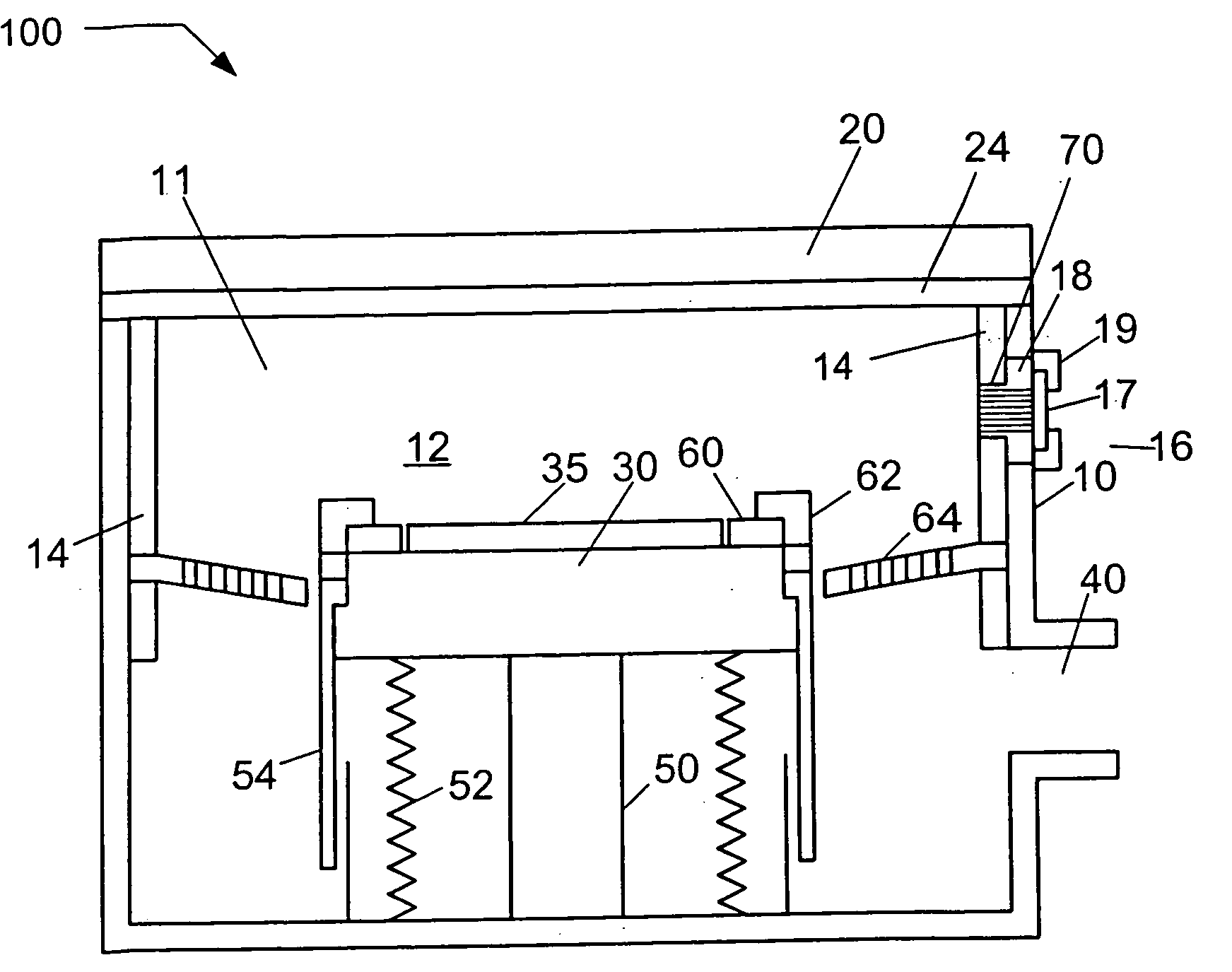
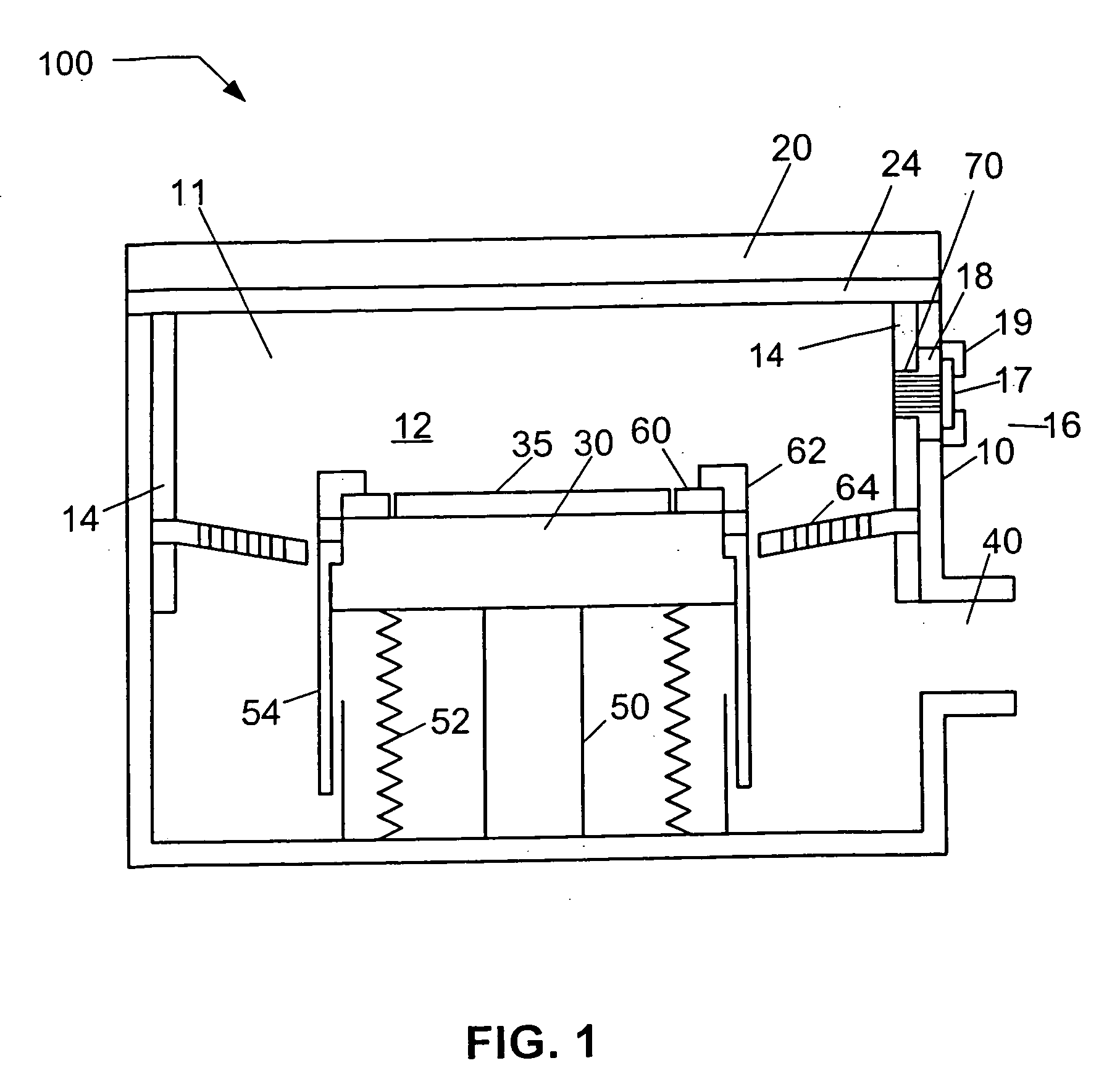
[0030] Referring now to the drawings, wherein like reference numerals designate identical or corresponding parts throughout the several views. FIG. 1 shows a simplified block diagram of a plasma processing system according to an embodiment of the present invention. As seen in this figure, a plasma processing system 100 includes a plasma processing chamber 10, an upper assembly 20, an electrode plate 24, a substrate holder 30 for supporting a substrate 35, and a pumping duct 40 coupled to a vacuum pump (not shown) for providing a reduced pressure atmosphere 11 in plasma processing chamber 10. Plasma processing chamber 10 can facilitate the formation of processing plasma in a process space 12 adjacent substrate 35. The plasma processing system 100 can be configured to process 200 mm substrates, 300 mm substrates, or larger.
[0031] In the illustrated embodiment, the upper assembly 20 can include at least one of a cover, a gas injection assembly, and an upper electrode impedance match n...
PUM
| Property | Measurement | Unit |
|---|---|---|
| Length | aaaaa | aaaaa |
| Diameter | aaaaa | aaaaa |
| Structure | aaaaa | aaaaa |
Abstract
Description
Claims
Application Information
 Login to View More