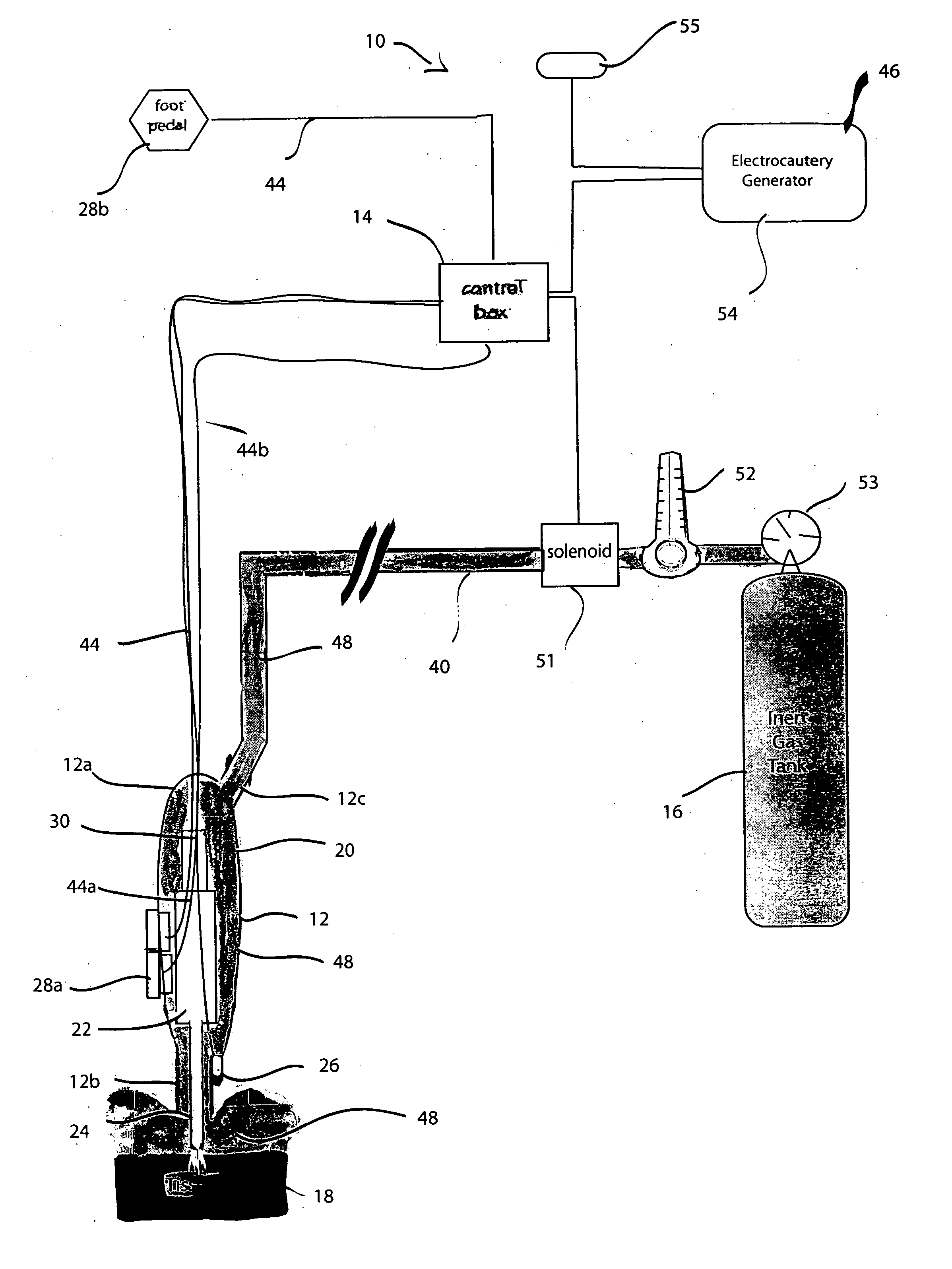
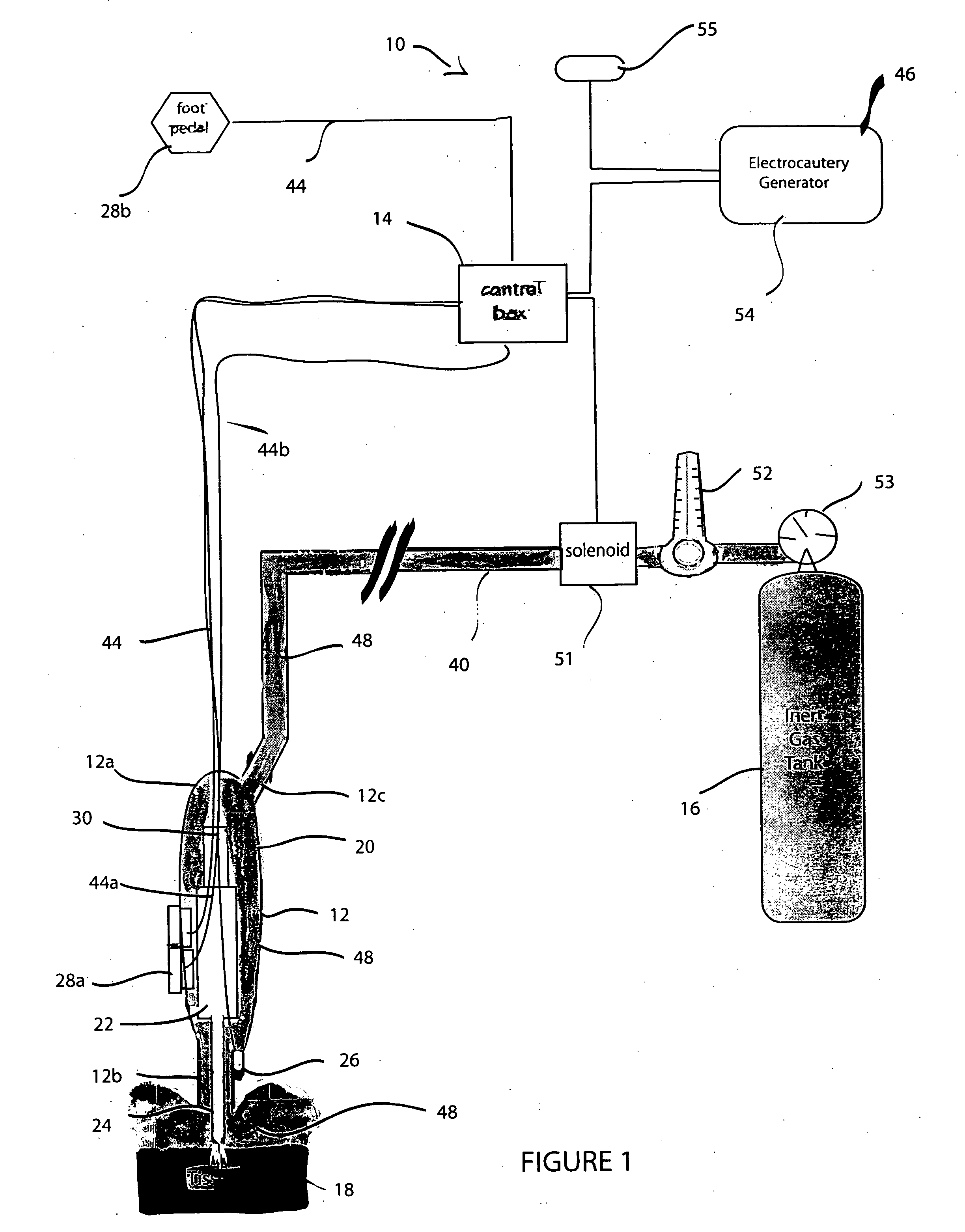
[0007] The main embodiment of the invention includes an electrocautery instrument or
laser device that will be operatively coupled to a source of
inert gas, such as
nitrogen,
helium, air,
argon,
carbon dioxide, or other non-toxic gaseous
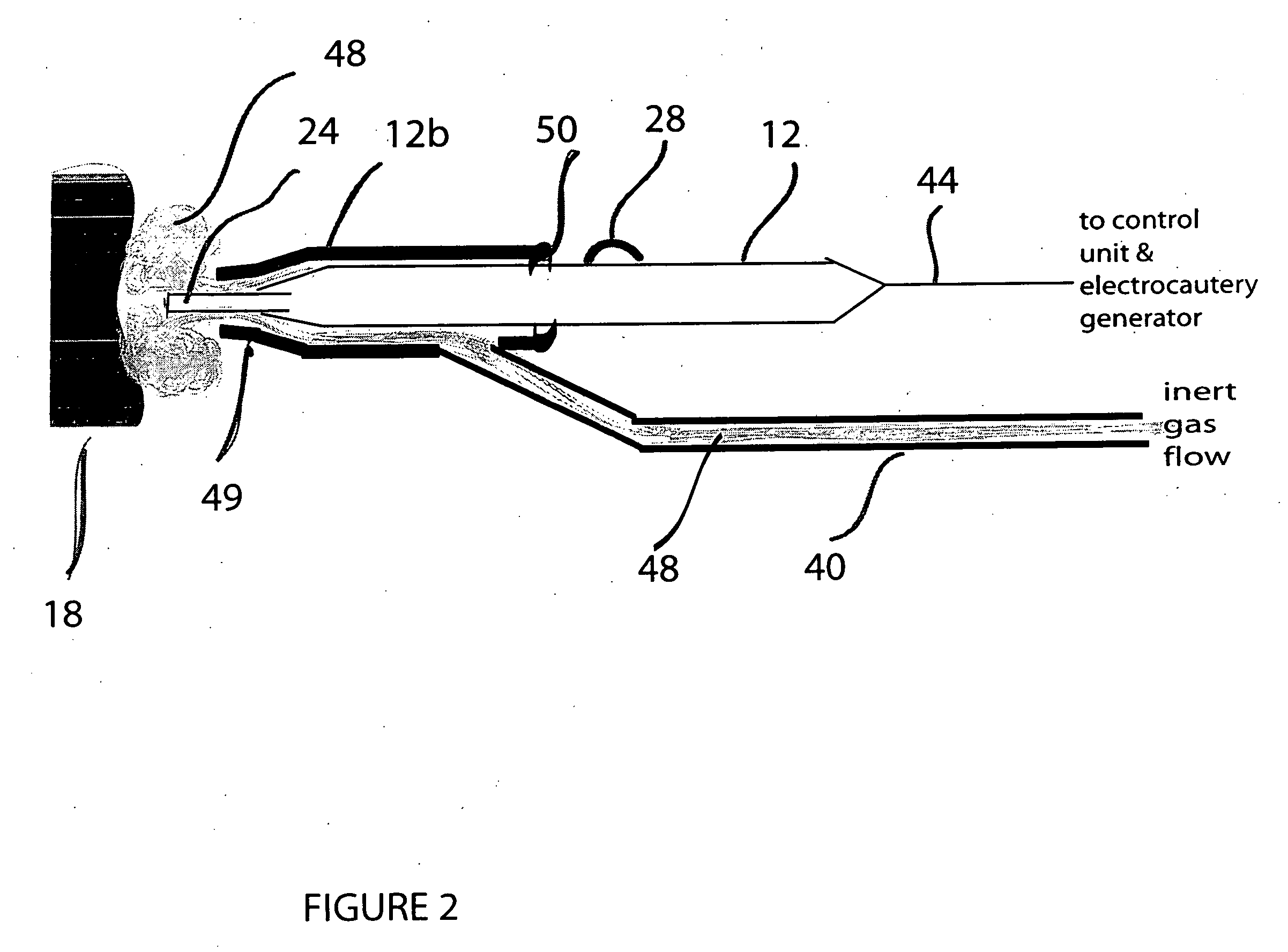
flame retardant such as halon, that will be fluidly coupled to the electrocautery element and operative to be dispersed through the distal-most end, thereof. According to such embodiment, the source of
inert gas will be coupled to the electrocautery instrument such that the
inert gas is expelled from the distal-most end, either by automatic or manually operable control, and preferably radially about the electrocautery blade or
laser point utilized to perform the surgical procedure. To that end, it is contemplated that such
inert gas, which may be maintained at either ambient temperature or otherwise cooled, may be continuously free flowing through the electrocautery instrument throughout the surgical procedure, or may be coupled to a switch, such as a
two step switch, to the extent that the gas flow is instigated first before the electrocautery. In the latter case, turning off the electrocautery instrument would similarly require the gas flow to continue thereafter thereby assuring that the electrocautery process is fully shielded by
inert gas flow. Alternatively, the switch activating the electrocautery instrument may be coupled with a sensor located within the
inert gas delivery tube that allows activation of the electrocautery instrument only after the flow of inert gas is established (i.e., operation of device is permitted once the flow of inert gas reaches a pre-determined level. In this regard, such inert gas will be operative to surround the environment about the distal-most end where the electrocautery blade is utilized to thus prevent any heat or spark generated thereby from coming into contact with the oxygen-enriched environment by blowing away the oxygen or other flammable gases. Under such circumstances, the electrocautery instrument will be incapable of igniting an operating room fire that may otherwise spread widely. Similarly, it is contemplated that a laser instrument as coupled with the inert source of gas may be operative such that the inert gas is to be distributed from the distal-most end of the laser instrument prior to when the laser beam of the instrument is turned on or applied to tissue, or any other type of ignitable substance.
[0010] In a further embodiment of this
system, it is contemplated that the distal most part of the ventilation system will be provided with nonflammable materials such as Teflon, metals and the like so as to prevent the
respiratory system from catching on fire and turning into a blowtorch.


 Login to View More
  Login to View More