

Laser micromachining method
a laser and micro-machining technology, applied in the field of micro-machining, can solve the problems of reducing the fluence and ablation capability of the laser, the inability of conventional lasers (traditionally focused lasers with long pulse duration, such as nanosecond lasers) to produce high-quality cuts through semiconductor wafers, and the inability of lasers to integrate laser technology for die singulation
- Summary
- Abstract
- Description
- Claims
- Application Information
AI Technical Summary
Problems solved by technology
Method used
Image

Examples
Embodiment Construction
[0010] In the following detailed description, a method for laser micromachining is disclosed. Reference is made to the accompanying drawings within which are shown, by way of illustration, specific embodiments by which the present invention may be practiced. It is to be understood that other embodiments may exist and that other structural changes may be made without departing from the scope and spirit of the present invention.
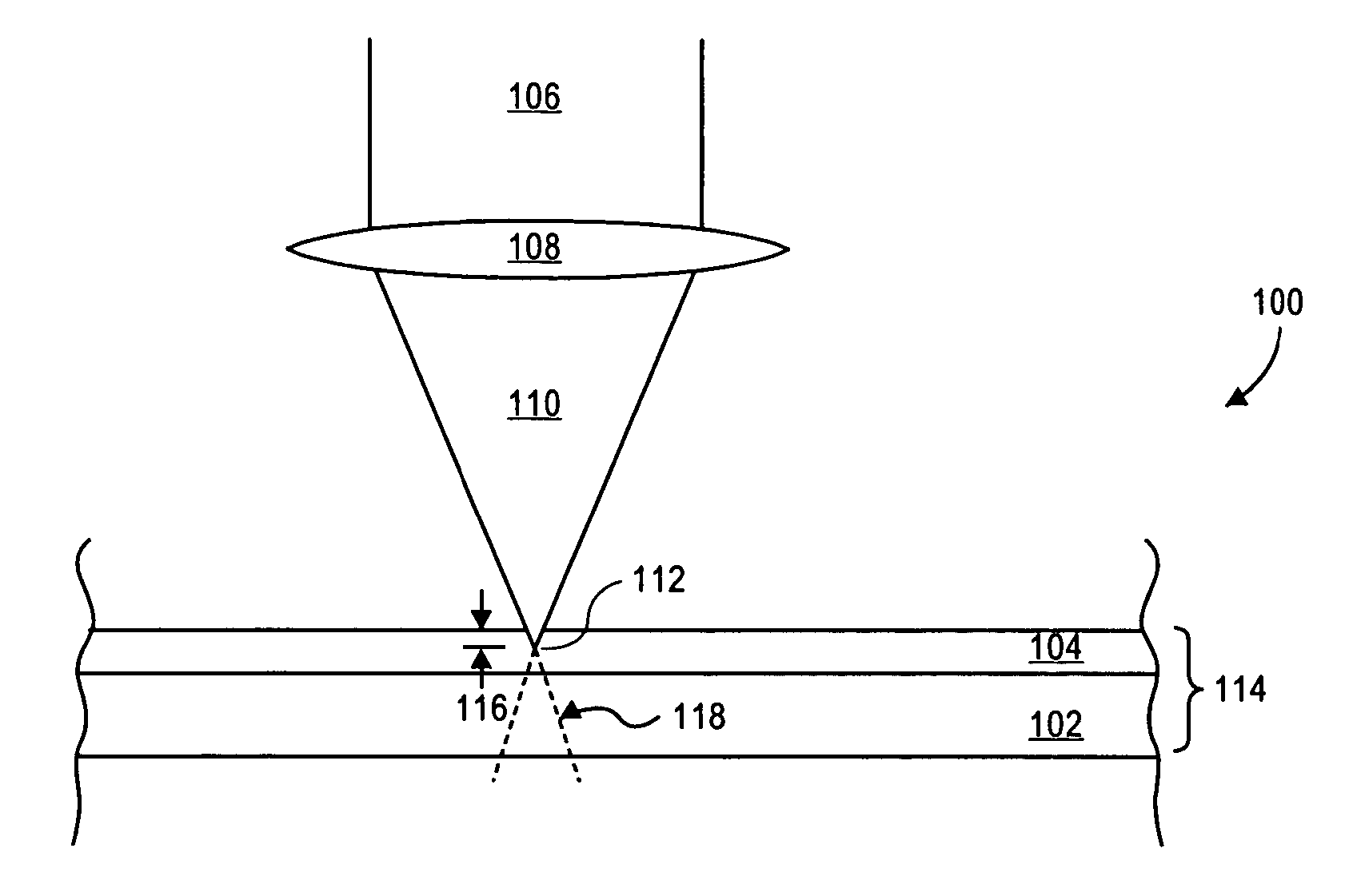
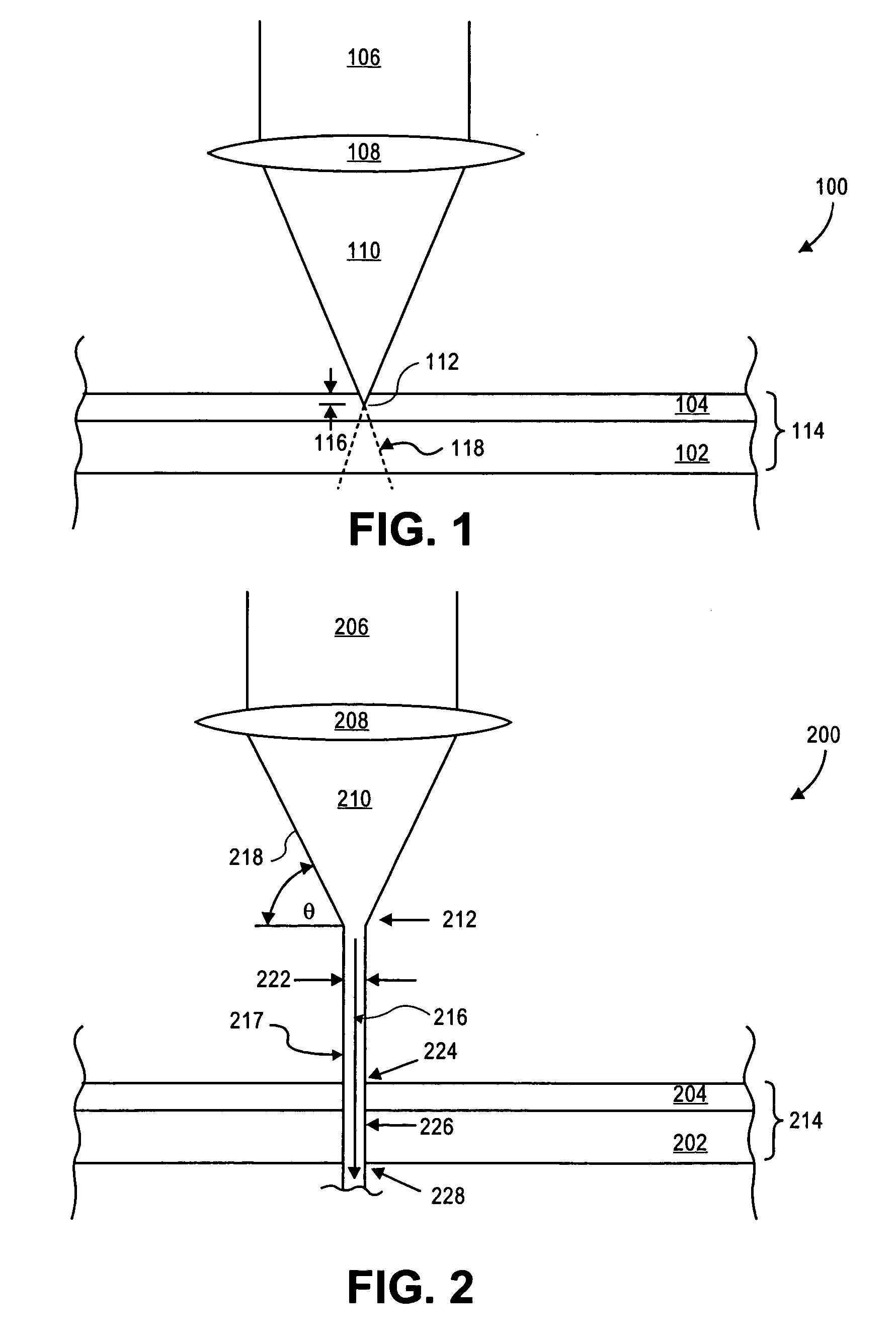
[0011] Using embodiments of the present invention, collimated beams, incident to converging beam geometry pulses from an ultrafast laser, can be used to scribe, dice, or mill a workpiece. The collimated beam can maintain a uniform diameter and high intensity optical energy while ablating through the entire thickness of the workpiece. In one embodiment, the workpiece is a semiconductor wafer. Embodiments of the present invention overcome depth-of-focus problems encountered with conventional lasers. And, because ablation is the result of using a short pulse dura...
PUM
| Property | Measurement | Unit |
|---|---|---|
| pulse energy | aaaaa | aaaaa |
| diameter | aaaaa | aaaaa |
| ionization energy | aaaaa | aaaaa |
Abstract
Description
Claims
Application Information
 Login to View More