
Antifuse having uniform dielectric thickness and method for fabricating the same
a technology of amorphous silicon and an antifuse, which is applied in the direction of semiconductor devices, electrical devices, semiconductor/solid-state device details, etc., can solve the problems of difficult to achieve high-level amorphous silicon, etc., and achieves the effect of facilitating the formation of silicides, improving the uniformity of antifuse materials, and ensuring the uniformity
- Summary
- Abstract
- Description
- Claims
- Application Information
AI Technical Summary
Benefits of technology
Problems solved by technology
Method used
Image

Examples
Embodiment Construction
[0023] Hereinafter, preferred embodiments of the present invention will be described with reference to the accompanying drawings.
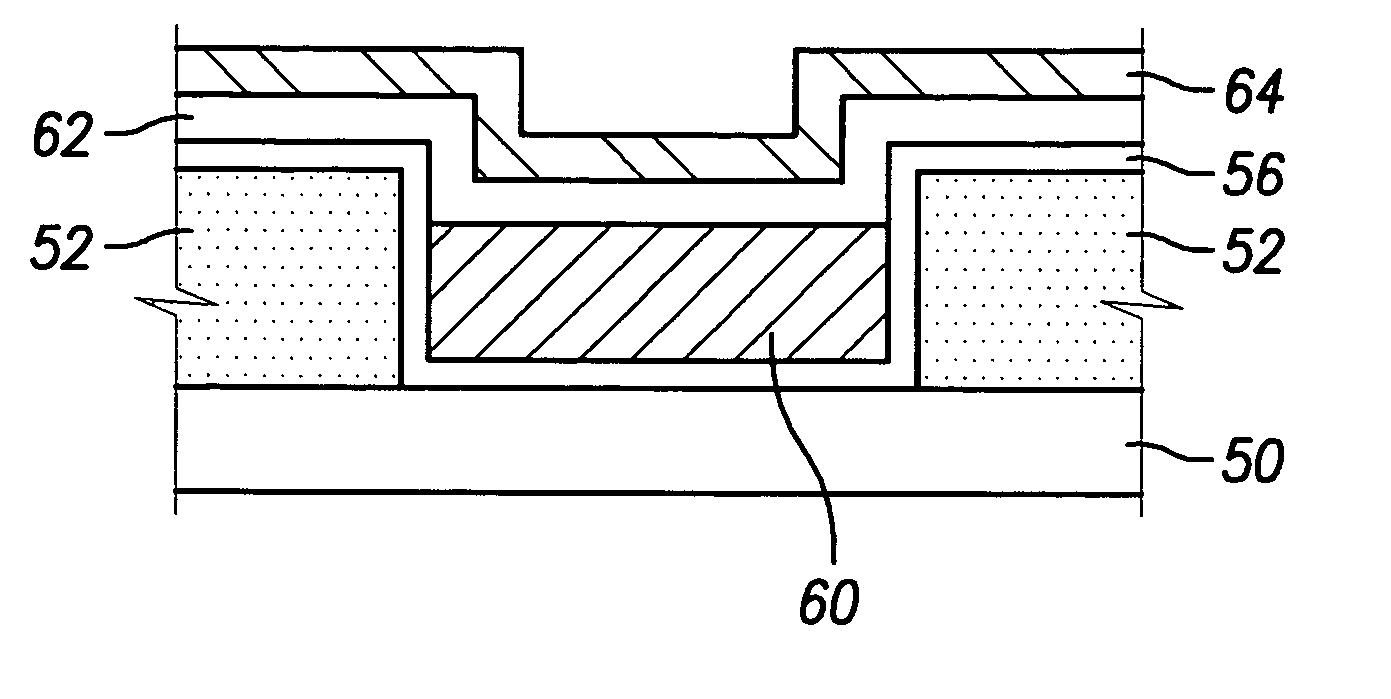
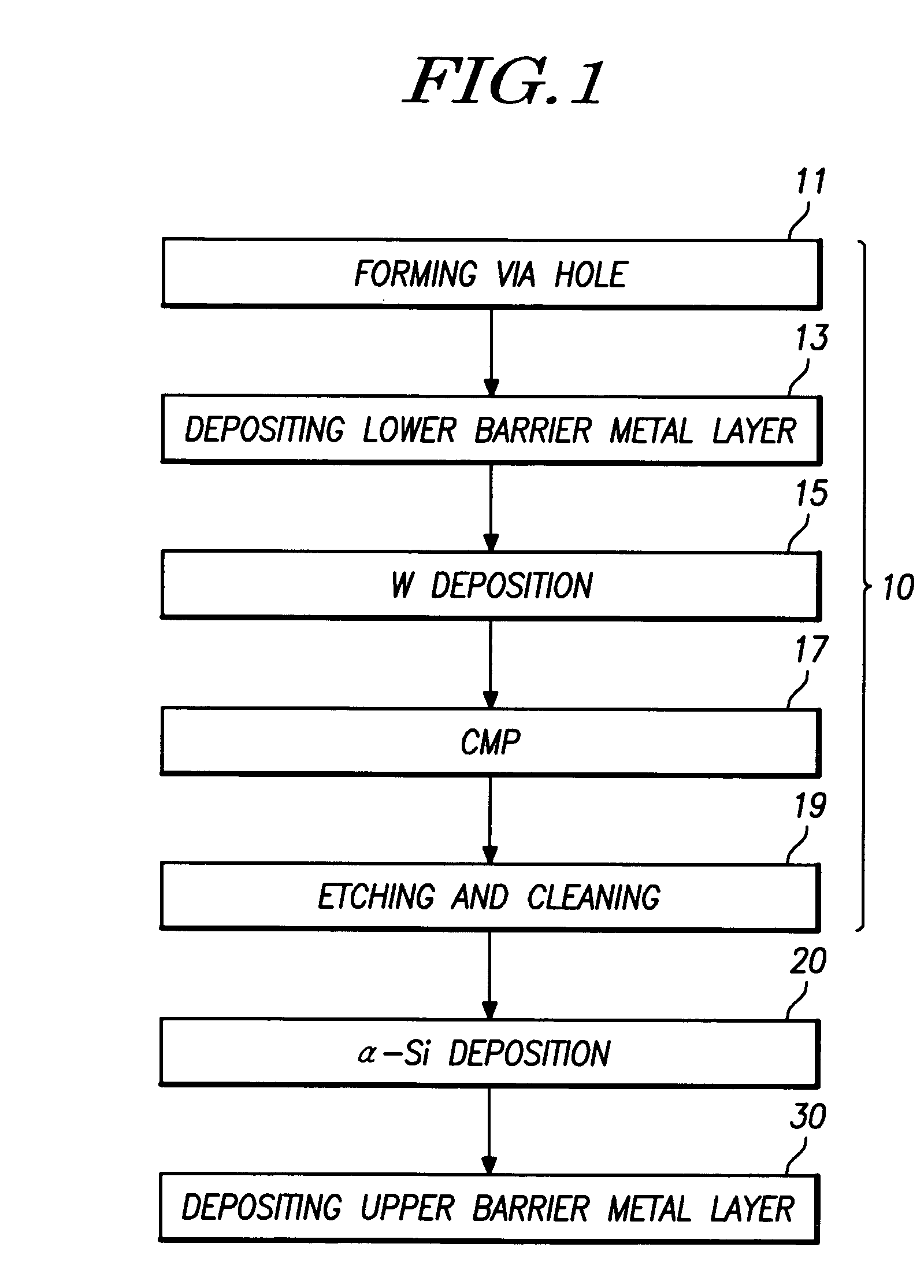
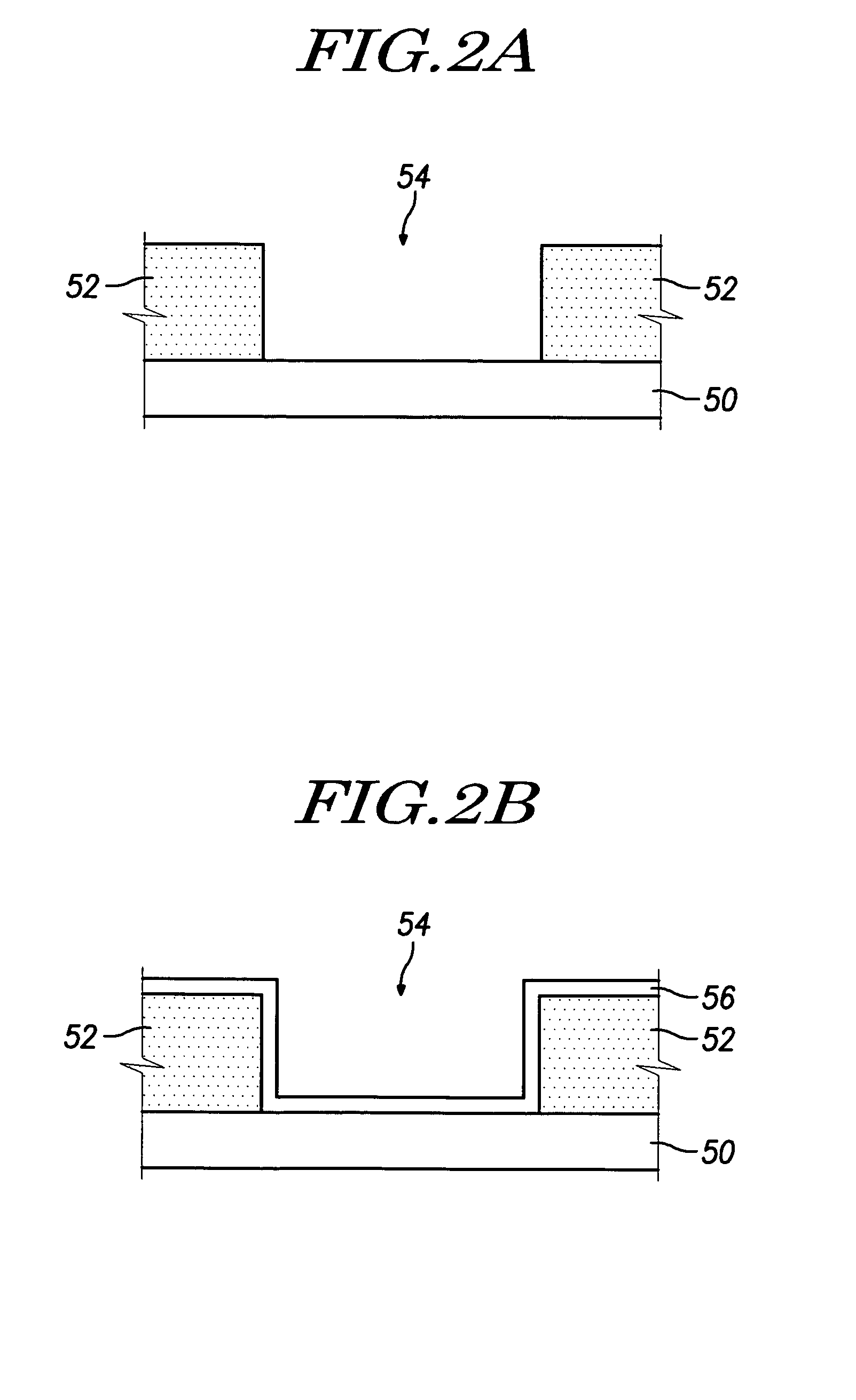
[0024] Referring to FIG. 1, a method for fabricating an antifuse according to the present invention may include contact forming step 10, antifuse material deposition step 20, and upper metal layer deposition step 30. In the contact forming step 10, a base for a programmable (or potential) connection structure (or antifuse) between overlying and underlying conductive layers that can be interconnected by the antifuse is formed. The overlying conductive layer may comprise a polysilicon layer (which may further have a metal silicide layer thereon) or a lower metal layer, and the underlying conductive layer may comprise an impurity diffusion layer (e.g., a source and / or drain terminal of a CMOS transistor, a base / emitter / collector terminal of a bipolar transistor, a buried bit line or word line in a memory, an electrode in a capacitor or an electrical connecti...
PUM
| Property | Measurement | Unit |
|---|---|---|
| resistance | aaaaa | aaaaa |
| conductive | aaaaa | aaaaa |
| depth | aaaaa | aaaaa |
Abstract
Description
Claims
Application Information
 Login to View More