
Optical film, polarizing plate and image display device
a technology of optical film and polarizing plate, which is applied in the direction of polarising elements, instruments, synthetic resin layered products, etc., can solve the problems of difficult to decrease the refractive index, decrease of coating strength or adhesion at the interface, and decrease of scratch resistance, so as to improve film strength and reduce adhesion, the effect of low refractive index
- Summary
- Abstract
- Description
- Claims
- Application Information
AI Technical Summary
Benefits of technology
Problems solved by technology
Method used
Image

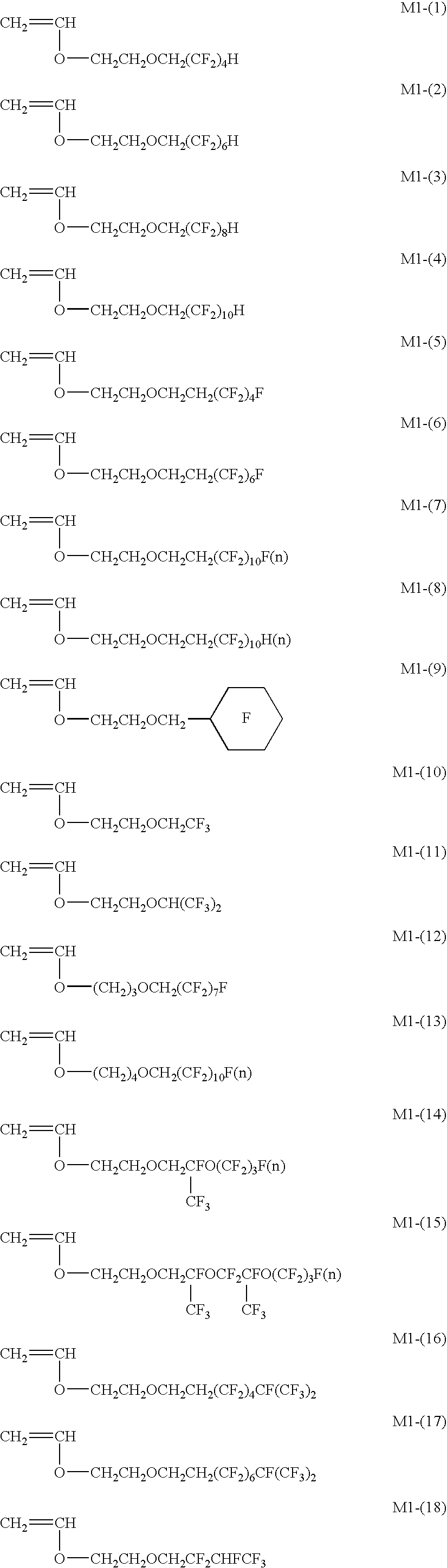
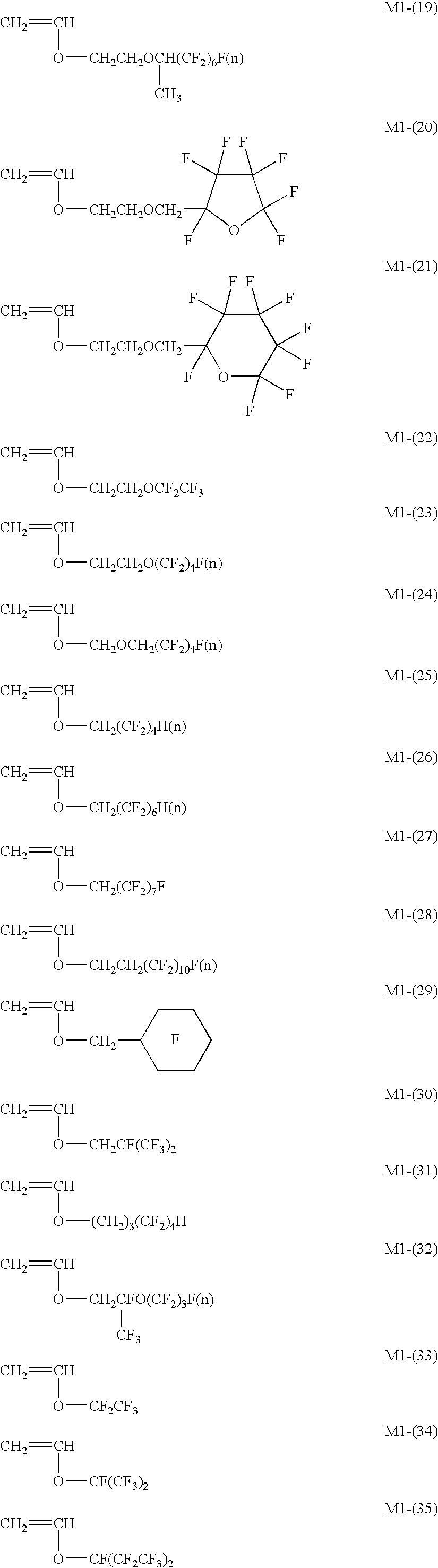
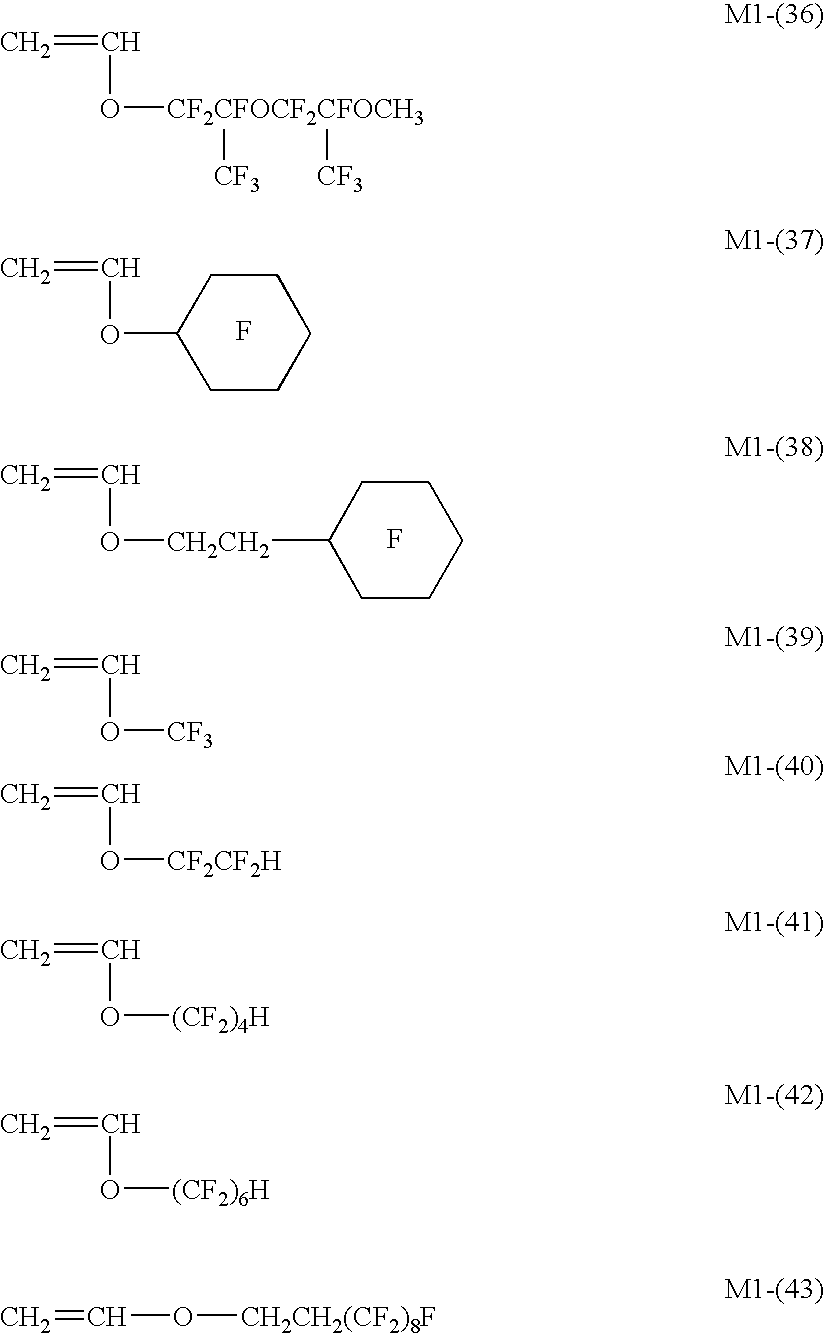
Examples
example 1
[Production of Antireflection Film]
[Preparation of Coating Solutions (Ln-1 to Ln-22) for Low Refractive Index Layer]
[0536]Respective components were mixed as shown in the Table and dissolved in MEK to prepare a coating solution for low refractive index layer having a solid content of 6%.
TABLE 3Fluorine-ContainingPolyfunctionalPolymerCompoundCuring CatalystPhotoinitiatorCoatingAmountFluorineAmountAmountAmountSolution No.KindUsedContent %KindUsedKindUsedKindUsedRemarksLn-1P-440.060.4Cymel 3038.0Catalyst 40501.0PM980M0.4InventionLn-2″44.060.4″8.0″1.0″0.4InventionLn-3″48.060.4″8.0″1.0″0.4InventionLn-4″48.060.4″8.0″1.0—0.0InventionLn-5″55.060.4″8.0″1.0PM980M0.4InventionLn-6″84.060.4″8.0″1.0″0.4ComparisonLn-7″92.060.4″8.0″1.0—0.0ComparisonLn-8″54.060.4″8.0″1.0PM980M0.4ComparisonLn-9″39.060.4″8.0″1.0″0.4InventionLn-10″39.060.4″8.0″1.0″0.4InventionLn-11″40.060.4″8.0″1.0—0.0InventionLn-12″44.060.4″8.0″1.0PM980M0.4InventionLn-13compound for40.038.9″8.0″1.0″0.4ComparisoncomparisonLn-14compound...
example 2
[0576]Coating Solutions Ln23, Ln24 and Ln25 for Low Refractive Index Layer were prepared in the same manner as Coating solution Ln1 for Low Refractive Index Layer except for changing the kind of the photoinitiator to Irg184, Irg907 and Irg369, respectively. After a low refractive index was coated on HC-1 by using Coating Solutions Ln1, Ln23, Ln24 and Ln25 under the same conditions as in Antireflection Film 1, saponification was performed to obtain Antireflection Films 23 to 26.
[0577]Also, Antireflection Films 27 and 28 were obtained by performing the curing and saponification under the same conditions as in the production of Antireflection Film 1 using Coating Solution Ln1 for Low Refractive Index Layer of Example 1 except for changing the temperature at the UV curing to 30° C. and 90° C.
[Evaluation of Antireflection Film]
[0578]Using the saponified antireflection films obtained in this way, the average reflectance, steel wool scratch resistance, marker wiping durability and SW scrat...
example 3
Preparation of Coating Solution for HC Layer:
[0580]
(Composition of Coating Solution HCL-2 for Hardcoat Layer)PETA40 wt %DPHA35 wt %Irgacure 184 3 wt %MX-60012 wt %KBM-510310 wt %Solid content concentration30 wt %MIBK / MEK90 / 10
(Composition of Coating Solution HCL-3 for Hardcoat Layer)PETA40 wt %DPHA38.5 wt % Irgacure 184 3 wt %SX-3505.5 wt % Crosslinked acryl-styrene particle 3 wt %KBM-510310 wt %Solid content concentration30 wt %MIBK / MEK90 / 10
(Composition of Coating Solution HCL-4 for Hardcoat Layer)PETA40 wt %DPHA31 wt %Irgacure 184 3 wt %SX-35010 wt %Crosslinked acryl-styrene particle5.5 wt % KBM-510310 wt %Solid content concentration30 wt %MIBK / MEK90 / 10
[0581]The constituent components above are shown by the mass percentage of the solid content. Details of the compounds used are as follows.
PETA:
[0582]A mixture of pentaerythritol triacrylate and pentaerythritol tetraacrylate, produced by Nippon Kayaku Co., Ltd.
DPHA:
[0583]A mixture of dipentaerythritol pentaacrylate and dipentaerythr...
PUM
| Property | Measurement | Unit |
|---|---|---|
| refractive index | aaaaa | aaaaa |
| particle size | aaaaa | aaaaa |
| refractive index | aaaaa | aaaaa |
Abstract
Description
Claims
Application Information
 Login to View More