
Bias and random delay cancellation
- Summary
- Abstract
- Description
- Claims
- Application Information
AI Technical Summary
Benefits of technology
Problems solved by technology
Method used
Image

Examples
Embodiment Construction
[0008]In order to further facilitate the above-mentioned miniaturization, it is desirable to limit the number of pins on connectors, and to reduce the amount of circuitry in these devices and to reduce the amount of power dissipated by these devices. Thus, it would be advantageous to substantially reduce or eliminate the need to include a high-frequency clock within these small devices.
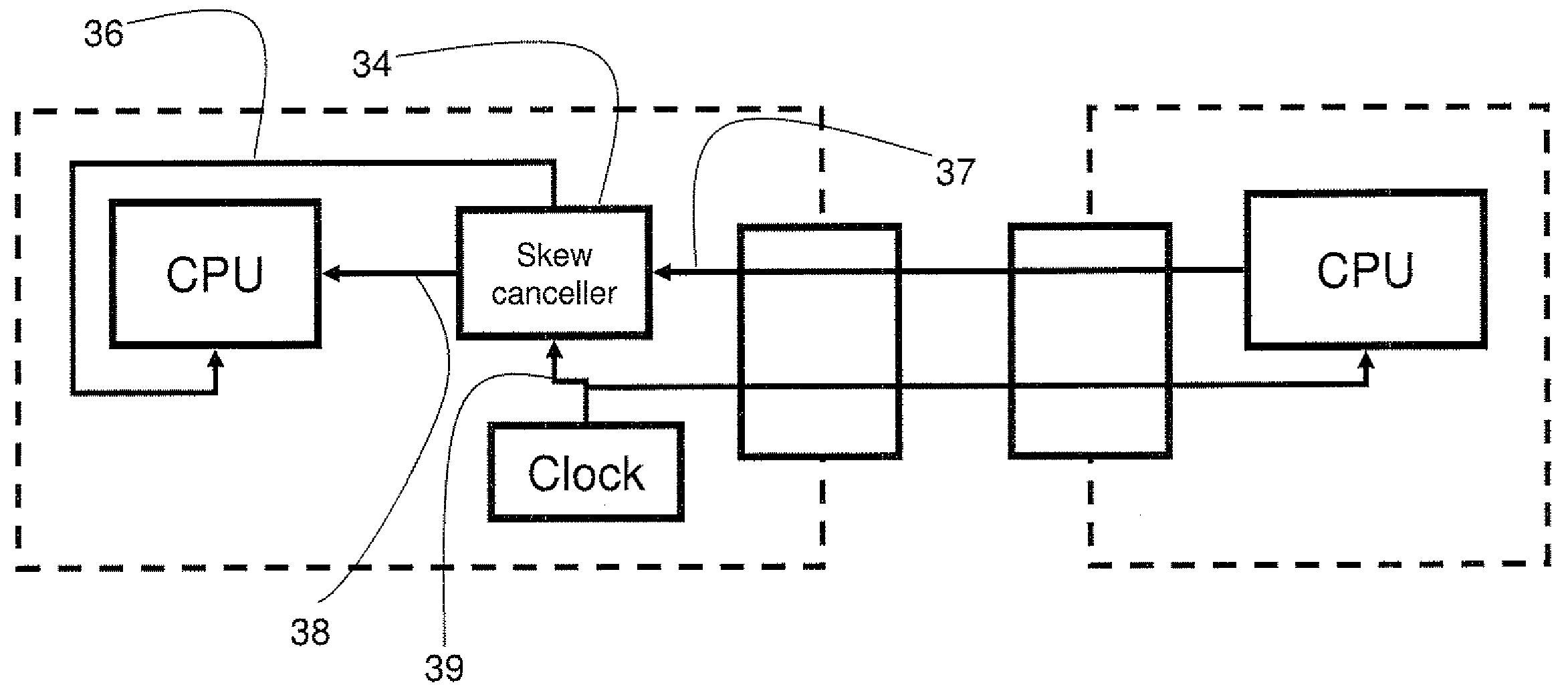
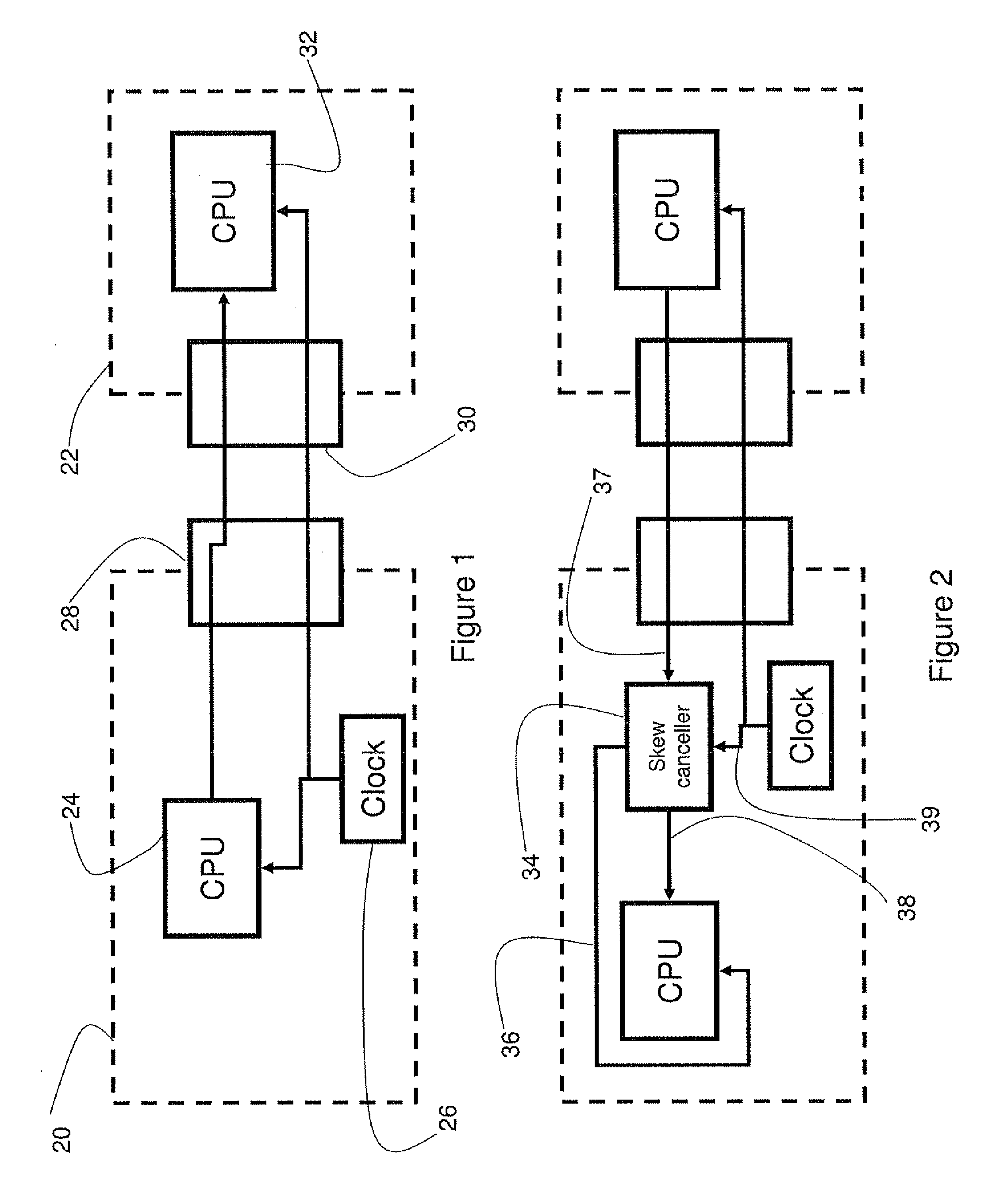
[0009]It would be further advantageous to have bi-directional multi-bit per clock pulse communication between a host and a device, without the need to build a clock into the device, and with compensation for errors in the timing of the sampling signals of the host receiver and the device receiver caused by both bias errors and random delay errors. There is thus an advantage in providing bias and random delay compensation in a data communication system.
[0010]Multi-bit per clock pulse communication has the advantage of using a slower clock, which is less noisy and consumes less power.
[0011]Various embod...
PUM
 Login to View More
 Abstract
Description
Claims
Application Information
 Login to View More