
Vacuum processor
a technology of vacuum processor and rotary blade, which is applied in the direction of vacuum evaporation coating, electrolysis components, coatings, etc., can solve the problems of difficult capture of adhesive materials in pipes, adverse effect on yield of semiconductor elements, and difficulty in passing through the vanes of the rotary blade to the pump, so as to reduce the degradation of yield of members, restrain the exposure of the front end of the peripheral part, and restrain the degradation of yield
- Summary
- Abstract
- Description
- Claims
- Application Information
AI Technical Summary
Benefits of technology
Problems solved by technology
Method used
Image

Examples
first embodiment
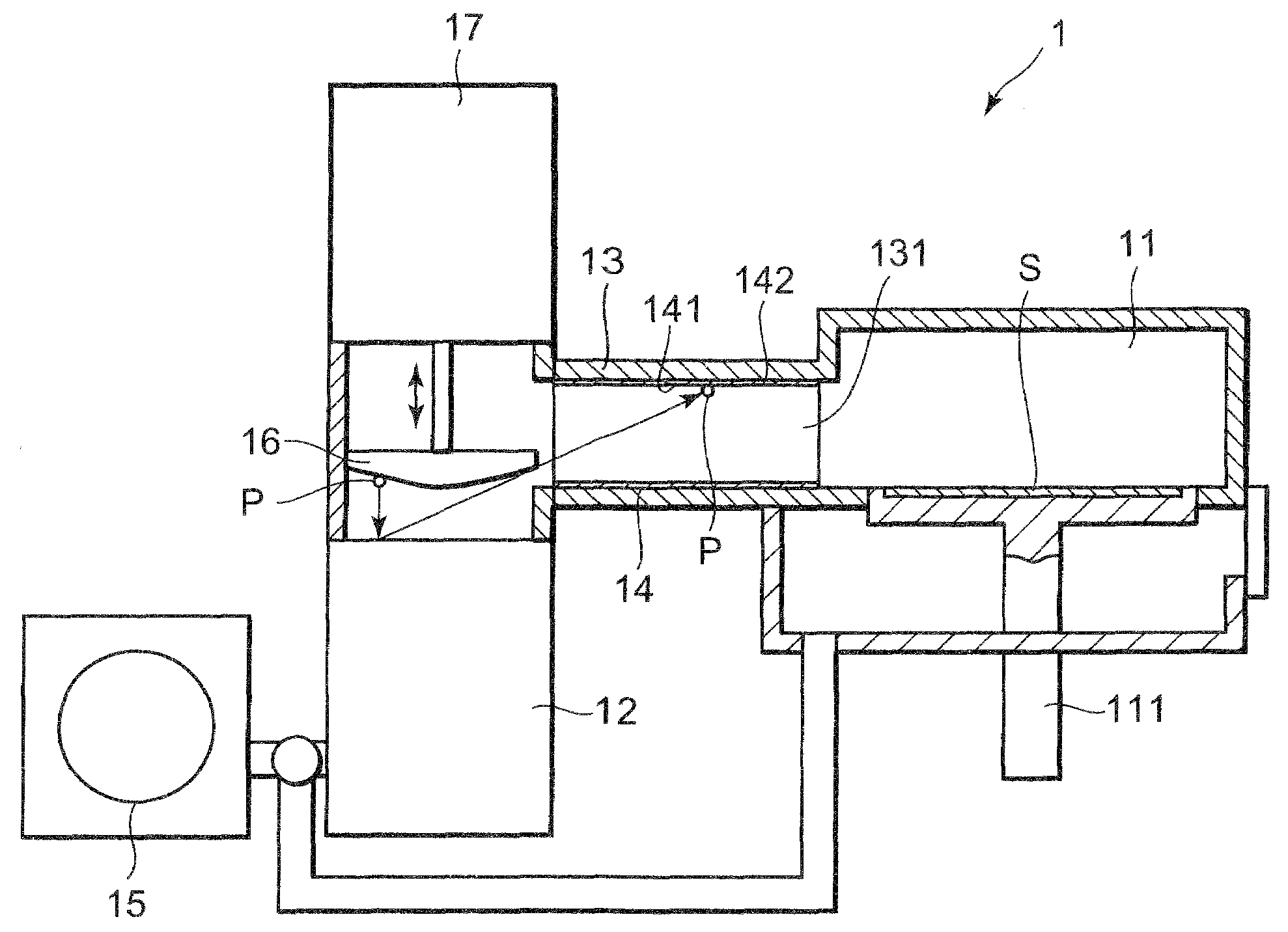
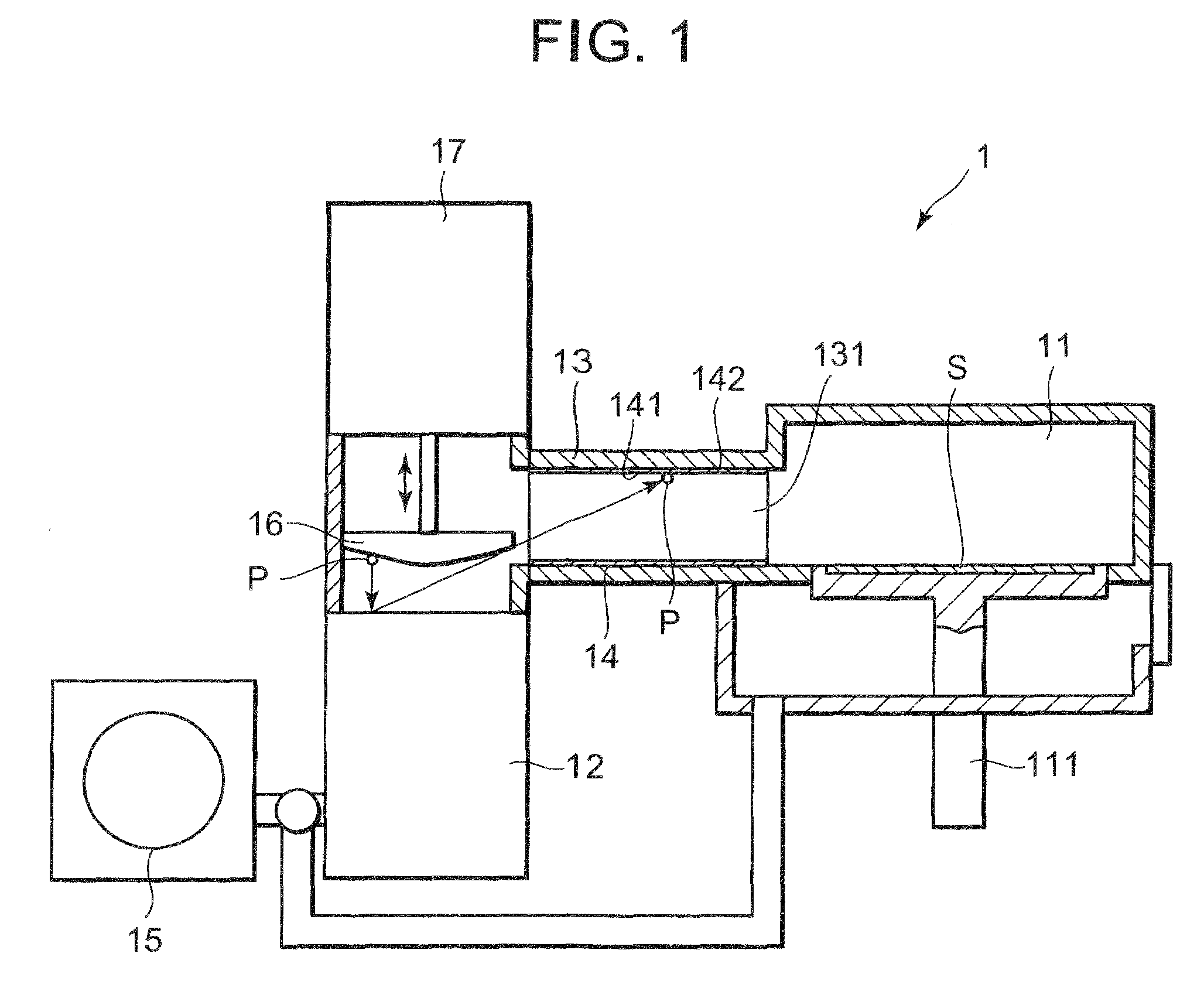
[0054]Referring to FIGS. 9 to 11, description will be made on a first embodiment of the present invention below. In the present embodiment, as illustrated in FIG. 9, a fibrous substance 241 includes woven cloth 243 having a surface facing the passage 131 and unwoven cloth 242 having a surface on the passage 131 side covered with the woven cloth 243. The peripheral part of the woven cloth 243 is folded to the back side of the unwoven cloth 242 (also corresponding to the back side of woven cloth 243) and a peripheral part front end 243A of the woven cloth 243 is interfolded to the back side of the unwoven cloth 242. Other respects are the same as for the basic configuration described above.
[0055]The unwoven cloth may be formed by a needle punch method. Otherwise, the span bond method, thermal bond method or chemical bond method may be used. Of the above-methods, preferably, the needle punch method is used. Some materials of the unwoven cloth 242 are difficult to cause fusion between f...
second embodiment
[0069]Referring to FIG. 12, a second embodiment of the present invention will now be described. In the first embodiment, the fibrous substance 241 has the unwoven cloth 242 and the woven cloth 243. On the other hand, in the present embodiment, a fibrous substance 441 has a first woven cloth 443 having a surface facing a passage 131 and a second woven cloth 442 having a surface on the passage 131 side covered with the first woven cloth 443. Other respects are the same as for the embodiment described above.
[0070]The first woven cloth 443 covers the whole surface of one face of the second woven cloth 442 on the passage 131 side, and a peripheral part thereof is folded to the other face of a second woven cloth 442 (back face of the second woven cloth 442, also corresponding to back side of the first woven cloth 443) and the peripheral part front end of the first woven cloth 443 is interfolded to the other face side of the second woven cloth 442. The way of folding the peripheral part of...
PUM
| Property | Measurement | Unit |
|---|---|---|
| aperture diameter | aaaaa | aaaaa |
| aperture diameter | aaaaa | aaaaa |
| length | aaaaa | aaaaa |
Abstract
Description
Claims
Application Information
 Login to View More