[0008]A method of injecting steam into a sealed vessel has several features, no single one of which is solely responsible for its desirable attributes. Without limiting the scope of these inventions, some of the more prominent features will now be discussed briefly. After considering this discussion, and particularly after reading the section entitled “Detailed Description,” one will understand how the features of these inventions provide advantages, which can include, for example: minimization of the amount of liquid introduced into the reactor, total moisturization, increased methane and CO2 production, and production of methane having higher Btu values as compared to methane produced in other reactors.
[0009]Whereas wet reactors in use today operate in the aqueous phase, the methods and apparatus disclosed herein can operate in the vapor to bio-film phase. Steam expands 1,600 times its original volume. Therefore, much less water can be required to biodegrade the organic waste with steam and produce a maximum amount of
biogas with little to no
wastewater.
Moisture and heat accelerates
decomposition of organic refuse.
Pilot Study data from
steam injection in landfills indicates that 1 volume of steam can create 1 equal volume of
landfill gas or
biogas.
[0010]Some embodiments provide a method of injecting steam into a sealed vessel that is loaded with organic waste and collecting the methane produced by accelerated decomposition /
biodegradation of the
organic component of the waste within the vessel. The steam accelerates the decomposition of the organic refuse, thereby enhancing the production of
methane gas and CO2.
Anaerobic digestion processes contribute to the production of this gas. Once the organic waste is inoculated with
bacteria, biogas
recovery can begin within hours instead of the 21 days required by many typical current systems that employ wet processes.
[0011]The reduced decomposition time can allow for a
continuous flow of organic waste into the reactor. It has been found that according to certain methods, for every approximately 12,000 cubic feet of biogas produced, approximately 1
ton of organic waste has been converted to gas. In addition, for every approximately 12,000 cubic feet of steam injected, approximately 12,000 cubic feet of biogas is produced, with at least approximately 50% to approximately 60% methane and approximately 40% to approximately 50% CO2. Therefore, every approximately 56 gallons of water converted to steam can produce approximately 12,000 cubic feet of biogas and remove approximately 1
ton of organic waste from the reactor. Any excess
moisture in the organic waste itself can exit the reactor with the biogas as most biogas is usually saturated with a
moisture content of approximately 2 to 12%
water vapor.
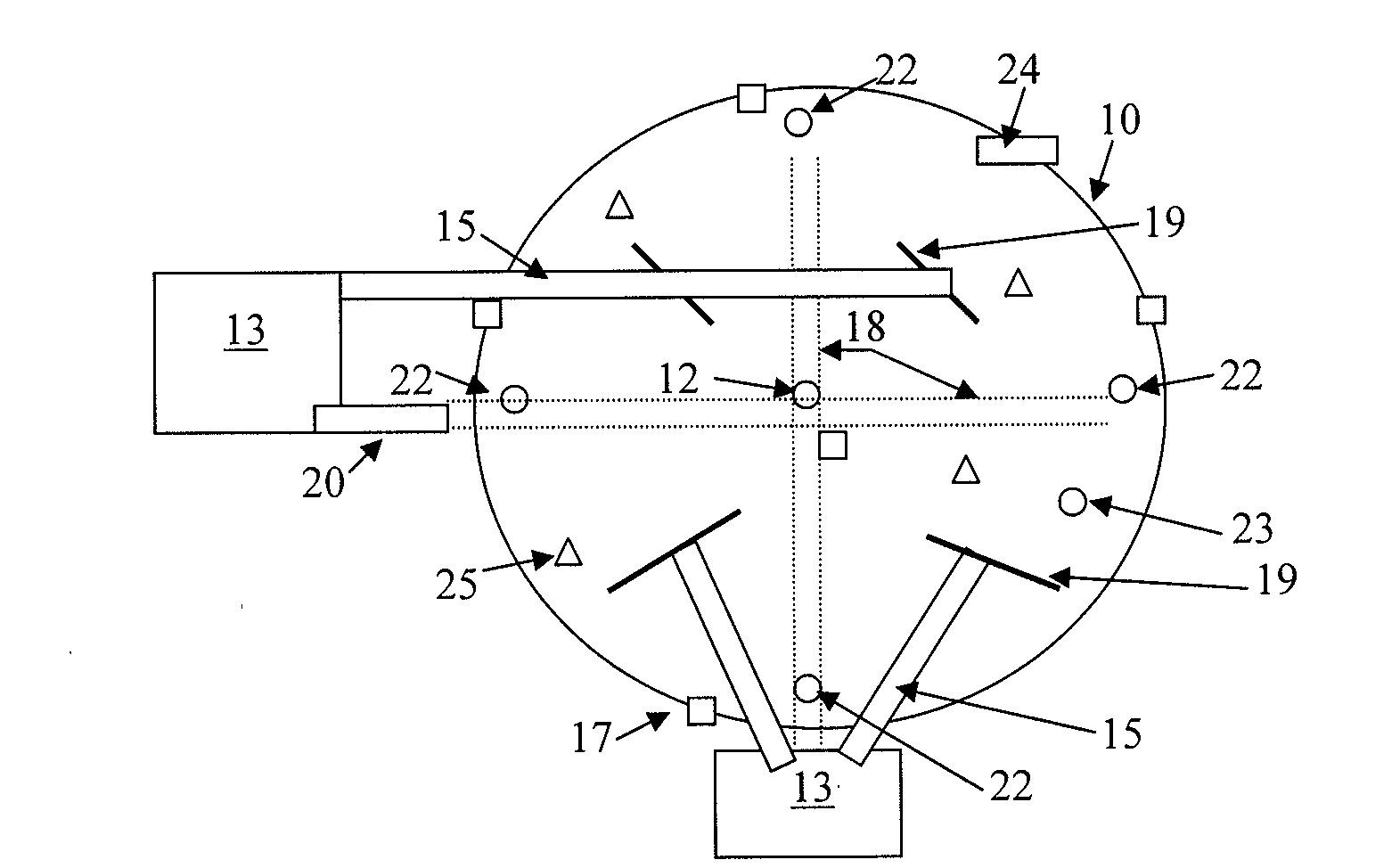
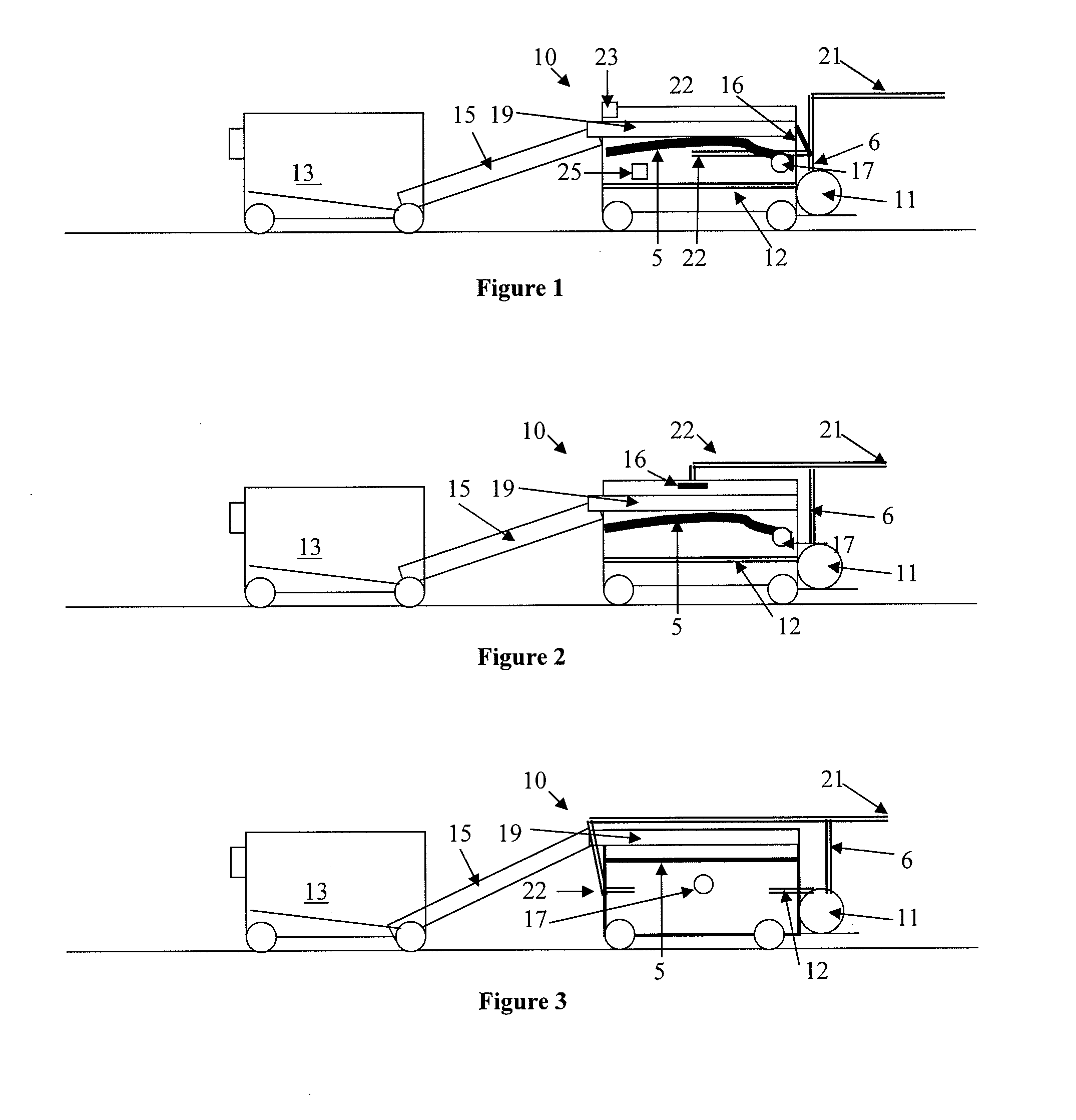
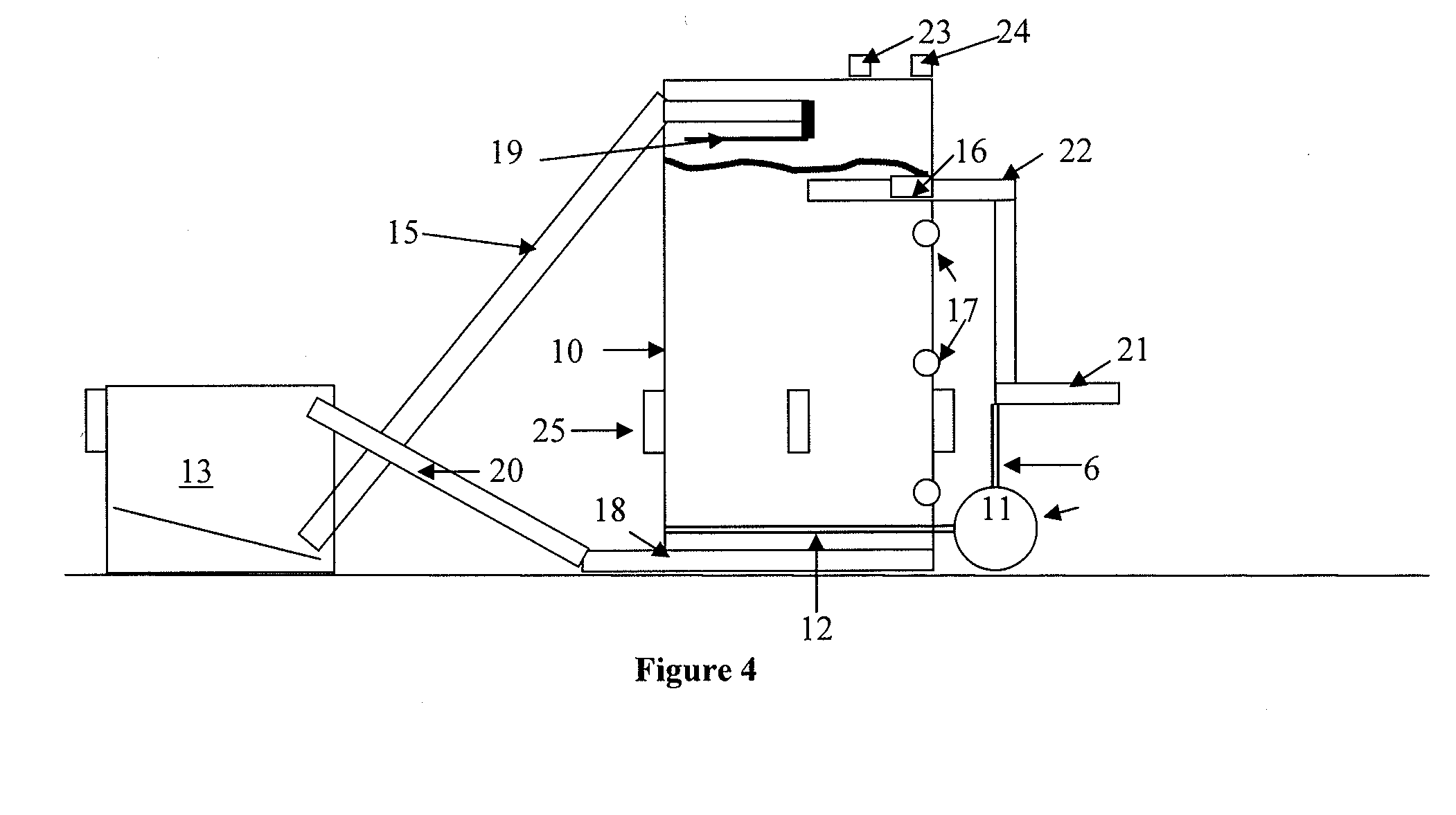
[0015]Some embodiments provide a method for the extraction of biogas from organic material. Organic material is placed into a first container. The material is purged of air. The material is then conveyed into a substantially air-tight second container. Steam is injected into the second container to facilitate the decomposition of the organic material and the generation of biogas.
Biogas is extracted from the second container. Additional organic material is added to the second container, either continuously or as needed, to maintain a desired level of material in the second container. The level of material can be monitored such that the supply of additional material is controlled. The substantially air-tight condition of the second container can be maintained by providing a seal between the first container and the second container. In some embodiments, the seal is maintained by keeping a continuous feed of material in the conveyer
system between the first and second containers. In some embodiments, the conveyer
system is a screw
auger. As the level of material in the second container approaches or drops below a desired threshold, additional material can be fed into the container. In some embodiments, the level of material is monitored in one or both containers with a light and camera
system. The migration of steam through the material in the second container can be controlled to achieve a desired level of
biogas production. In some embodiments, densifying the material in the second container, for example by incorporating smaller particulate or by assisting in the
settling of the material, can slow the migration of steam through the material. In some embodiments, barriers can be used over the biogas extractors to reduce the amount of
moisture drawn out of the second container.


 Login to View More