
Portable celestial compass
- Summary
- Abstract
- Description
- Claims
- Application Information
AI Technical Summary
Benefits of technology
Problems solved by technology
Method used
Image

Examples
Embodiment Construction
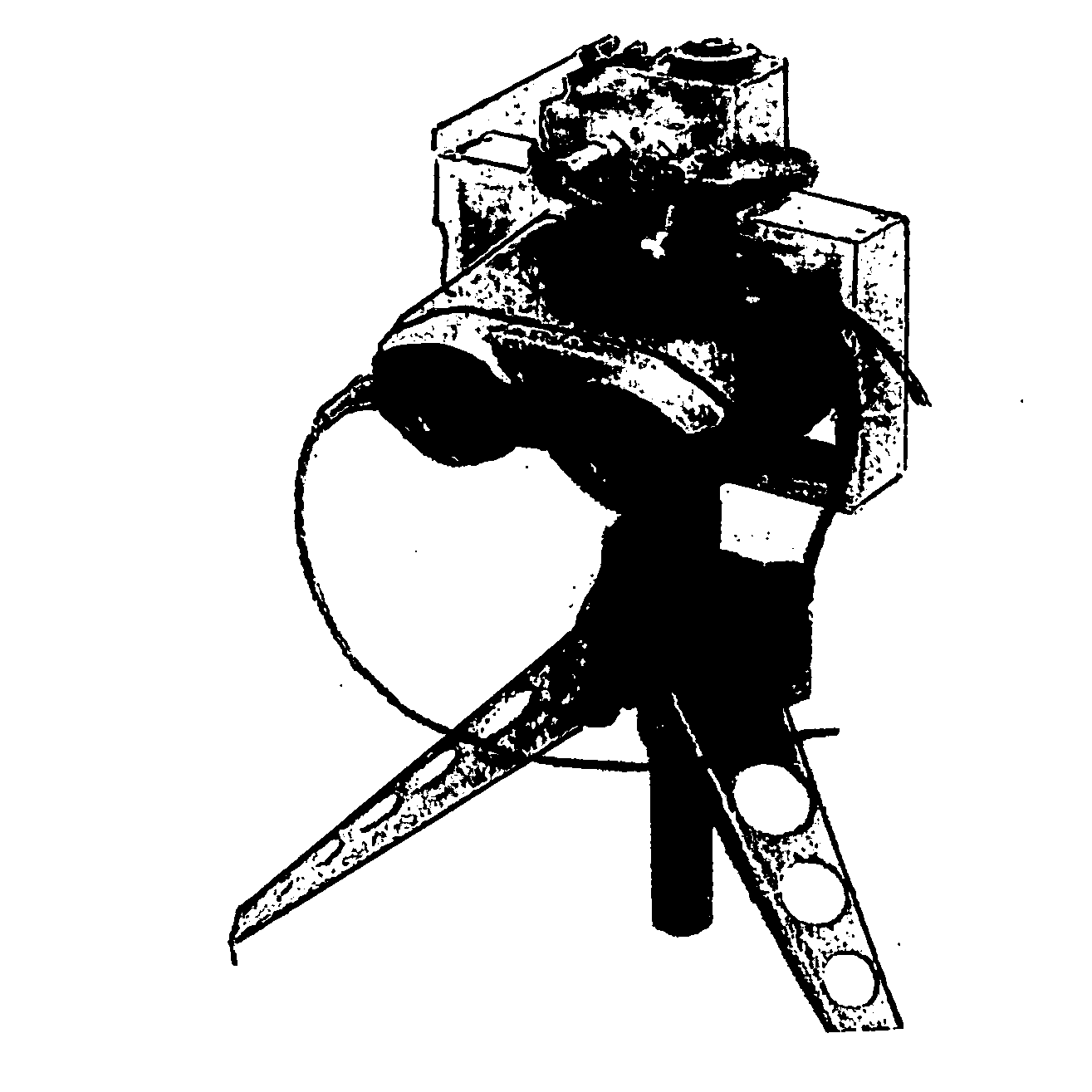
[0008]Preferred embodiments of the present invention can be described by reference to the figures. The PCS is built around M25 stabilized binoculars that have 14-power optics that allows an observer to identify targets and assess battle damage at extended ranges. The M25 is stabilized by a precision miniature gyroscope mounted on a gimbaled platform in the middle of the optical pathway. A gyro stabilized binocular rejects up to 98% of image motion caused by hand tremor and platform vibration. It has a 14× magnification, field of view of 4.3 degrees, and stabilization freedom of ±8 degree.
[0009]A laser range finder uses a miniature eye safe laser, which is capable of sending a beam out to 5 km and providing good signal-to-noise ratio without placing a high burden on the power supply. An integration of the range finder with a stabilized binocular provides beam stabilization and eliminates beam jitter. The laser rangefinder has an accuracy of ±2 m at 5 km range.
[0010]The PCC also inclu...
PUM
 Login to View More
 Abstract
Description
Claims
Application Information
 Login to View More