
Hyper-spectral imaging and analysis of a sample of matter, for identifying and characterizing an object of interest therein
a technology applied in the field of hyper-spectral imaging and analysis of a sample of matter, can solve the problems of affecting the processing and analysis of generated and collected hyper-spectral image data and information, affecting the generation and collection of hyper-spectral images, and affecting the accuracy of the image, etc., to achieve high reproducibility, high precision, and high accuracy
- Summary
- Abstract
- Description
- Claims
- Application Information
AI Technical Summary
Benefits of technology
Problems solved by technology
Method used
Image

Examples
example 1
Hyper-Spectral Imaging and Analysis of ‘Dust Particles’ Present in a Sample of Air Collected from an Indoor Source of Air
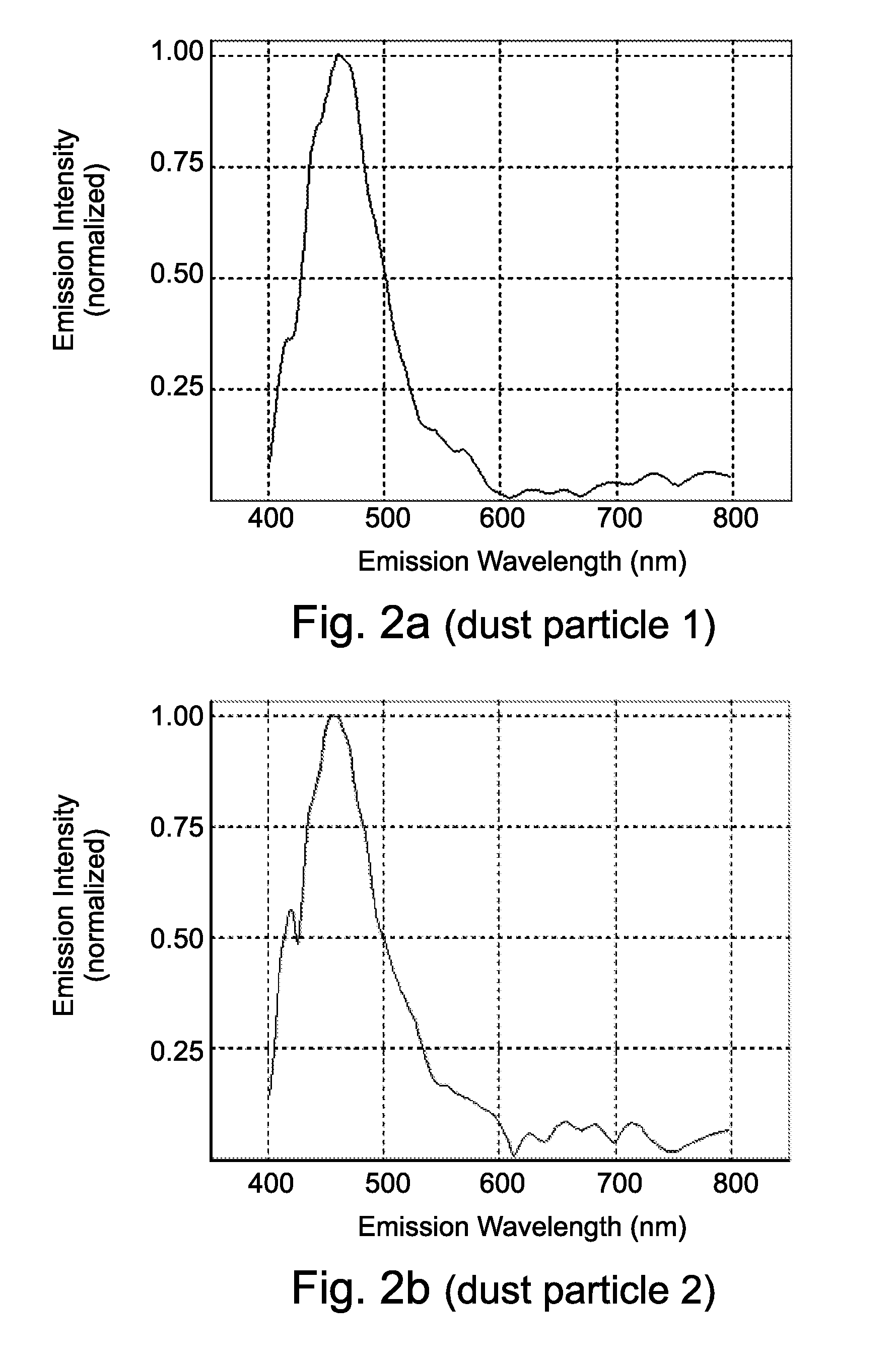
[0187]In Example 1, (dry form) dust particles of different sizes and shapes present in samples of air (i.e., air samples) collected from an indoor source of air (absent of any particular object of interest (target), such as a biological agent or chemical agent) were subjected to hyper-spectral imaging and analysis. The main objective was for obtaining hyper-spectral image data and information in the form of images and spectral fingerprint (SFP) or spectral signature pattern types of identification and characterization of the various different sized and shaped dust particles present in the source of air, for serving as a useful reference associated with ‘objects of non-interest’ (background) during hyper-spectrally imaging and analyzing of similarly collected air samples, or of other types of samples of matter, which may have present an ‘object of interest’ (target...
example 2
Hyper-Spectral Imaging and Analysis of (Native) ‘Dust Particles’ Suspended in Different Liquids (Ethanol, or Ethylene Glycol), for Determining Extent of ‘Background’ Signal Reduction Effected by Each Liquid
[0192]In Example 2, (native) dust particles of different sizes and shapes manually collected from dust originating from an indoor source of air (absent of any particular object of interest (target), such as a biological agent or chemical agent) were suspended in different liquids (ethanol, or ethylene glycol) and subjected to hyper-spectral imaging and analysis. The main objective was for obtaining hyper-spectral image data and information in the form of hyper-spectral images and spectral fingerprint (SFP) or spectral signature pattern types of identification and characterization of the suspended dust particles (as exemplary test suspensions), for determining the extent or degree of background signal reduction that could be effected by each suspending liquid. The experimental data...
example 3
Hyper-Spectral Imaging and Analysis of Target-Containing Test Suspensions of [(Dipicolinic Acid [DPA])-Terbium Trichloride [TbCl3]} Complex, and of Target-Containing Test Suspensions of {Biological Agent Bacillus subtilis Spore (Dipicolinic Acid [DPA])-Terbium Trichloride [TbCl3]} Complex], Suspended in the Background Reducing Chemical being Ethylene Glycol
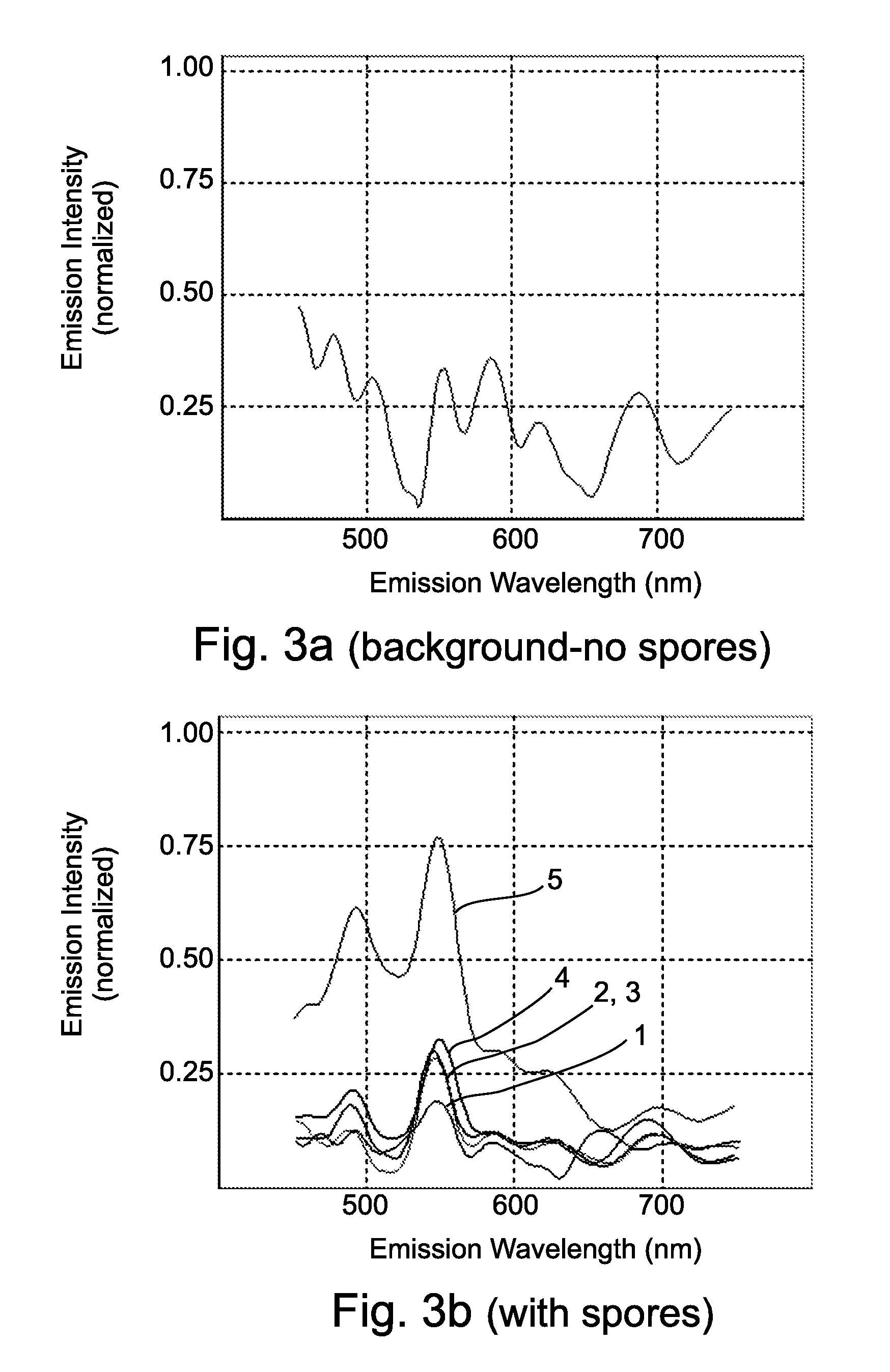
[0199]The rapid and accurate identification of biological agents is a vital task for first-responders in order to facilitate timely and appropriate actions in the event of a biological attack. Bacillus anthracis, a spore-forming bacterium and a dangerous pathogen causing the anthrax disease, is an important example. Among the potential biological warfare agent candidates, Bacillus anthracis spores are of particular concern. First, they are highly resistant to environmental stress and are relatively easily produced into weapon-grade material outside the laboratory. Second, anthrax is an infectious disease, requiring medical attenti...
PUM
| Property | Measurement | Unit |
|---|---|---|
| temperature | aaaaa | aaaaa |
| temperature | aaaaa | aaaaa |
| temperature | aaaaa | aaaaa |
Abstract
Description
Claims
Application Information
 Login to View More