
Hydraulic Bed Sensor and System for Non-Invasive Monitoring of Physiological Data
a sensor and physiological data technology, applied in the field of physiological data non-invasive monitoring by hydrostatic bed sensors and systems, can solve problems such as confusion of number of techniques and signals
- Summary
- Abstract
- Description
- Claims
- Application Information
AI Technical Summary
Benefits of technology
Problems solved by technology
Method used
Image

Examples
Embodiment Construction
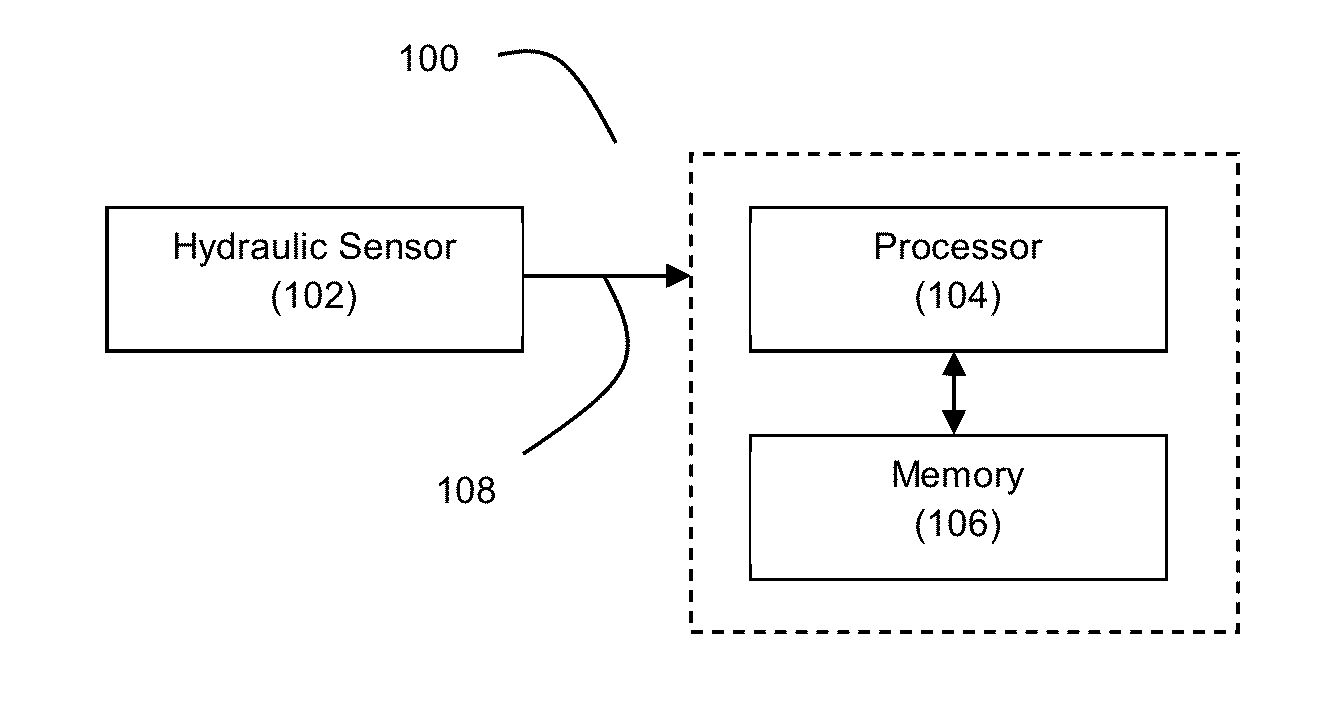
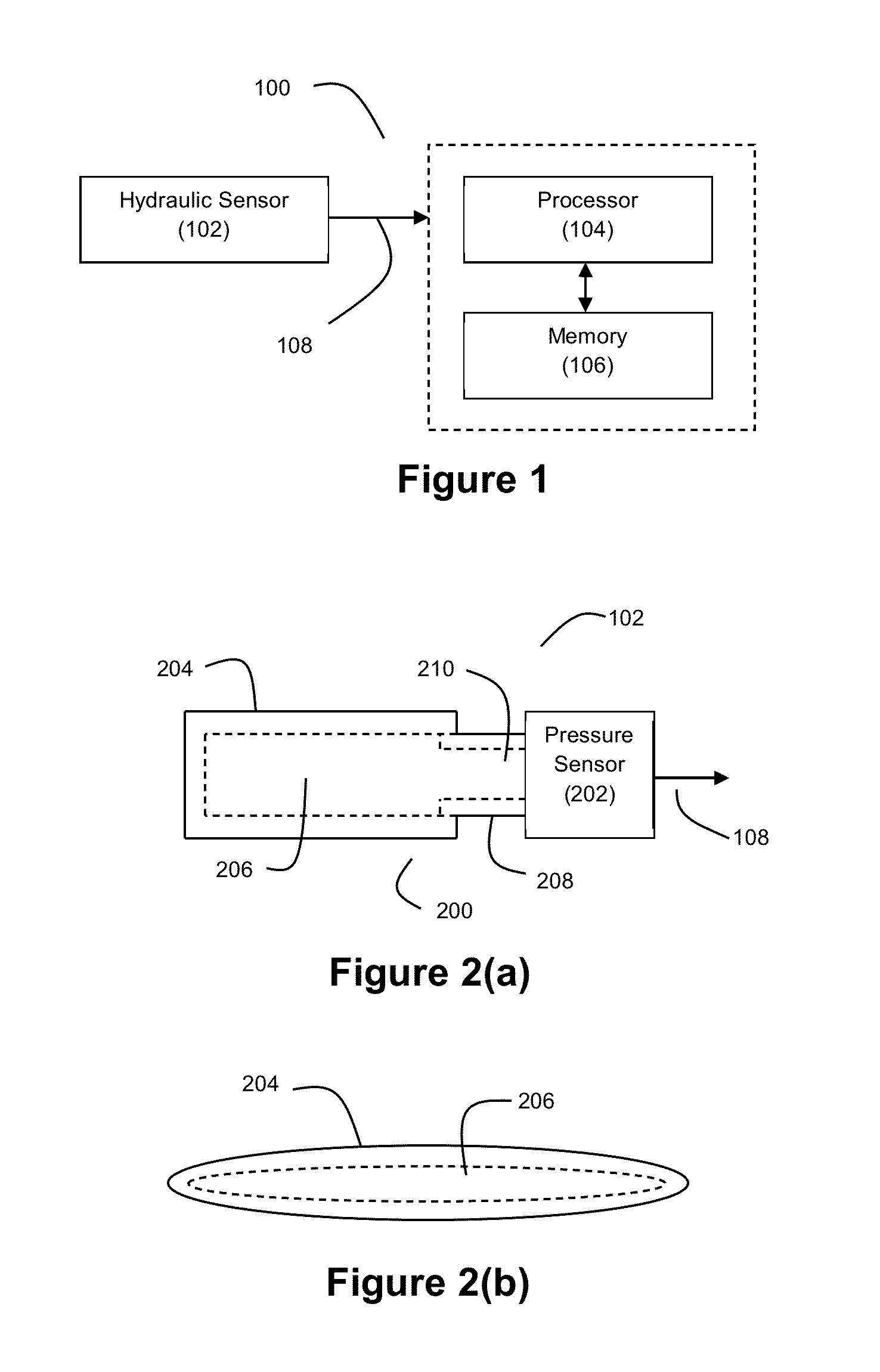
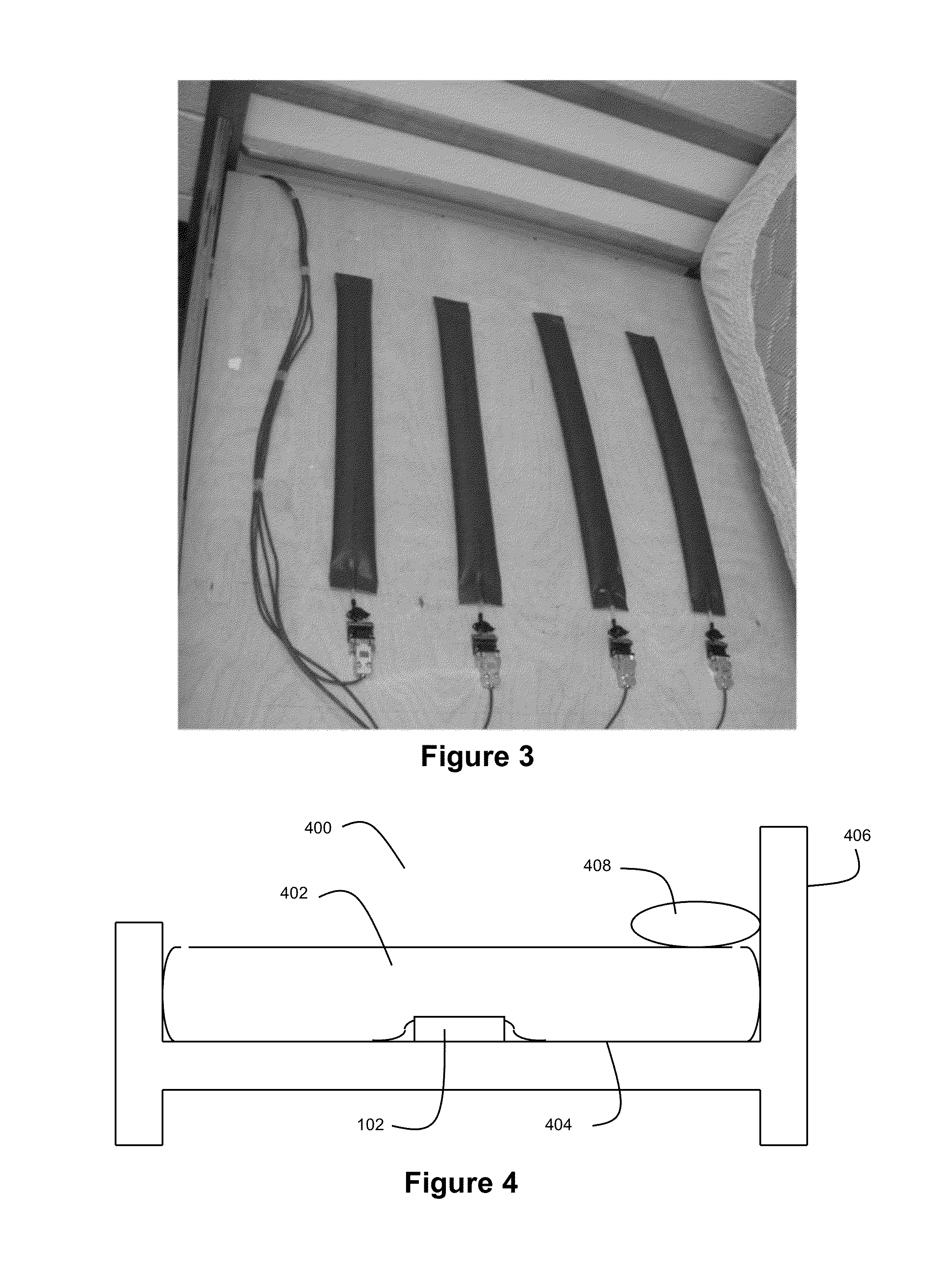
[0051]The invention provides a new and improved non-invasive bed sensing system to detect and monitor small scale physiological movements, such as breathing and heartbeat. Exemplary embodiments disclosed herein employ a hydraulic fluid to transduce the physiological pressures to an integrated pressure sensor. Signal processing techniques can employ techniques such as windowed peak-to-peak deviation (WPPD) and / or clustering to identify physiological data such as windowed instantaneous heart rates, individual cardiac pulses, respiration, restlessness, or other parameters from the electronic signals generated by the hydraulic transducer. These electronic signals will contain a cardiac component (attributable to the subject's heartbeat), a respiratory component (attributable to the subject's breathing motions), and a noise component (attributable to sources other than heartbeats and breathing). The signal processing techniques can be configured to extract the relevant cardiac informatio...
PUM
 Login to View More
 Abstract
Description
Claims
Application Information
 Login to View More