Check patentability & draft patents in minutes with Patsnap Eureka AI!

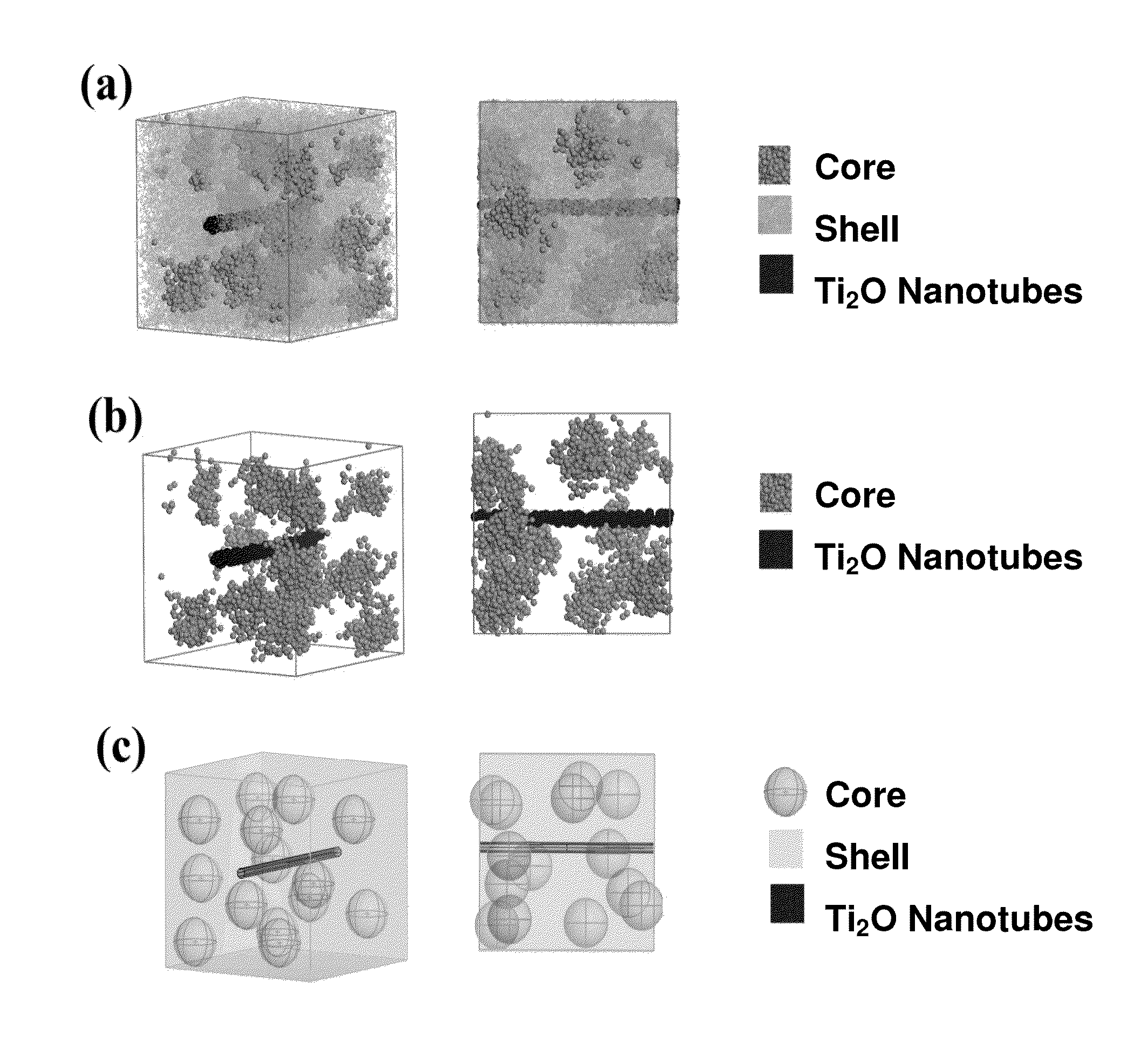
Procedure summary of water-based polymer resin doped titanium dioxide nanotubes as application corrosion coating.

Active Publication Date: 2014-02-06
INST MEXICANO DEL GASOLINEEO
View PDF1 Cites 0 Cited by
  • Summary
  • Abstract
  • Description
  • Claims
  • Application Information

AI Technical Summary

Benefits of technology

The patent text discusses the development of new polymer dispersions in the field of anti-corrosion coatings for metal structures. The technical effects of the invention include the synthesis of polymeric resin 100% water based corrosion, the use of titanium dioxide nanotubes, and the development of new composite materials that can increase or alter the properties of individual compounds. The goal is to minimize the use of organic solvents in the formulation of aqueous coating compositions that provide a smooth high gloss and good physical properties. The coatings industry is also struggling with the application conditions and pre-treatment of surfaces.

Problems solved by technology

Anticorrosive polymeric coatings are known since the early 50's, as shown in U.S. Pat. No. 5,674,934, where they were used with organic solvents, so that at present they are undesirable because of the toxicity and flammability of these solvents.
However, it is often difficult to achieve smooth coating finishes and high quality, such as those required in the industry, eliminating the use of organic solvents to help lower the viscosity and contributes to the leveling of a coating.

Method used

the structure of the environmentally friendly knitted fabric provided by the present invention; figure 2 Flow chart of the yarn wrapping machine for environmentally friendly knitted fabrics and storage devices; image 3 Is the parameter map of the yarn covering machine
View more

Image

Smart Image Click on the blue labels to locate them in the text.
Viewing Examples
Smart Image
  • Procedure summary of water-based polymer resin doped titanium dioxide nanotubes as application corrosion coating.
  • Procedure summary of water-based polymer resin doped titanium dioxide nanotubes as application corrosion coating.
  • Procedure summary of water-based polymer resin doped titanium dioxide nanotubes as application corrosion coating.

Examples

Experimental program
Comparison scheme
Effect test

example 1

Synthesis of a Polymer Resin Consisting of Two Monomers (Copolymer)

[0049]A 1 L reactor consisting of a stirrer, cooling equipment feedline inert gas (N2), the feed tank pre-emulsion, bath temperature control and metering pump. Were added from 160 to 220 g of MMA (methyl methacrylate), of 20 to 80 g Abu (butyl acrylate), 2.0 to 3.0 g of surfactant, of between 3.5 and 5.5 g of NaHCO3 and between 8.0 and 9.0 g of APS (ammonium persulfate). The reactor was heated in a temperature range between 70 and 85° C. and into it was added reagents for the pre-emulsion, of between 0.5 and 2.0 g of the monomer mixture, between 1.0 and 3.0 g of lauryl sulfate sodium, 80 to 110 g of NaHCO3, between 15 and 20 g of APS and the remaining water to obtain a solid theoretical rate of about 40%.

[0050]The reaction is initiated by an interval of 15 to 45 min, with stirring from 250 to 400 RPM. The rest of the monomers are arranged in a continuously stirred tank addition. Starts the addition of the first tank...

example 2

Synthesis of a Polymer Resin Consisting of Three Monomers (Terpolymer)

[0051]A 1 L reactor consisting with stirrer, cooling equipment feedline inert gas (N2), the feed tank pre-emulsion, bath temperature control and metering pump. Are added between 35 and 65 g of MMA (methyl methacrylate) of 110 to 120 g Abu (butyl acrylate) of 50 to 80 g of S (styrene), 2.0 to 3.0 g surfactants, of between 3.5 and 5.5 g of NaHCO3 and between 8.0 and 9.0 g of APS (ammonium persulfate). The reactor was heated in a temperature range between 70 and 85° C. and into it was added reagents for the pre-emulsion, of between 0.5 and 2.0 g of the monomer mixture, of between 1.0 and 3.0 g of lauryl sulfate sodium, 80 to 110 g of NaHCO3, between 15 and 20 g of APS and the remaining water to obtain a solid theoretical rate of about 40%.

[0052]The reaction is initiated by an interval of 15 to 45 min, with stirring from 250 to 400 RPM. The remaining components are disposed in a tank of addition with continuous stirri...

example 3

Synthesis of a Polymer Resin Core-Shell type

[0053]A 1 L reactor consisting with stirrer, cooling equipment feedline inert gas (N2), the feed tank pre-emulsion, bath temperature control and metering pump. 40 are added to 50 g of MMA (methyl methacrylate) of 110 to 120 g Abu (butyl acrylate), 60 to 70 g of S (styrene) of between 2.4 and 4.8 g of EGDMA (acrylate glycol di-methylethyl) of between 7.2 to 9.6 g of AA (acrylic acid), 2.0 to 3.0 g of surfactant, of between 3.5 and 5.5 g of NaHCO3 and between 8.0 and 9.0 g of APS (ammonium persulfate). The reactor is heated in a temperature range between 70 and 85° C. and the reagents are added to the seed formation, between 0.5 and 2.0 g of the monomer mixture, of between 1.0 and 3.0 g of Disponil® AES13, between 80 and 110 g of NaHCO3, between 15 and 20 g of APS and the remaining water to obtain a solid theoretical rate about 40%.

[0054]The reaction is initiated by an interval of 15 to 45 min, with stirring from 250 to 400 RPM. The rest of ...

the structure of the environmentally friendly knitted fabric provided by the present invention; figure 2 Flow chart of the yarn wrapping machine for environmentally friendly knitted fabrics and storage devices; image 3 Is the parameter map of the yarn covering machine
Login to View More

PUM

No PUM Login to View More

Abstract

The present invention relates to the application of polymeric resins and TiO2 doped with polymeric resins as coatings for external metal surfaces for industrial use, by selecting the following metals: stainless steel, carbon steel and copper. Focuses specifically on the synthesis of a polymeric resin waterborne corrosion consisting of nano-structured polymer particles formed with two or more acrylic monomers, vinyl or styrenic a functionalizing agent and a crosslinking agent from 1.0 to 20% w each. Doping addition is made of the same polymeric resins, which are incorporated in nanotubes of titanium dioxide in concentrations ranging from 50 to 10,000 ppm. The polymeric resin is water based corrosion synthesized by emulsion polymerization techniques and is during the synthesis process is introduced nanotube loading of titanium dioxide, which allowing the dispersion in the polymer matrix. Polymer dispersions obtained in this way are used as anti-corrosion coatings 100% water based.

Description

TECHNICAL FIELD OF THE INVENTION[0001]This invention relates to polymer dispersions in the field of anti-corrosion coatings for metal structures external industrial use. Focuses specifically on the synthesis of polymeric resin 100% water based corrosion, to which may or may not incorporate titanium dioxide nanotubes.BACKGROUND OF THE INVENTION[0002]Anticorrosive polymeric coatings are known since the early 50's, as shown in U.S. Pat. No. 5,674,934, where they were used with organic solvents, so that at present they are undesirable because of the toxicity and flammability of these solvents.[0003]Applications for patent publication No. WO 95 / 32228, U.S. 2004 / 0087713 and No. WO 2004 / 105963 show that the industry has worked in research and development of new coatings with low VOC's composition (Volatile Organic Compounds) that are in high demand from the ecological point of view as mentioned Kivit P. et al. 283-284:290 Macromolecular Symposium (2009). Suma et al. Macromolecular Symposiu...

Claims

the structure of the environmentally friendly knitted fabric provided by the present invention; figure 2 Flow chart of the yarn wrapping machine for environmentally friendly knitted fabrics and storage devices; image 3 Is the parameter map of the yarn covering machine
Login to View More

Application Information

Patent Timeline
no application Login to View More
IPC IPC(8): C23F11/173C09D7/62
CPCC23F11/173C01B32/00B82Y30/00C08K9/00C08K9/08C08K2003/2237C09D7/70C09D5/084C09D7/62C08K3/22C08K2003/2241C09D133/08C09D133/12
Inventor MONTESINOS GOMEZ, ROSA DEL CARMENPLIEGO VENCES, LIZBETHROMERO HERNANDEZ, NANCYFLORES SANDOVAL, CESAR ANDRESALVAREZ RAMIREZ, FERNANDOFERRAT TORRES, GERARDOTOLEDO ANTONIO, JOSE ANTONIOVAZQUEZ MORENO, FLAVIO SALVADOR
Owner INST MEXICANO DEL GASOLINEEO
Features
  • R&D
  • Intellectual Property
  • Life Sciences
  • Materials
  • Tech Scout
Why Patsnap Eureka
  • Unparalleled Data Quality
  • Higher Quality Content
  • 60% Fewer Hallucinations
Social media
Patsnap Eureka Blog
Learn More