
Thin film adhesive labels and methods of making thereof
- Summary
- Abstract
- Description
- Claims
- Application Information
AI Technical Summary
Benefits of technology
Problems solved by technology
Method used
Image

Examples
example
Example 1
Thin Film Label Via a Coating Technique
[0161]A thin film label was constructed with an untreated PET carrier sheet having a thickness of 3.0 mils (SG00-300 by SKC Films). The overprint layer, containing a blend of 95% Hybridur 580 and 5% polyethylene wax dispersion, was coated onto the carrier film using a Mayer rod technique with an approximate dry coat weight of 4 grams / square meter. The overprint layer was dried in a forced air oven. Indicia were applied to the overprint layer using an electrostatic digital transfer printing (laser printing) technique. An adhesive layer containing Encor 123 was then applied to the web at a coverage of 5 dry grams / square meter using a Mayer rod technique. The adhesive layer was dried in a forced air oven.
[0162]The resulting label had a low percent haze, i.e. excellent clarity.
[0163]The thickness of the overprint, indicia, and adhesive layer was 0.5 mils.
example 2
Thin Film Label Via Printing Press Techniques
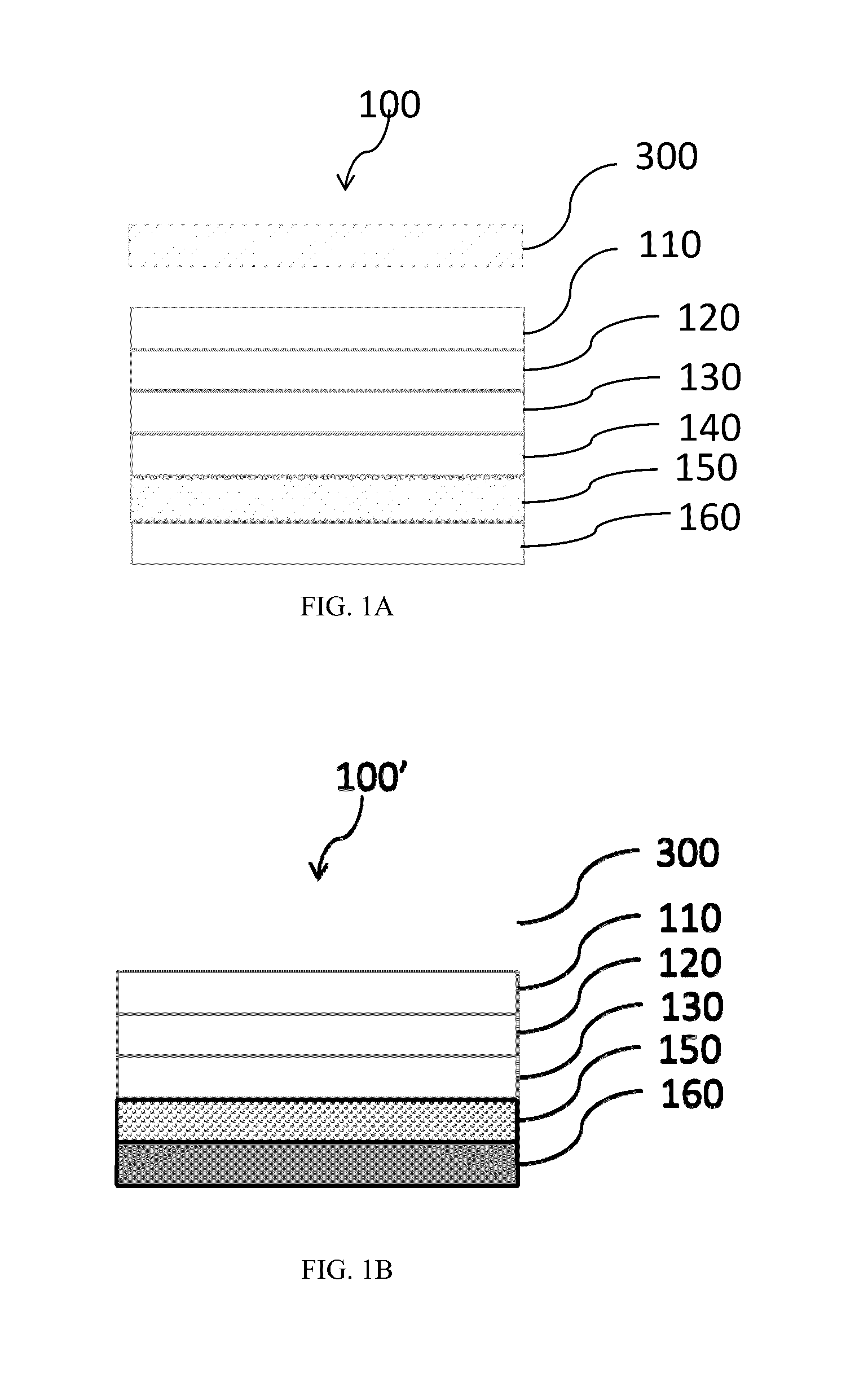
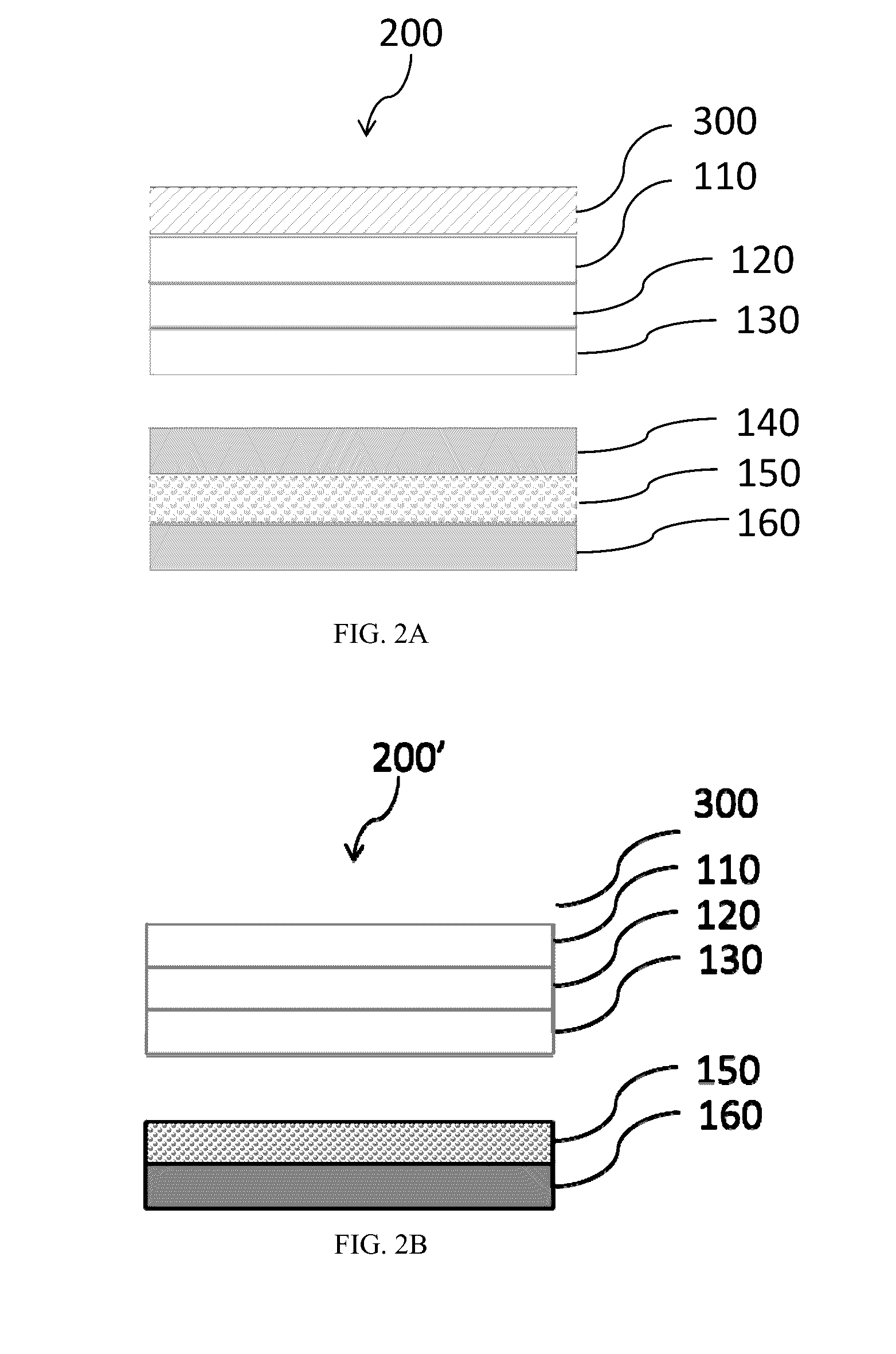
[0164]In another example, the thin film label was prepared utilizing an eight station flexographic printing press (Table 1). Referring to FIG. 2B, in this example, the carrier sheet 150 was a one-side-coated PET release liner (Silphan S50 produced by Siliconature) where the side of the PET release liner being printed upon was untreated. The side of the carrier sheet opposite to that having the PET release liner was coated with a silicone coating 160 to enhance release. The press was configured to allow for one to two press stations to be utilized for the printing of the overprint coating layer 130; another one to four press stations to be utilized for the printing of the indicia 120 (Flexographic colors 1-4), and another one to two stations to be utilized for the printing of a pressure sensitive adhesive 110.
TABLE 1Press stations from an eight station flexographicprinting press, used to prepare thin film labelsPress StationAnilox RollerCo...
PUM
| Property | Measurement | Unit |
|---|---|---|
| Thickness | aaaaa | aaaaa |
| Thickness | aaaaa | aaaaa |
| Length | aaaaa | aaaaa |
Abstract
Description
Claims
Application Information
 Login to View More