Unlock instant, AI-driven research and patent intelligence for your innovation.

Ferulic acid and p-coumaric acid based polymers and copolymers

a technology of ferulic acid and p-coumaric acid, which is applied in the field of p-coumaric acid based polymers and copolymers, can solve problems such as potential calamities

Inactive Publication Date: 2019-01-03
UNIV OF FLORIDA RES FOUNDATION INC
View PDF0 Cites 3 Cited by
  • Summary
  • Abstract
  • Description
  • Claims
  • Application Information

AI Technical Summary

Benefits of technology

The invention relates to cinnamic acid polymers or copolymers, which are formed from a polymerization mixture of at least two monomers selected from cinnamic acid, cinnamyl alcohols, and other similar compounds. The polymerization is carried out in the presence of a metal oxide, metal alkoxide, or metal acetate catalyst heated to a temperature above the copolymer's glass transition temperature, with removal of water or acetic acid from the polymerization mixture. The resulting copolymers have improved properties such as increased flexibility, better adhesion, enhanced mechanical strength, and improved thermal stability. They can be used in various applications such as in adhesives, sealants, and coatings.

Problems solved by technology

This situation is potentially calamitous because styrene has been reported as a hazardous air pollutant and a human carcinogen.

Method used

the structure of the environmentally friendly knitted fabric provided by the present invention; figure 2 Flow chart of the yarn wrapping machine for environmentally friendly knitted fabrics and storage devices; image 3 Is the parameter map of the yarn covering machine
View more

Image

Smart Image Click on the blue labels to locate them in the text.
Viewing Examples
Smart Image
  • Ferulic acid and p-coumaric acid based polymers and copolymers
  • Ferulic acid and p-coumaric acid based polymers and copolymers
  • Ferulic acid and p-coumaric acid based polymers and copolymers

Examples

Experimental program
Comparison scheme
Effect test

Embodiment Construction

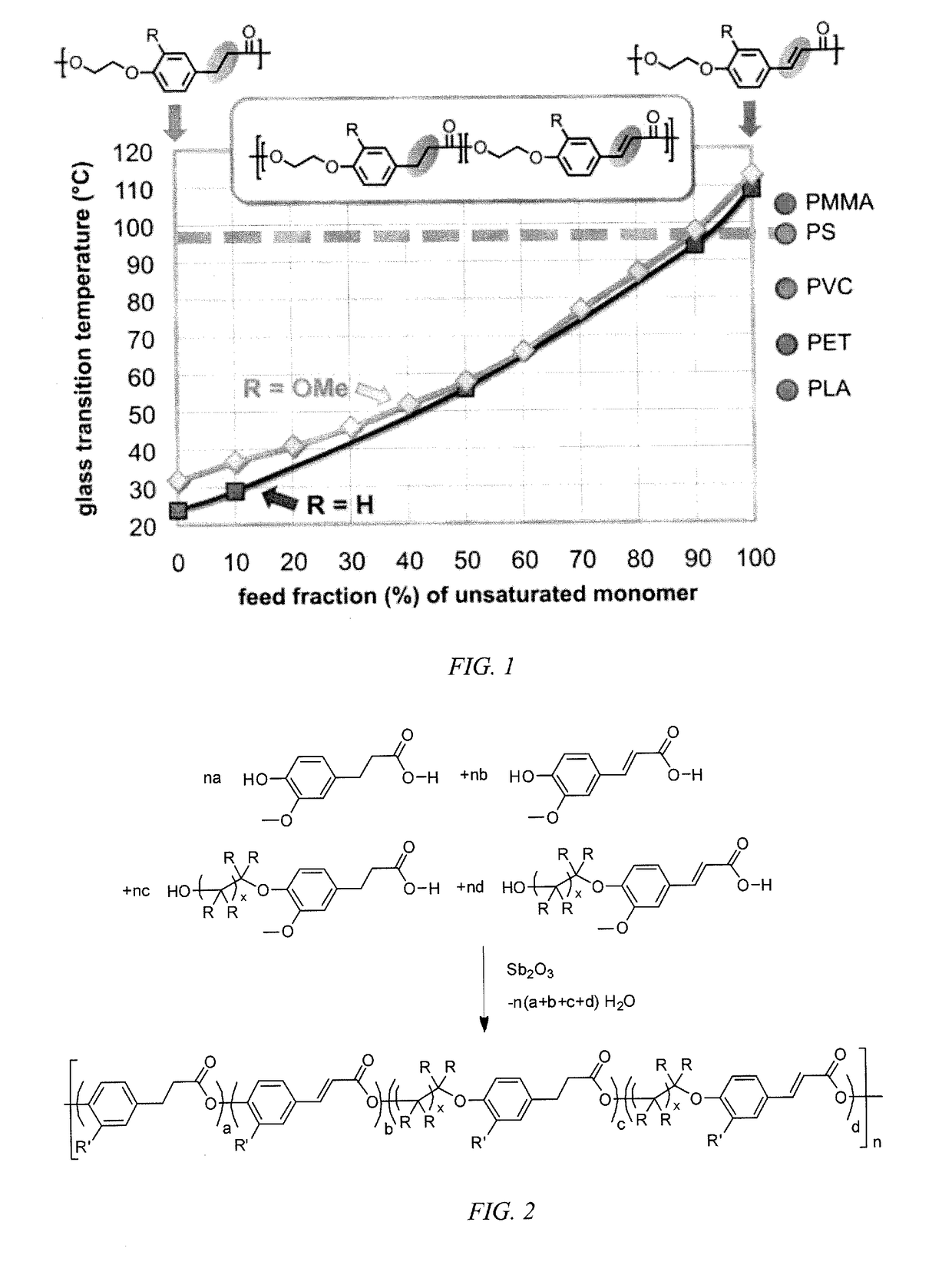
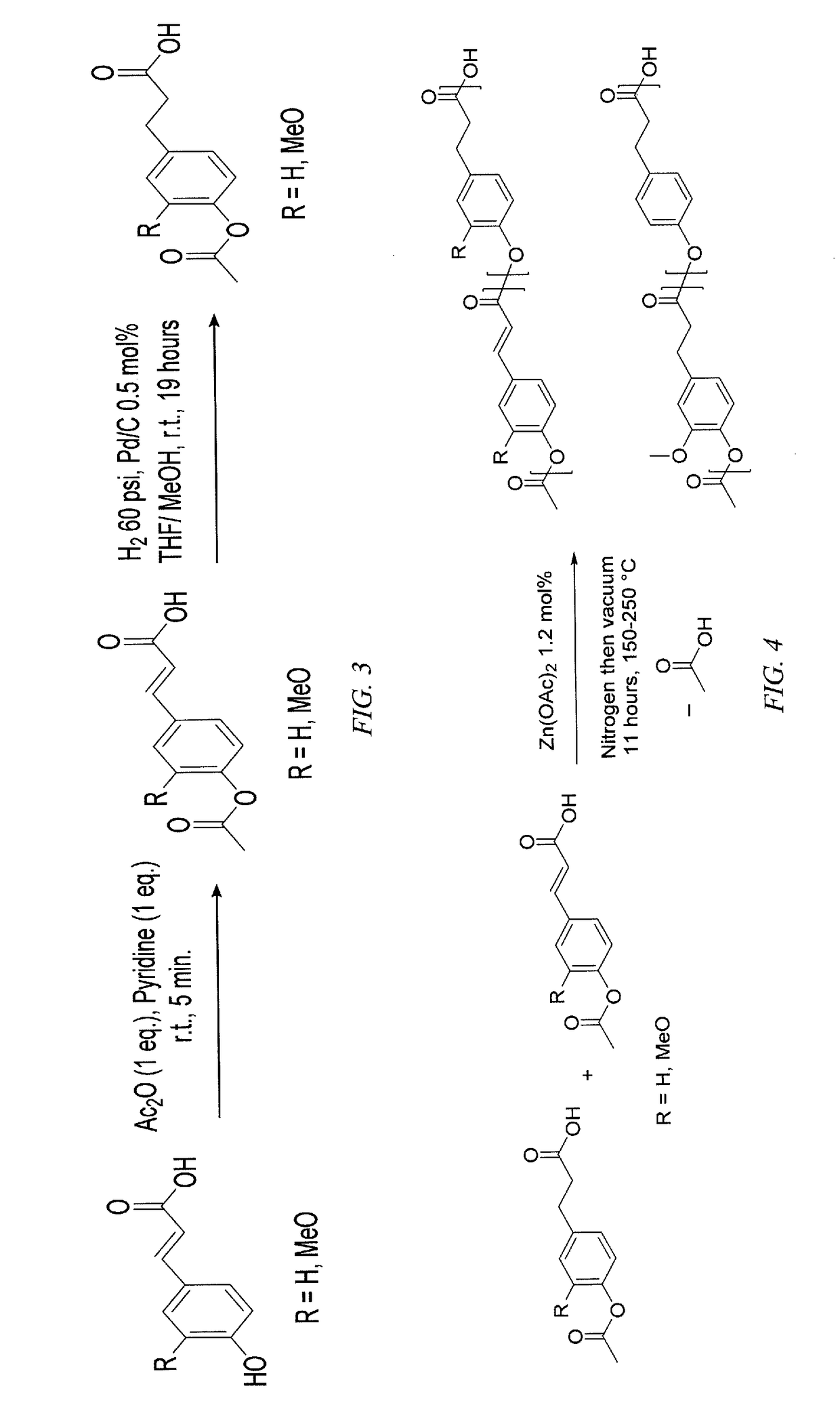
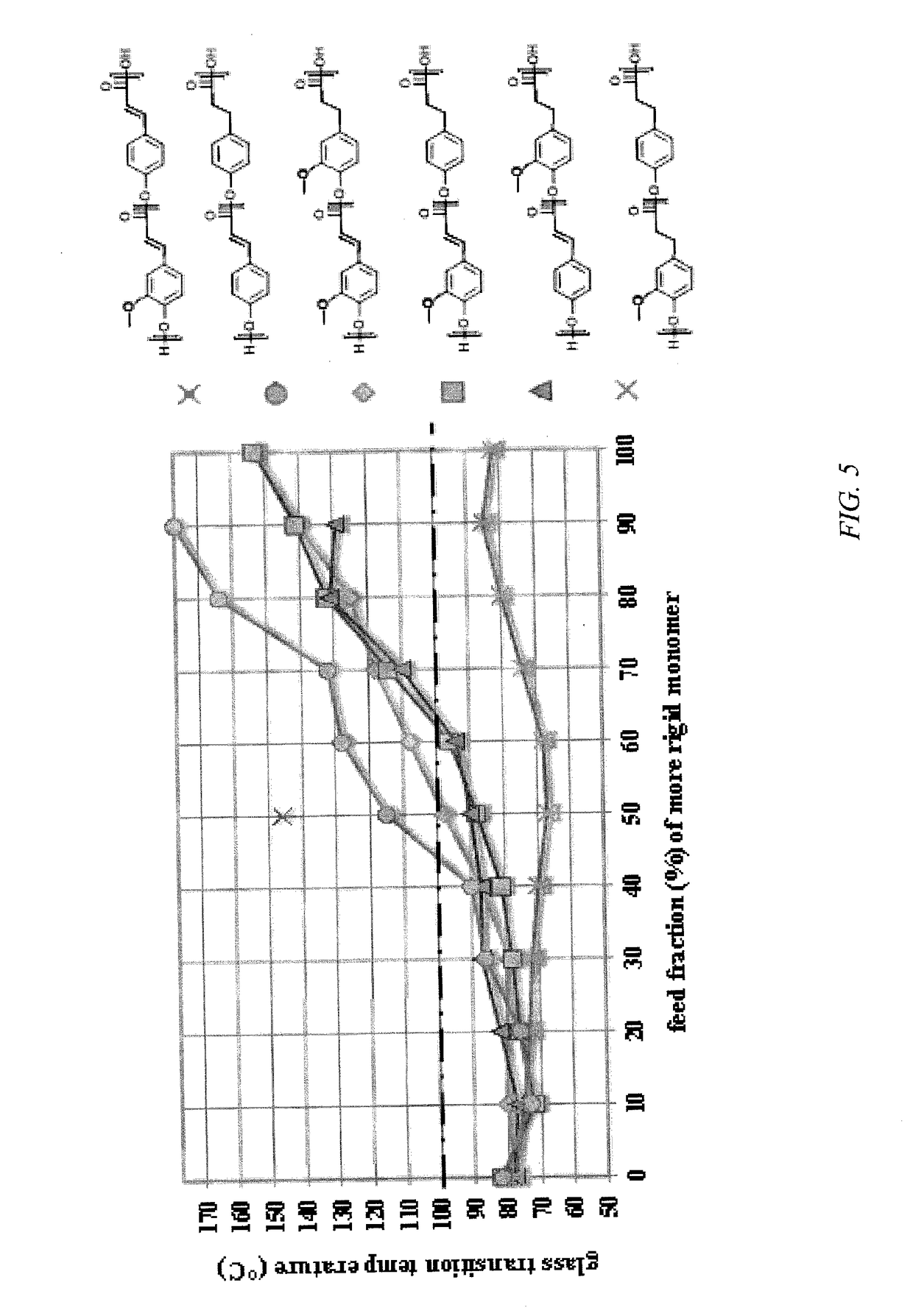
[0018]Embodiments of the invention are directed to homopolymers and copolymers that include repeating units derived from p-coumaric acid and / or ferulic acid. In embodiments of the invention, polymers have molecular weights in excess of 10,000 and glass transition temperatures in excess of 50° C. In embodiments of the invention, repeating units that are present in the copolymer include p-coumaric acid and / or ferulic acid. In embodiments of the invention repeating units that are present in the copolymer include those derived from dihydro-p-coumaric acid and / or dihydroferulic acid. In embodiments of the invention repeating units that are present in the copolymer include those derived from hydroxyalkyl-p-coumaric acid and / or hydroxyalkylferulic acid. In embodiments of the invention repeating units that are present in the copolymer include those derived from hydroxyalkyldihydro-p-coumaric acid and / or hydroxyalkyldihydroferulic acid, where the alkyl group can be a C2 to C10 linear or bran...

the structure of the environmentally friendly knitted fabric provided by the present invention; figure 2 Flow chart of the yarn wrapping machine for environmentally friendly knitted fabrics and storage devices; image 3 Is the parameter map of the yarn covering machine
Login to View More

PUM

PropertyMeasurementUnit
Tgaaaaaaaaaa
melting temperatureaaaaaaaaaa
Login to View More

Abstract

A cinnamic acid polymer or copolymer that can be employed as a biorenewable alternative to a commodity polymer results from the polymerization of hydroxyalkyldihydroferulic acids, hydroxyalkylferulic acids, hydroxyalkyldihydrocoumaric acids, hydroxyalkylcoumaric acids, dihydroferulic acid, ferulic acid, dihydrocoumaric acid, and coumaric acid in various proportions. The physical properties of the plastic are controlled by the composition of the polymers. A melt polycondensation route achieves the desired plastics.

Description

CROSS-REFERENCE TO A RELATED APPLICATION[0001]This application claims the benefit of U.S. Provisional Application Ser. No. 62 / 277,207, filed Jan. 11, 2016, the disclosure of which is hereby incorporated by reference in its entirety, including all figures, tables and drawings.[0002]This invention was made with government support under CHE-1305794 awarded by the National Science Foundation. The government has certain rights in the invention.BACKGROUND OF INVENTION[0003]Poly(aromatics), for example, polystyrene (PS), are highly used as commodity plastics. PS alone accounts for about 9% of the global plastic market. PS is wholly derived from non-renewable fossil fuels. Despite its broad utility in packaging, unreacted styrene monomer can remain in the polymer and is continually released throughout the PS life cycle. This situation is potentially calamitous because styrene has been reported as a hazardous air pollutant and a human carcinogen. PS is neither biorenewable nor biodegradable ...

Claims

the structure of the environmentally friendly knitted fabric provided by the present invention; figure 2 Flow chart of the yarn wrapping machine for environmentally friendly knitted fabrics and storage devices; image 3 Is the parameter map of the yarn covering machine
Login to View More

Application Information

Patent Timeline
no application Login to View More
Patent Type & Authority Applications(United States)
IPC IPC(8): C08G63/06C08G63/664C08G63/86
CPCC08G63/06C08G63/664C08G63/866C08G63/82
Inventor NGUYEN, HA THI HOANGMILLER, STEPHEN A.
Owner UNIV OF FLORIDA RES FOUNDATION INC