
Peptidic protein kinase c inhibitors and uses thereof
a protein kinase and inhibitor technology, applied in the field of new, can solve the problems of narrow therapeutic window, unspecific mode of action of tj modulating agents used as absorption enhancers, and ineffective anti-tumor drugs, so as to improve the immune response, increase the effect of drug penetration into tissues, and improve the effect of anti-cancer drugs
- Summary
- Abstract
- Description
- Claims
- Application Information
AI Technical Summary
Benefits of technology
Problems solved by technology
Method used
Image

Examples
example 1
of Compounds According to the Invention
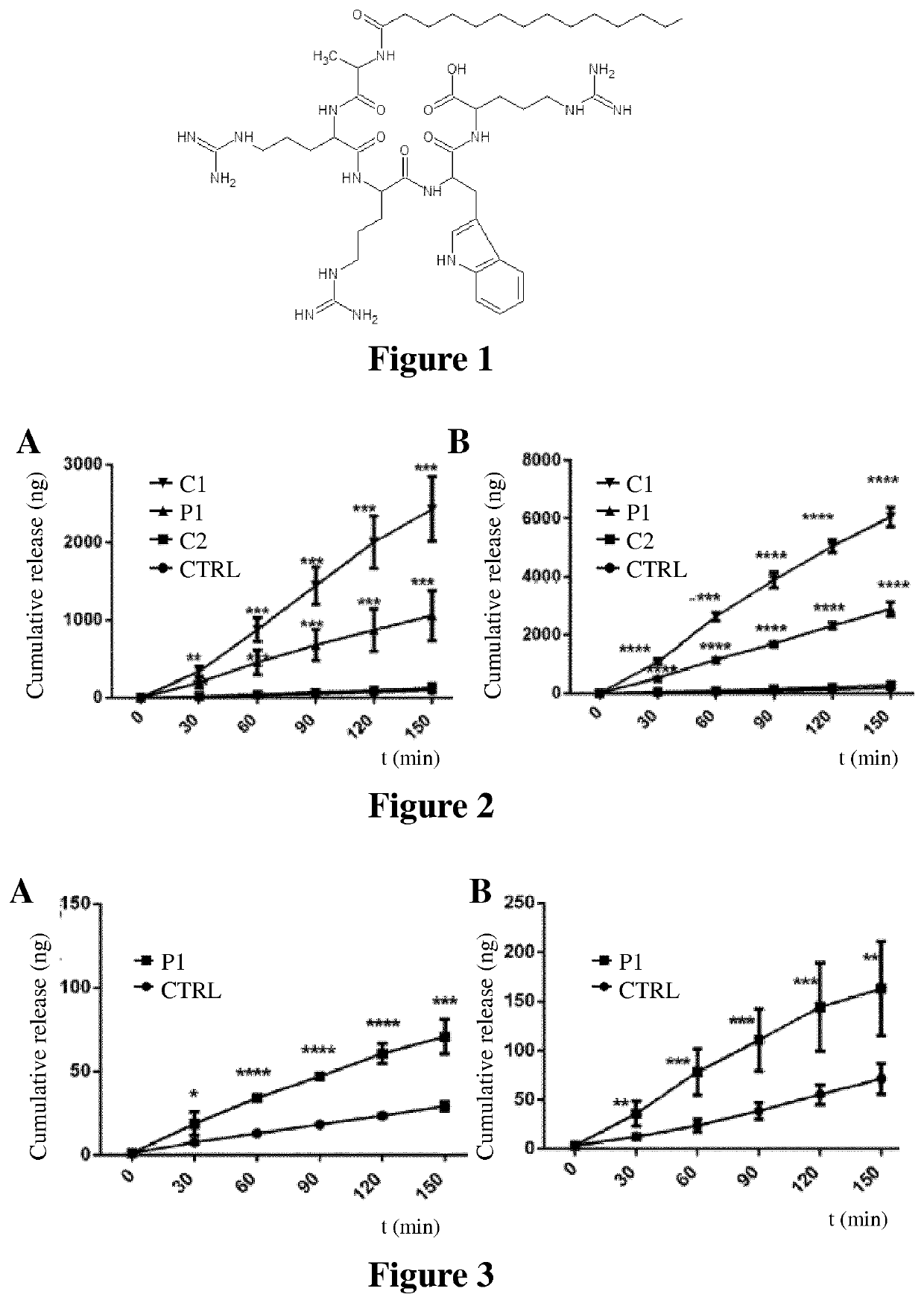
[0162]Compounds of the invention are prepared by solid phase peptide synthesis. As an illustration, the steps of the synthesis of Peptide 1 (P1, SEQ ID NO: 2, FIG. 1) are provided below:
[0163]Step 1—The reaction vessel was washed with dichloromethane (DCM) and bottom blown with nitrogen and then drained completely.
[0164]Step 2—Resin swelling: 2-Chlorotrityl Chloride Resin was weighed in the reaction vessel, the resin was then swollen with dimethylformamide (DMF; 15 ml / g) for 30 min.
[0165]Step 3—Coupling of the first amino acid from the C-terminus of the peptide: 1.6 g of Fmoc-L-Arg(Pbf)-OH were weighted in a test tube and Fmoc (9-Fluorenylmethyloxycarbonyl)-amino acids were dissolved in DMF / DCM (Sigma-Aldrich) (1:1) (15 ml / g). The solution was transferred into the reaction vessel described above, 10 times DIEA (N,N-Diisopropylethylamine) was added and mixed for 30 min at room temperature with nitrogen.
[0166]Step 4—Blocking the active site of th...
example 2
f Peptides of Various Lengths Increase on Membrane Permeability of Macromolecules
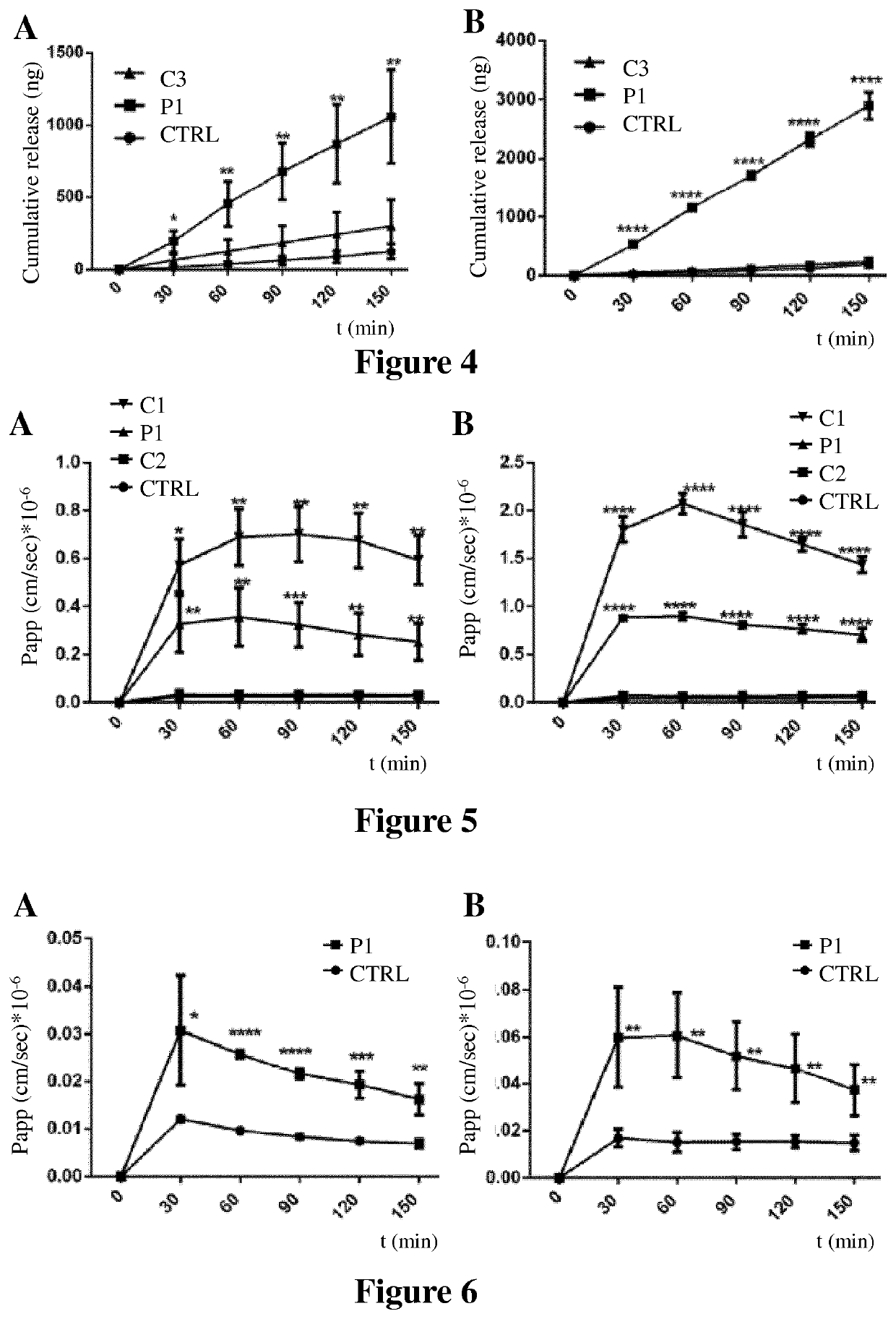
[0189]To assess the potential effects of peptides of the invention on the permeabilization of therapeutic molecules, fluorescein-conjugated dextrans (FD) were used to as a model for assessing paracellular drug transport (apical to basolateral) across the epithelial monolayer.
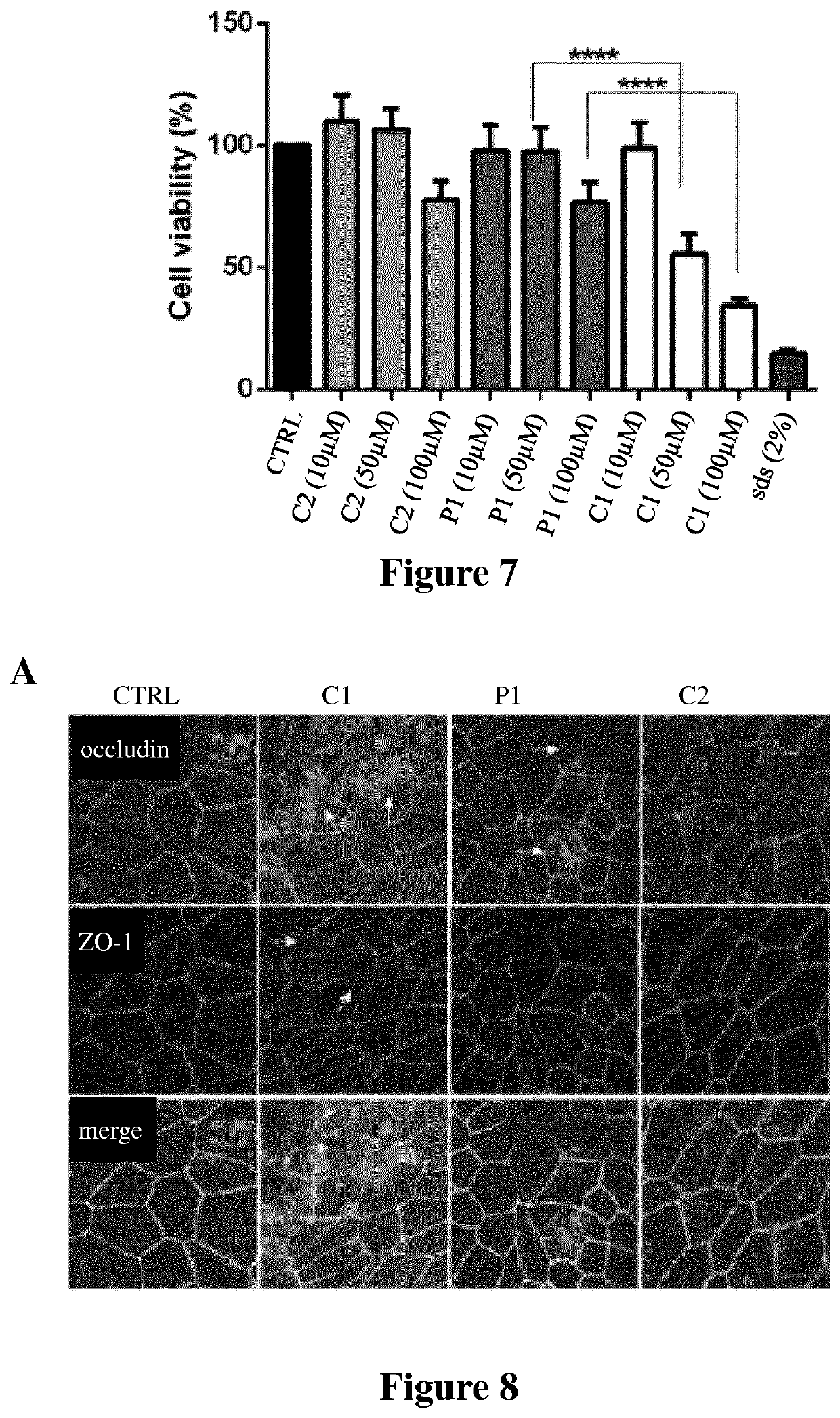
[0190]To ensure that the integrity of the monolayer was maintained during the course of the experiment, trans-epithelial electrical resistance (TEER) was measured before and after these studies, as described below.
[0191]Mucilair™ human primary nasal and bronchial epithelial cells (Epithelix sarl, Geneva, Switzerland) were used (Huang et. al., 2013, Toxicol. in Vitro 27: 1151-1156).
[0192]Before each experiment, the culture medium was removed from each compartment and the monolayer was washed once with 200 μl of saline (0.9%) and once with warm Hanks' Balanced Salt Solution (HBSS) (37° C.). In the basolateral compartment, 600 μL of pr...
example 3
he Membrane Penetrating Group
[0198]To assess the role of the membrane penetrating group (myristoyl) in peptides of the invention in the enhancing of the permeability of macromolecules through epithelial cell layers, the permeabilizing capacity of peptide P1 of the invention was compared to a comparative peptide C3 (SEQ ID NO: 6) corresponding to the same peptide without the myristoyl group. The permeabilizing capacity of a peptide P2 (SEQ ID NO: 3) of the invention was also assessed. Uptake experiments and TEER were conducted as described in Example 2.
[0199]Peptide P2 increased the permeability of the fluorescein conjugated dextran of 4 kDa in a significant manner in nasal human primary epithelial cells as compared to control (FIG. 12). These results support that the peptides of the invention are able to permeabilize the macromolecules across epithelial monolayers. Comparative peptide C3 did not show significant difference in permeabilization ability compared to the negative control...
PUM
| Property | Measurement | Unit |
|---|---|---|
| surface area | aaaaa | aaaaa |
| non-polar | aaaaa | aaaaa |
| fatty acid | aaaaa | aaaaa |
Abstract
Description
Claims
Application Information
 Login to View More