
Water-soluble isatin derivative, and manufacturing method and application thereof
a technology of water-soluble isatin and derivative, applied in the field of new compound synthesis and drug application, can solve the problems of poor water solubility, limited clinical application of these compounds, low bioavailability, etc., and achieve the effect of improving the activity of compound 2, retaining certain cytotoxic activity, and improving water solubility of target compounds 1 and 2
- Summary
- Abstract
- Description
- Claims
- Application Information
AI Technical Summary
Benefits of technology
Problems solved by technology
Method used
Image

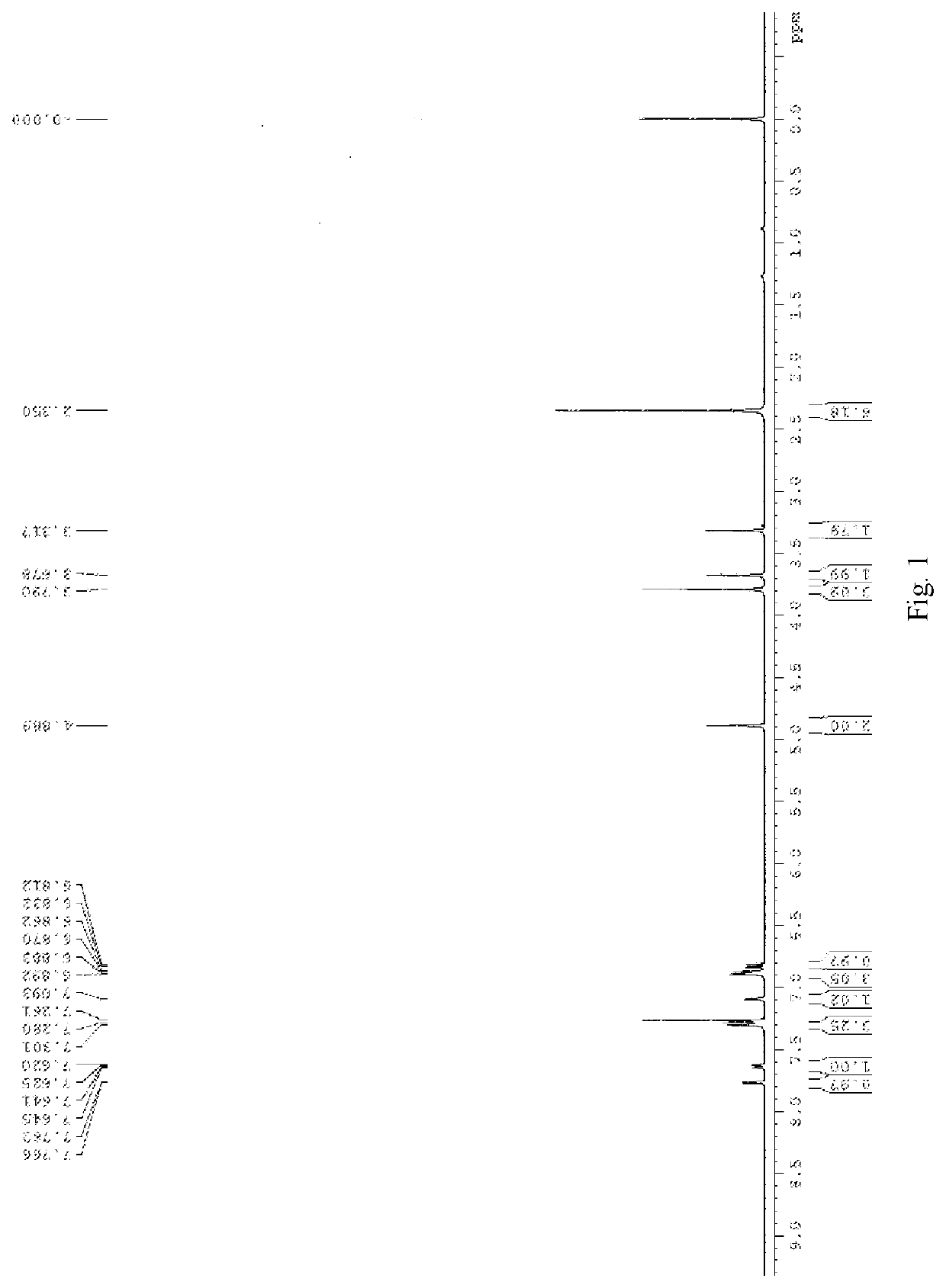
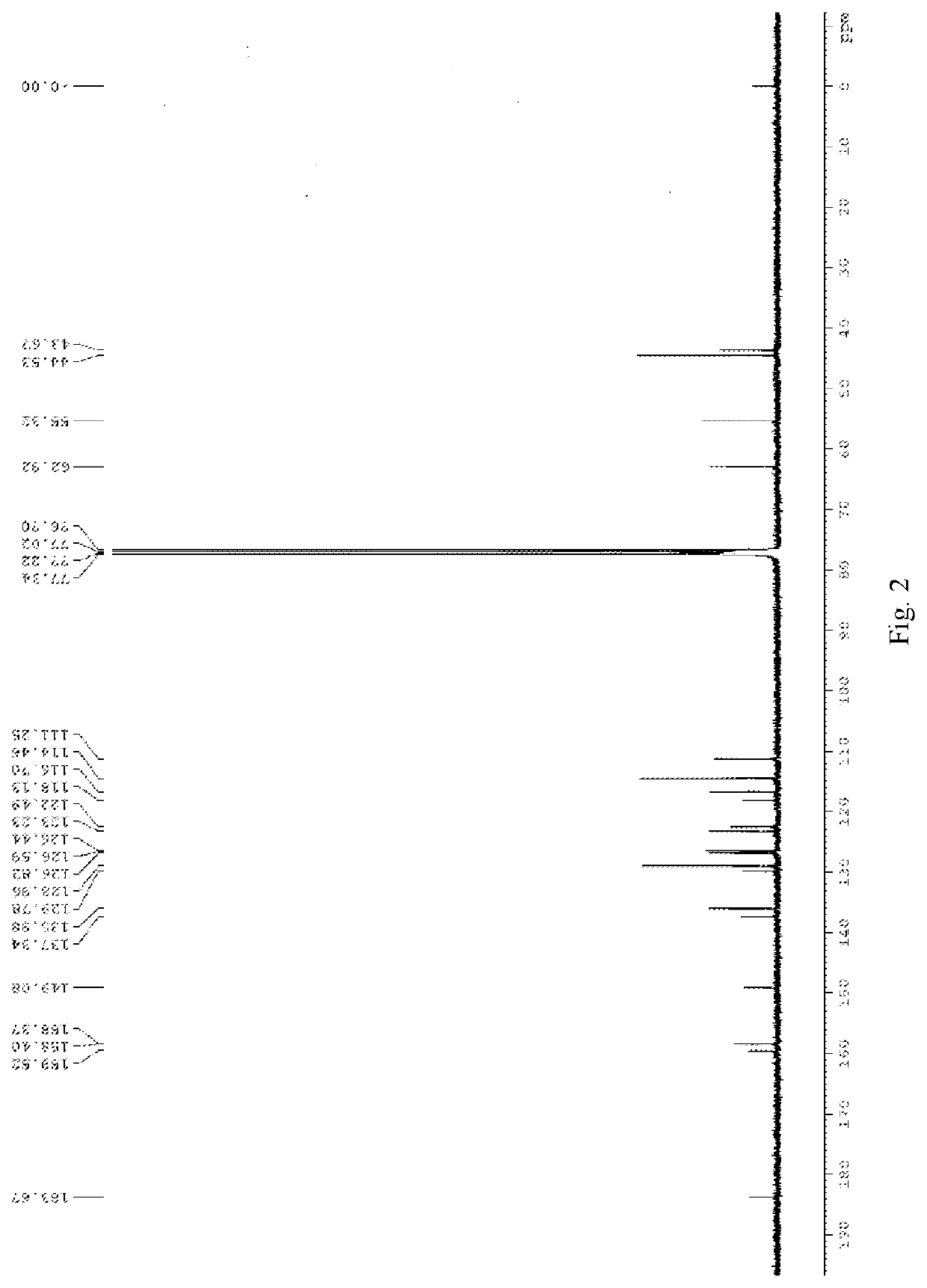
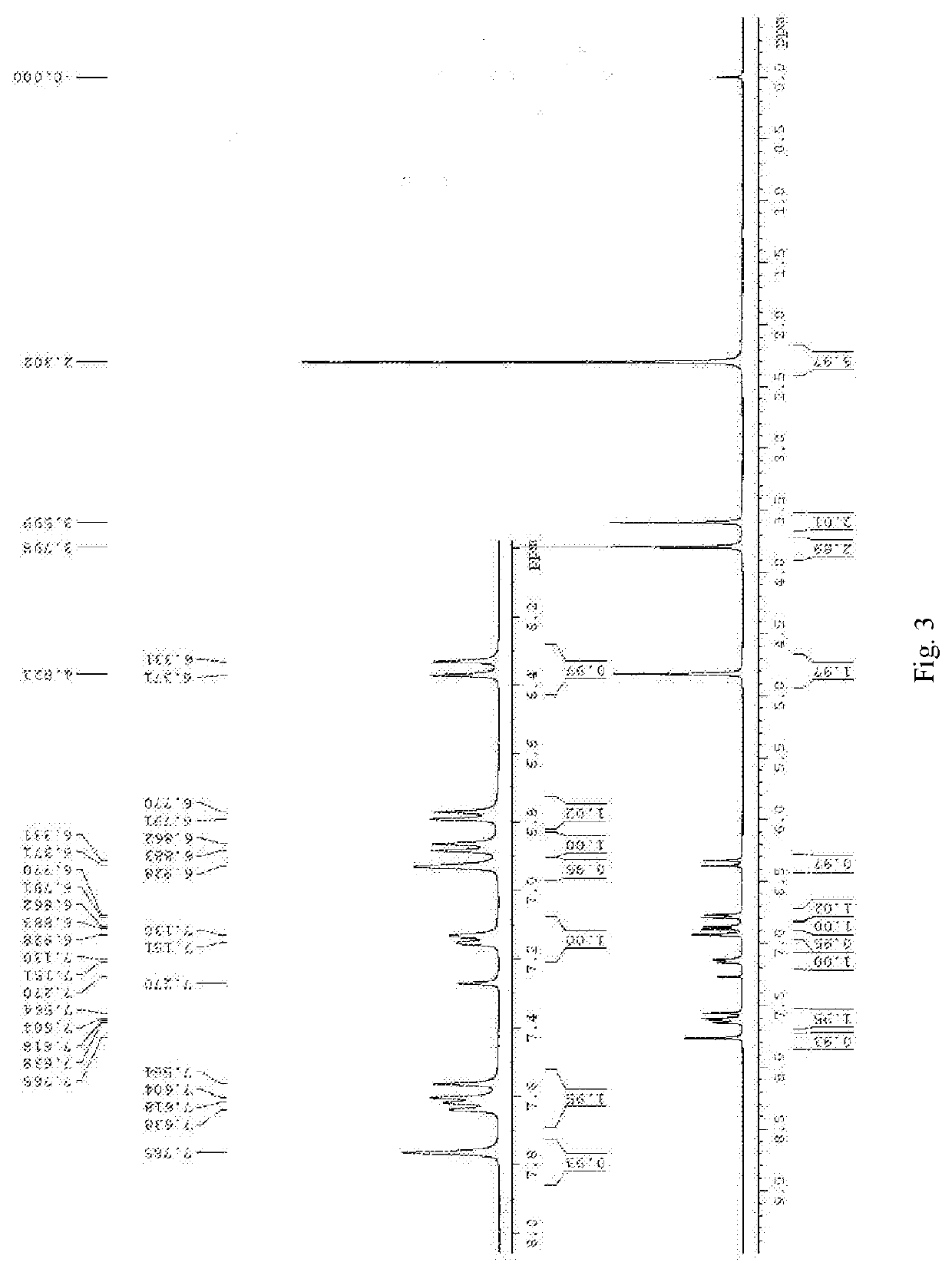
Examples
example 1
[0022]
[0023]Synthesis of Compound 3
[0024]Into a 25 ml round-bottom flask is added 1 g of 5-bromoisatin, 4 ml of DMF, 4.83 g of potassium carbonate and 0.83 g of p-methoxy benzyl chloride in this sequence. The mixture is stirred overnight at room temperature, and the reaction is complete as indicated by TLC. 20 ml of water is added into the reaction mixture, and red solid precipitates after stirring for 10 minutes. After filtering and drying in air to obtain a red solid of 1.38 g, 90% yield. 1H NMR (400 MHz, d6-DMSO) δ 7.76 (d, J=8.4 Hz, 1H) 7.73 (s, 1H), 7.36 (d, J=8.4 Hz, 2H), 6.94 (d, J=8.4 Hz, 1H), 6.91 (d, J=8.4 Hz, 2H), 4.84 (s, 2H), 3.73 (s, 3H).
[0025]Synthesis of Compound 4
[0026]1 g of compound 3 and 0.48 g of p-hydroxyphenylboronic acid are sequentially added into 20 ml microwave tube, 0.43 g of potassium acetate and 0.24 g of [1, 1′-bis(diphenylphosphine)ferrocene] dichloropalladium(II) are added into the tube. 1, 4-Dioxane is added to dissolve the mixture. Argon is filled ...
example 2
[0029]
[0030]Synthesis of Compound 5
[0031]200 Mg of compound 3 was added into a dried 50 ml round bottom flask, and 1 ml of DCM was added to dissolve the compound. Then 0.12 ml of a 1 M BBr3 in dichloromethane solution was added under the protection of argon. After stirring for half an hour at 0° C., the reaction was complete as indicated by TLC. 10 ml of saturated aqueous sodium bicarbonate solution was added into the system, and stirring for 10 minutes. Then the mixture was extracted with DCM. The combined organic phase was washed with brine for three times, dried over anhydrous sodium sulfate, filtered and concentrated under reduced pressure to afford the crude product, which was purified by flash column chromatography using PE:EA=3:1 as eluent to obtain the product. The product is further recrystallized from dichloromethane and hexane to obtain 243 mg of brownish red solid, wherein the yield is 84%. 1H NMR (400 MHz, d6-DMSO) δ 9.43 (s, 1H), 7.76 (d, J=8.4 Hz, 1H), 7.73 (s, 1H), 7...
PUM
 Login to View More
 Abstract
Description
Claims
Application Information
 Login to View More