

Method and apparatus for high spatial resolution spectroscopic microscopy
- Summary
- Abstract
- Description
- Claims
- Application Information
AI Technical Summary
Benefits of technology
Problems solved by technology
Method used
Image

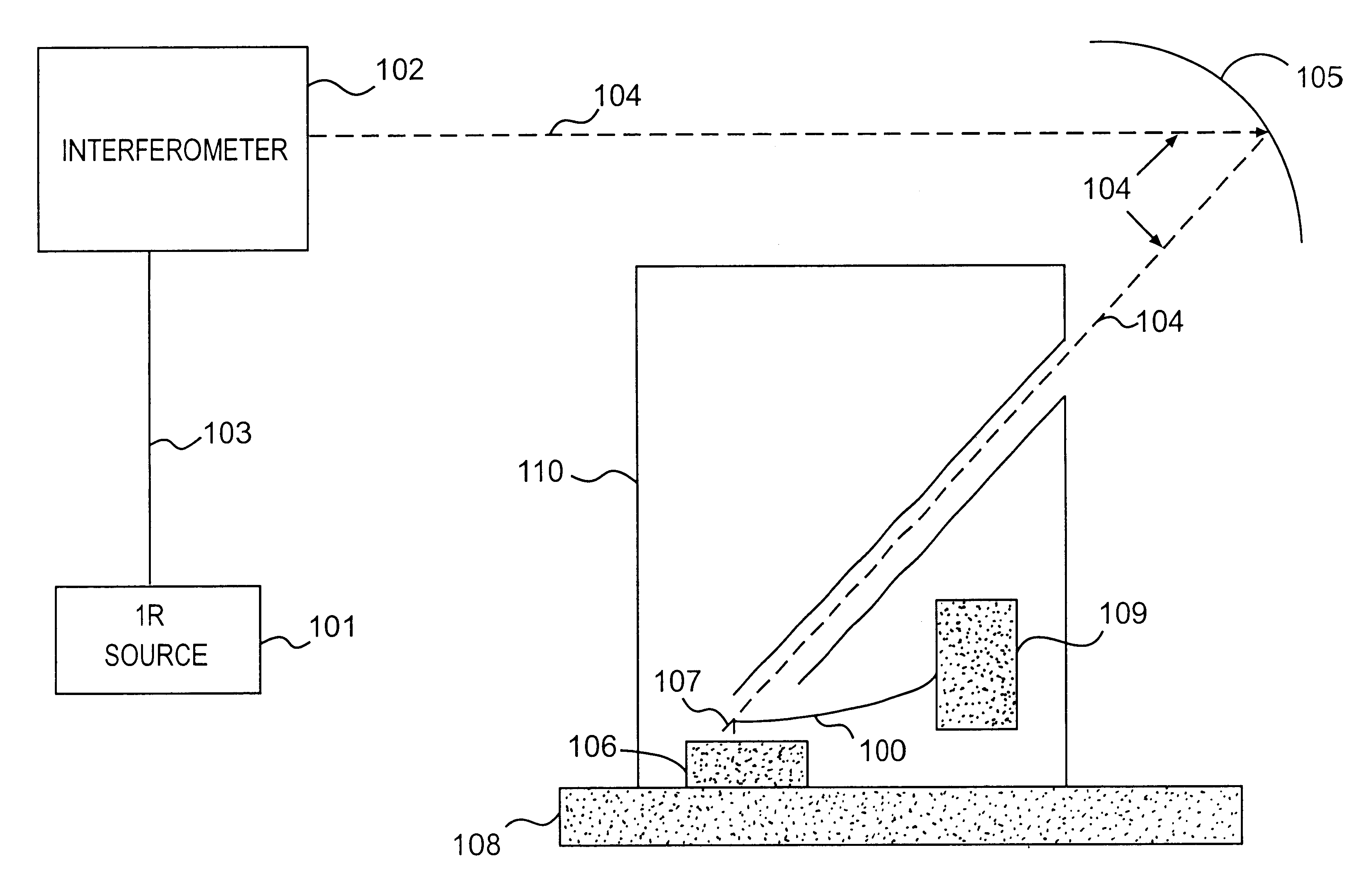
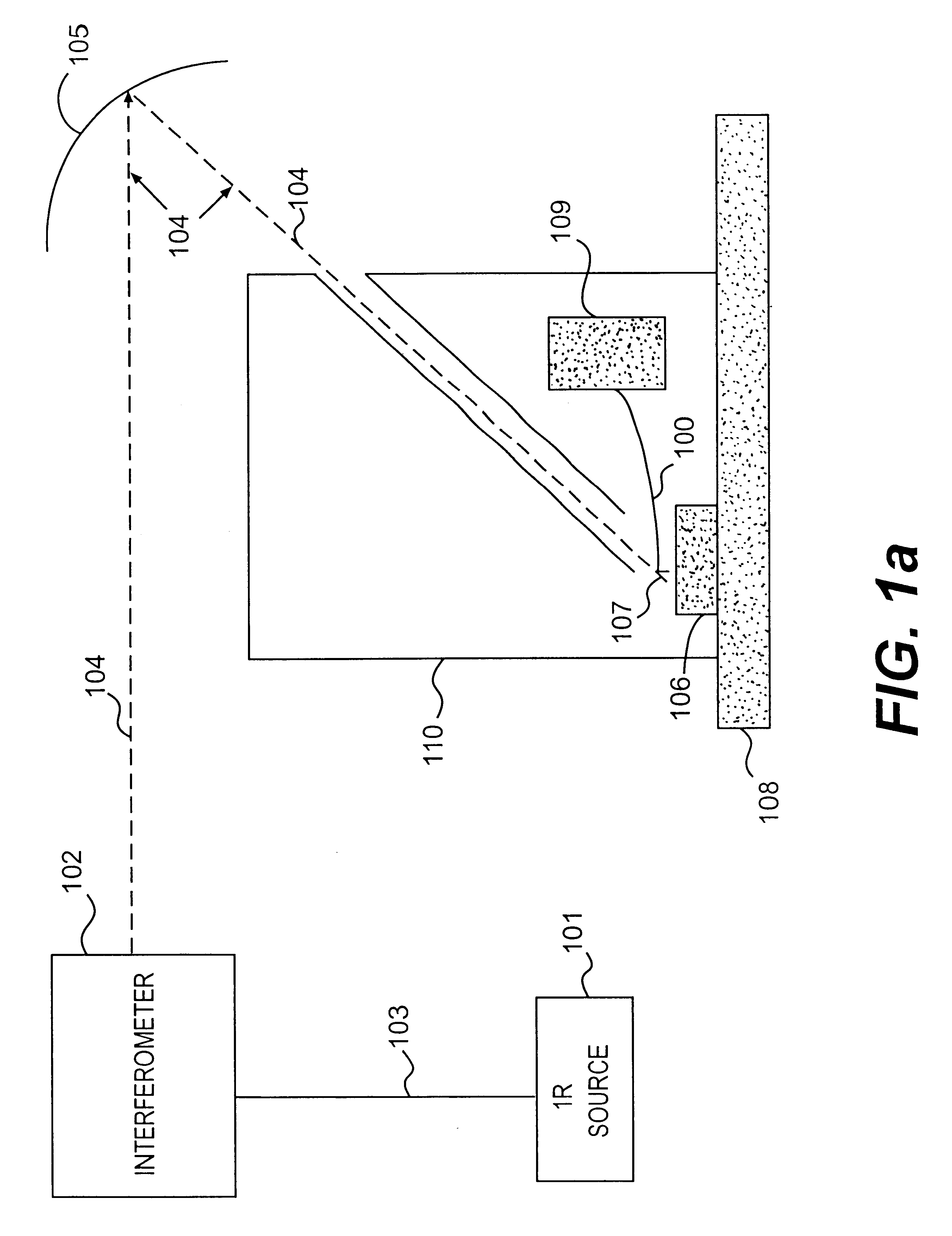
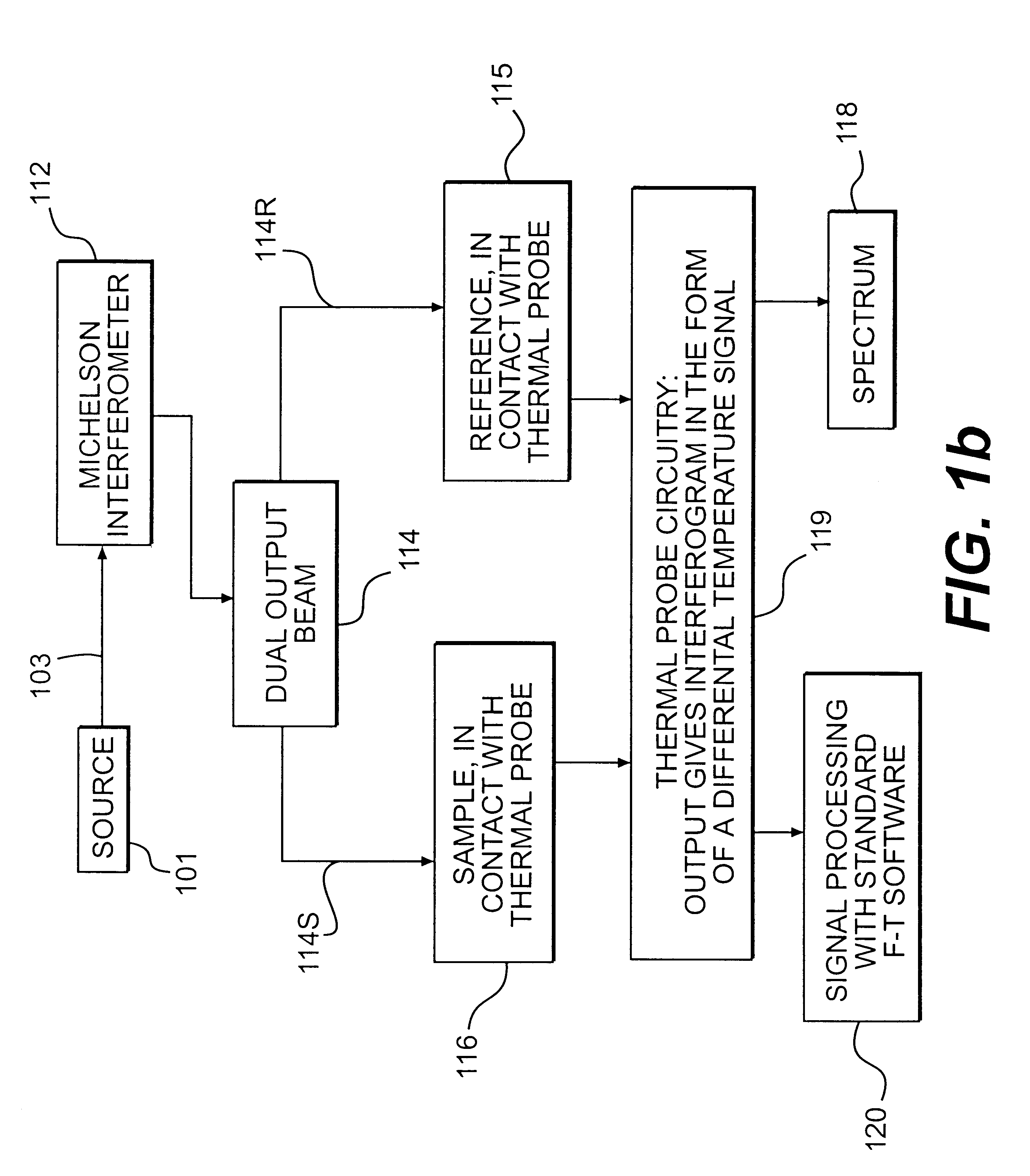
Examples
Embodiment Construction
(see D. W. van Krevelen, Properties of Polymers, Elsevier 1990)
The calculations below assumes the material has the values of parameters of polyethylene.
Notation:
Thermal conductivity k=0.15 Wm.sup.-1 .degree. KE.sup.-1
Density.times.heat capacity .rho.C.sub.p =10.sup.6 Jm.sup.-3 .degree. K.sup.-1
Diffusivity D=k / (.rho.C.sub.p)=1.6.times.10.sup.-7
Thermal diffusion length .mu. is given by .mu..sup.2 =D / (.pi..nu.), where .nu. is frequency.
Optical absorption length for IR within a typical absorption band:
l.sub..beta. =2.5 .mu.m (absorption coefficient=4.times.10.sup.5 m.sup.-1, but can vary two orders of magnitude from one "edge" to another. With visible light, l.sub..beta. =10.sup.-4.
IR bandwidth (.DELTA..lambda.) chosen: 200 nm.
Thickness of the near-surface layer of interest: z.sub.s =either film thickness, or =.mu., see above ("bulk" samples).
Illuminated area of sample: 1 mm.sup.2
Power of source: 100 mW
Power per nm of the absorption band: 0.7.times.10.sup.-6 (the implied ratio R=1.4.tim...
PUM
 Login to View More
 Abstract
Description
Claims
Application Information
 Login to View More