
Extended release analgesic for pain control
an analgesic and extended release technology, applied in the field of extended release analgesic for pain control, can solve the problems of dangerous overdose, inability to swallow the medication, and pain from the procedures described, and achieve the effects of improving electrostatic shielding, reducing side effects, and reducing side effects
- Summary
- Abstract
- Description
- Claims
- Application Information
AI Technical Summary
Benefits of technology
Problems solved by technology
Method used
Image

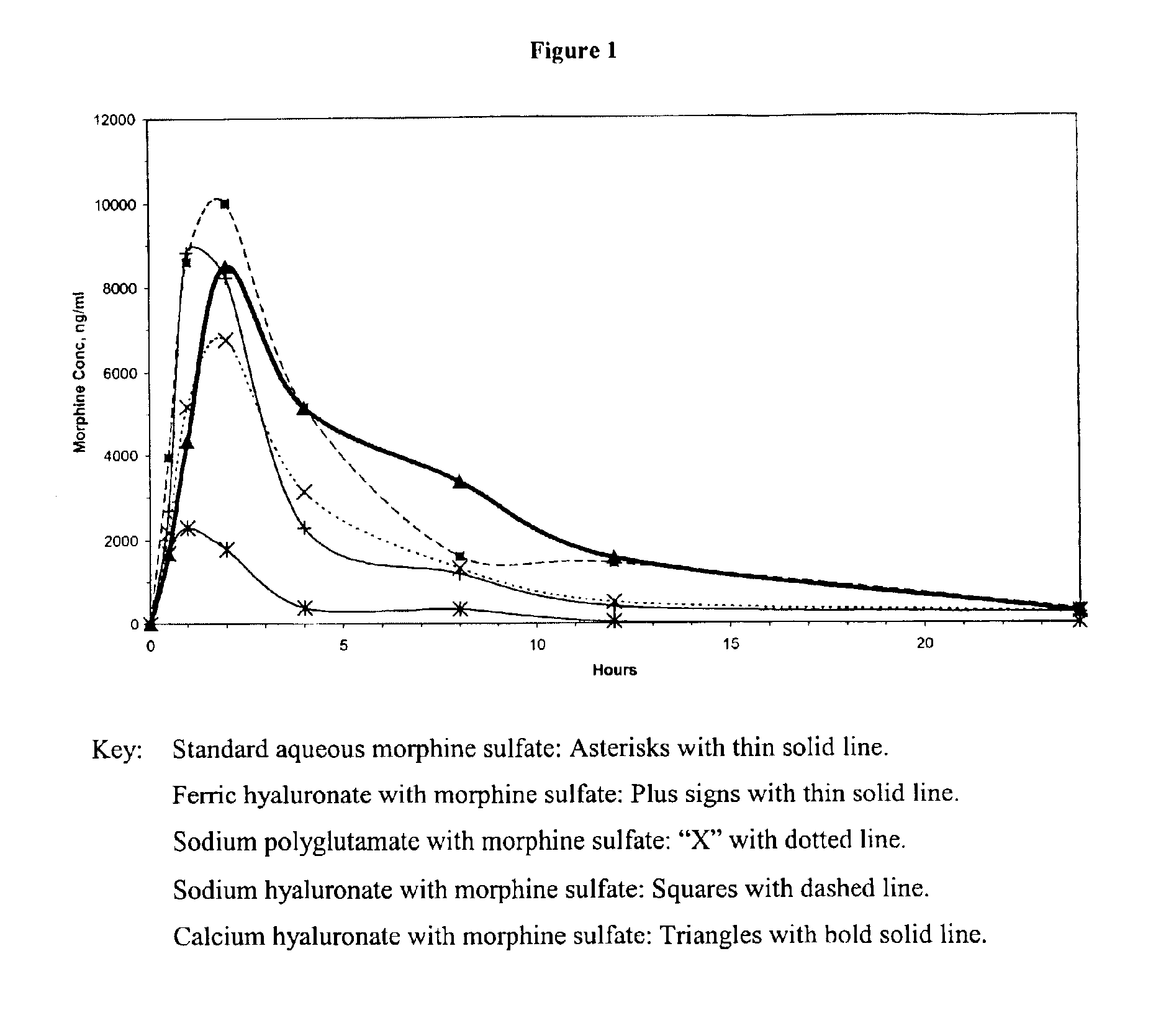
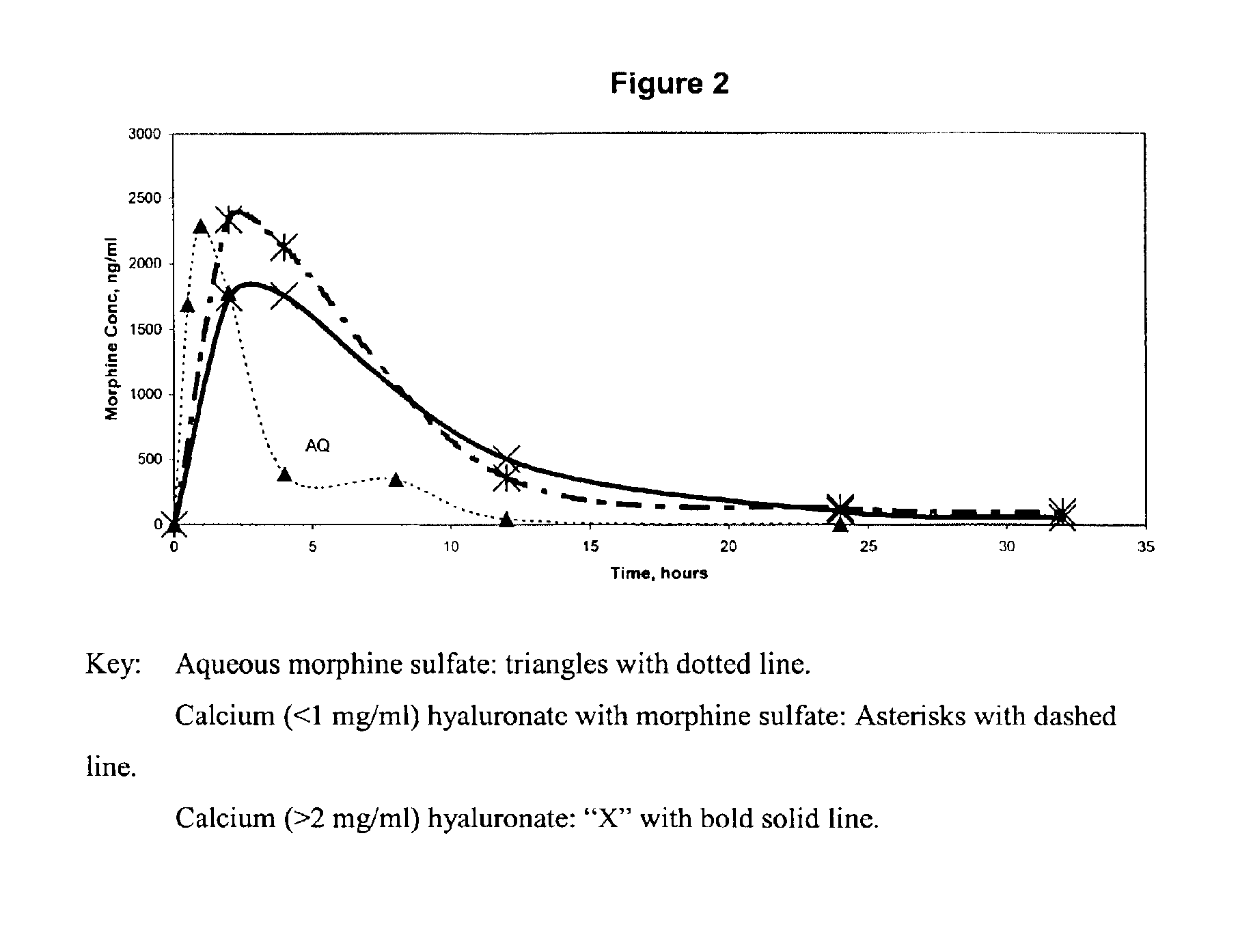
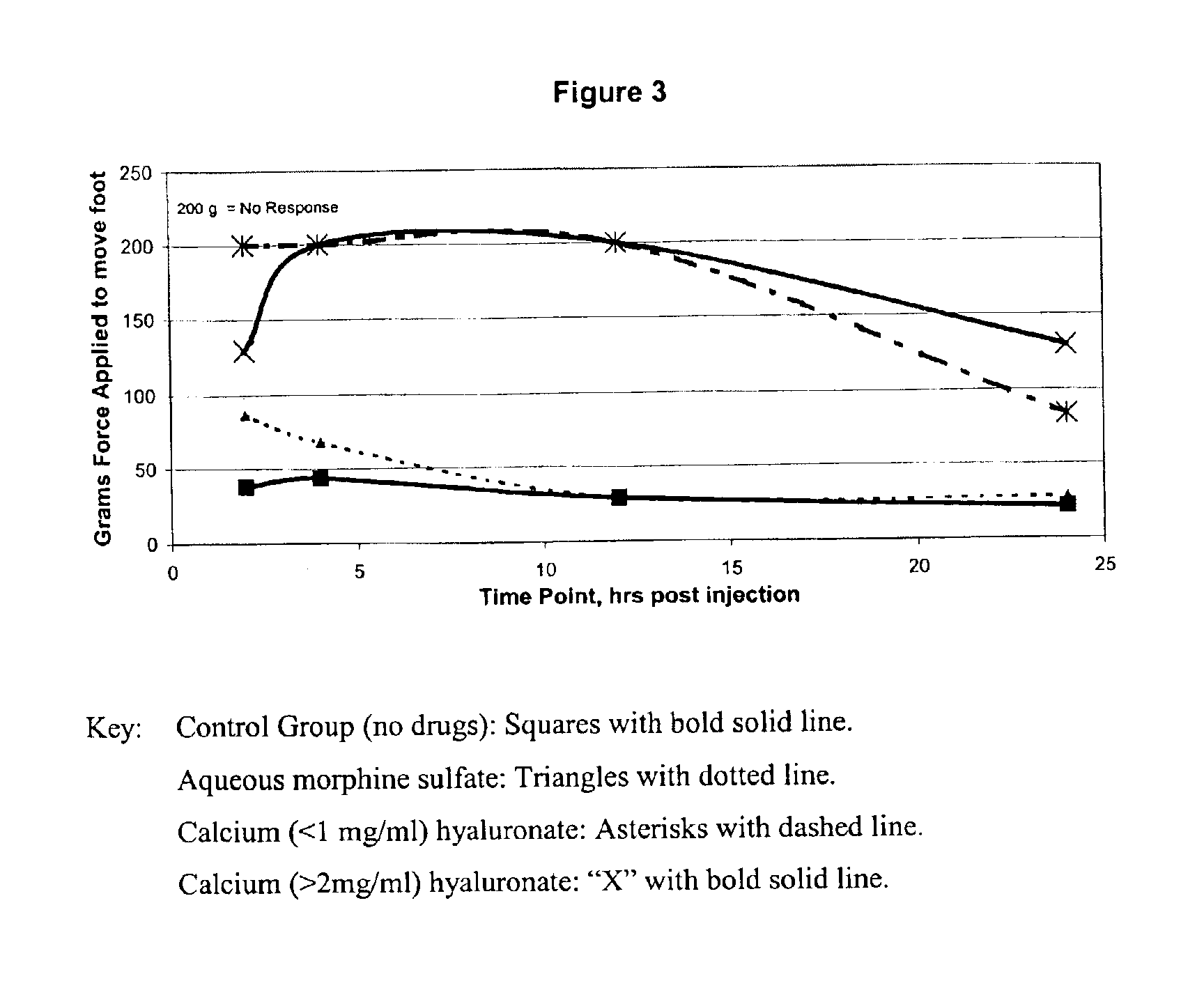
Examples
example 1
[0014]Sodium hyaluronate with morphine: All work was performed in a class 100 clean hood. 54 mg of morphine hexahydrate was placed in a depyrogenated beaker. 3 ml of sterile saline (0.9% NaCl) was added to the morphine and swirled until it was dissolved. The solution was then drawn up into a syringe. The syringe was fitted with a sterilizing filter, and the solution was passed through the filter into a clean sterile beaker. 45 mg of sterile and pyrogen free hyaluronic acid was weighed, and placed in the beaker with the solution. The hyaluronic acid had a molecular weight in excess of 1 million Daltons. A sterilized stir-bar was placed in the beaker, and the solution was stirred for 24 hours. The solution was then placed in syringes (1 ml per syringe) and stored for subsequent animal tests.
example 2
[0015]Calcium hyaluronate with morphine: All work was performed in a class 100 clean hood. 54 mg of morphine hexahydrate was placed in a depyrogenated beaker. 2.25 ml of sterile water was added to the morphine and swirled until it was dissolved. The solution was then drawn up into a syringe. The syringe was fitted with a sterilizing filter, and the solution was passed through the filter into a clean sterile beaker. 45 mg of sterile and pyrogen free hyaluronic acid was weighed, and placed in the beaker with the solution. The hyaluronic acid had a molecular weight in excess of 1 million Daltons. A sterilized stir-bar was placed in the beaker, and the solution was stirred for 24 hours. 0.0135 grams of calcium chloride was added to 0.75 ml of water, and swirled until dissolved. The solution was then drawn into a syringe, the syringe fitted with a sterile filter, and the solution was added via this sterile filter to the polymer solution. The final solution was then placed in syringes (1 ...
example 3
[0016]Ferric hyaluronate with morphine: All work was performed in a class 100 clean hood. 54 mg of morphine hexahydrate was placed in a depyrogenated beaker. 2.25 ml of sterile water was added to the morphine and swirled until it was dissolved. The solution was then drawn up into a syringe. The syringe was fitted with a sterilizing filter, and the solution was passed through the filter into a clean sterile beaker. 45 mg of sterile and pyrogen free hyaluronic acid was weighed, and placed in the beaker with the solution. The hyaluronic acid had a molecular weight in excess of 1 million Daltons. A sterilized stir-bar was placed in the beaker, and the solution was stirred for 24 hours. 0.010 grams of ferric chloride was added to 0.75 ml of water, and swirled until dissolved. The solution was then drawn into a syringe, the syringe fitted with a sterile filter, and the solution was added via this sterile filter to the polymer solution. A sterile solution of 1M NaOH was used to neutralize ...
PUM
| Property | Measurement | Unit |
|---|---|---|
| Time | aaaaa | aaaaa |
| Time | aaaaa | aaaaa |
| Mass | aaaaa | aaaaa |
Abstract
Description
Claims
Application Information
 Login to View More