
Non-volatile memory device and method of manufacturing the same
a memory device and non-volatile technology, applied in the direction of semiconductor devices, electrical devices, transistors, etc., can solve the problems of leakage current generation, overall storage capacity affect, reliability of the device, etc., and achieve the effect of improving the coupling ratio of the device and improving the storage efficiency of the memory devi
- Summary
- Abstract
- Description
- Claims
- Application Information
AI Technical Summary
Benefits of technology
Problems solved by technology
Method used
Image

Examples
Embodiment Construction
[0019]Reference will now be made in detail to the present preferred embodiments of the invention, examples of which are illustrated in the accompanying drawings. Wherever possible, the same reference numbers are used in the drawings and the description to refer to the same or like parts.
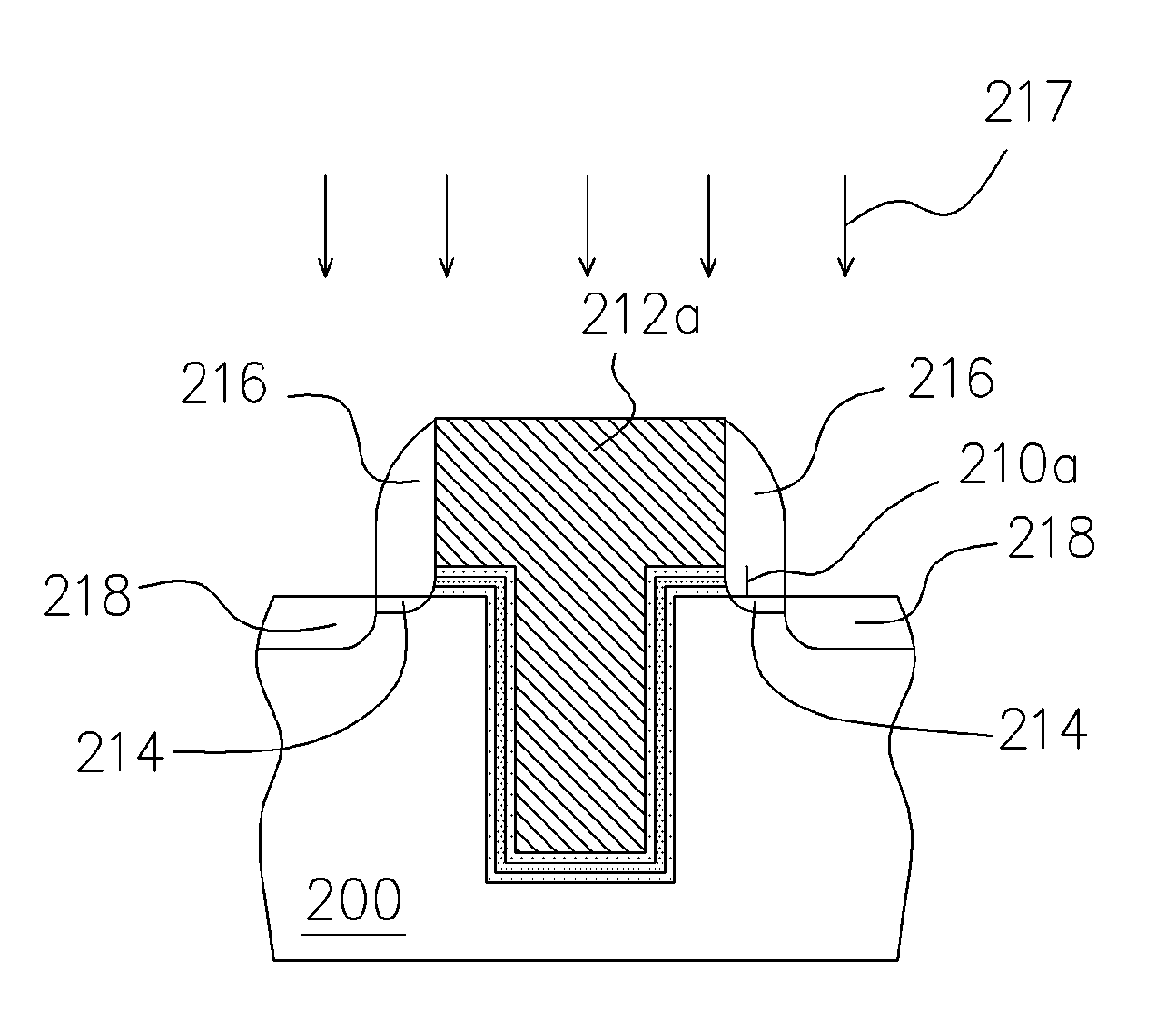
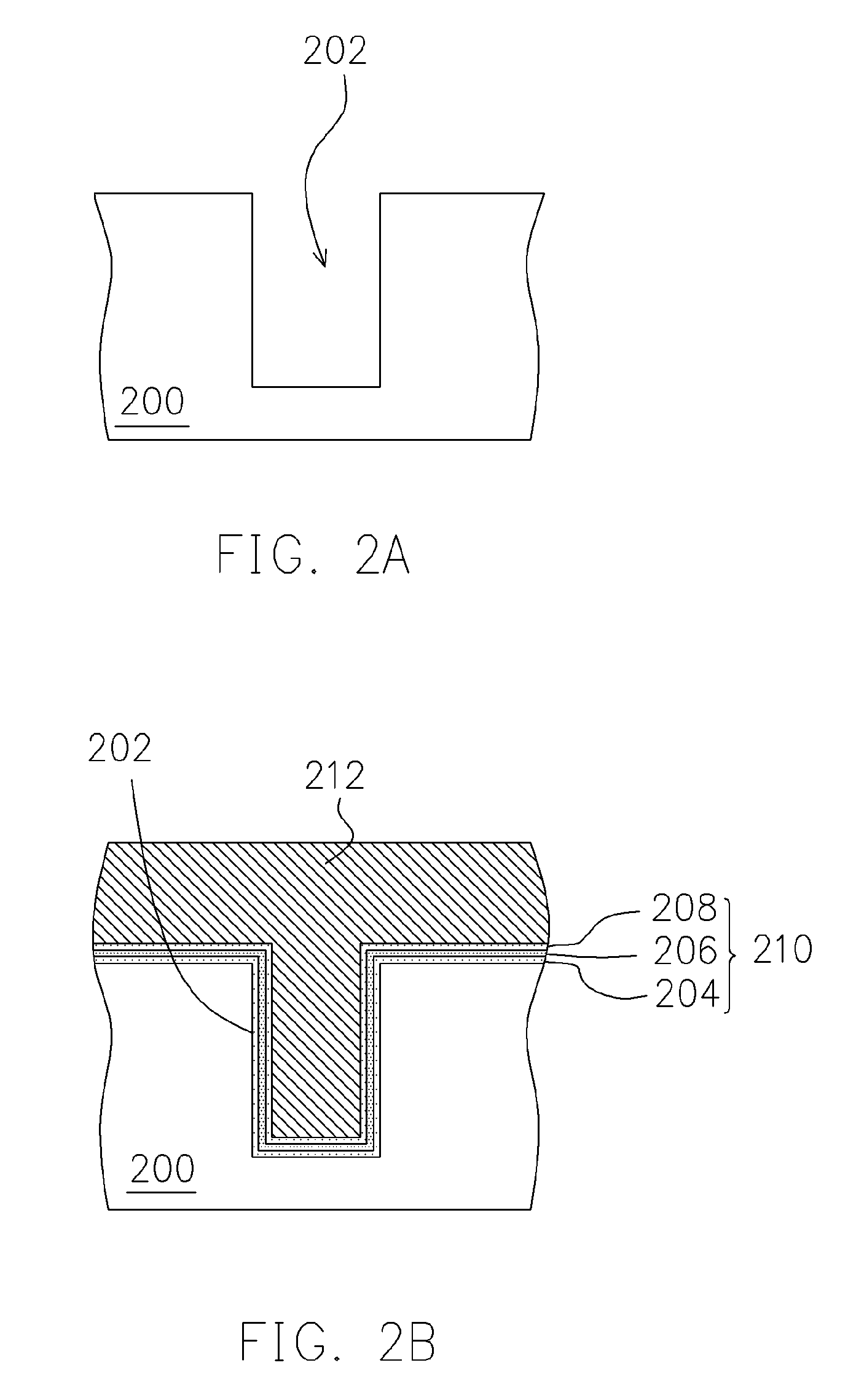
[0020]FIGS. 2A through 2D are schematic cross-sectional views showing the progression of steps for fabricating a non-volatile memory device according to one preferred embodiment of this invention. As shown in FIG. 2A, a substrate 200 is provided. Thereafter, a trench 202 is formed in the substrate 200. To form the trench 202, a pad oxide layer (not shown) is first formed over the substrate 200. A patterned mask layer (not shown) fabricated from silicon nitride or other suitable material is next formed over the pad oxide layer. Using the patterned mask layer as a mask, the exposed pad oxide layer and a portion of the substrate 200 is removed. Finally, the pad oxide layer and the patterned mask layer a...
PUM
 Login to View More
 Abstract
Description
Claims
Application Information
 Login to View More