
Catalyst-coated membrane, membrane-electrode assembly, and polymer electrolyte fuel cell
a technology of membrane electrolyte and catalyst, which is applied in the direction of fuel cell details, cell components, electrochemical generators, etc., can solve the problems that the durability and cycle life characteristics of the membrane-electrolyte assembly cannot be sufficiently improved, and the degradation of the membrane-electrolyte assembly and the catalyst-coated membrane cannot be sufficiently prevented when the fuel cell is operated for a long period of time. , to achieve the effect of improving the durability of the catalys
- Summary
- Abstract
- Description
- Claims
- Application Information
AI Technical Summary
Benefits of technology
Problems solved by technology
Method used
Image

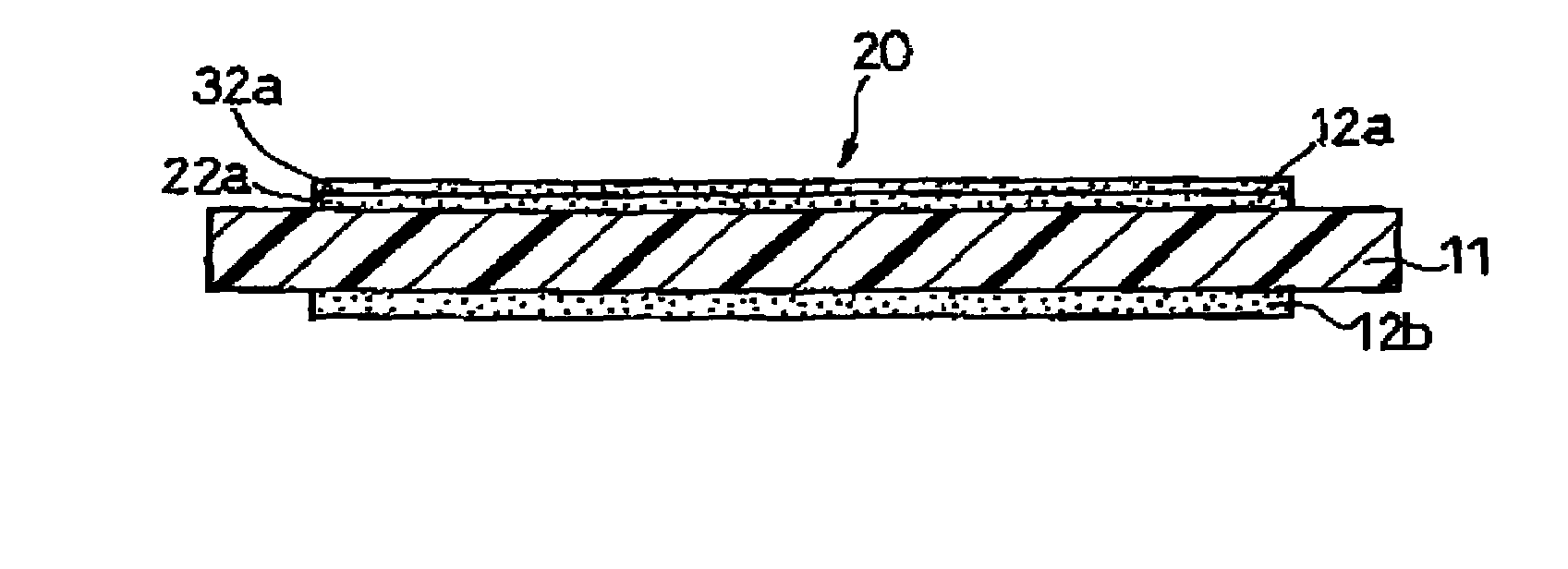
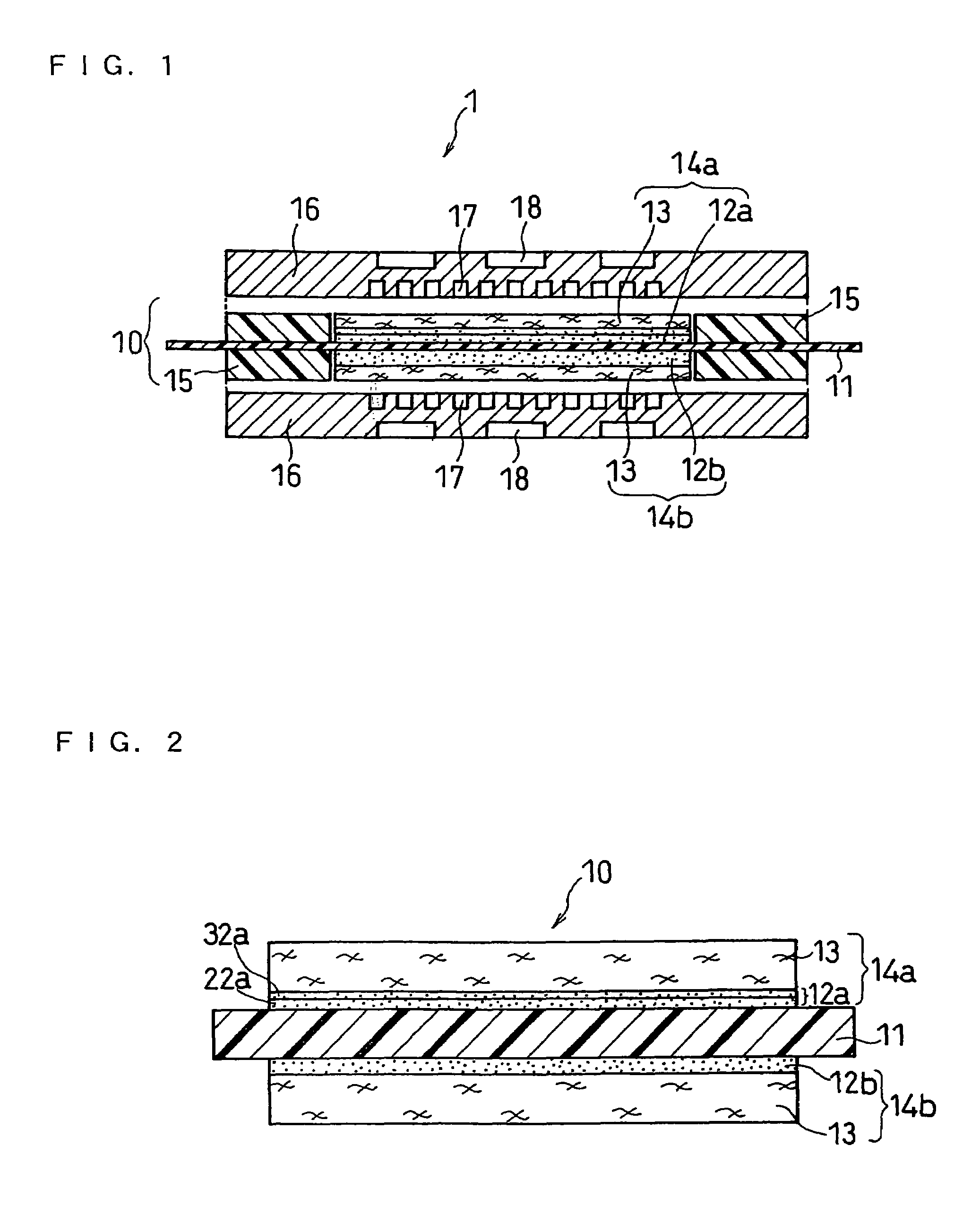
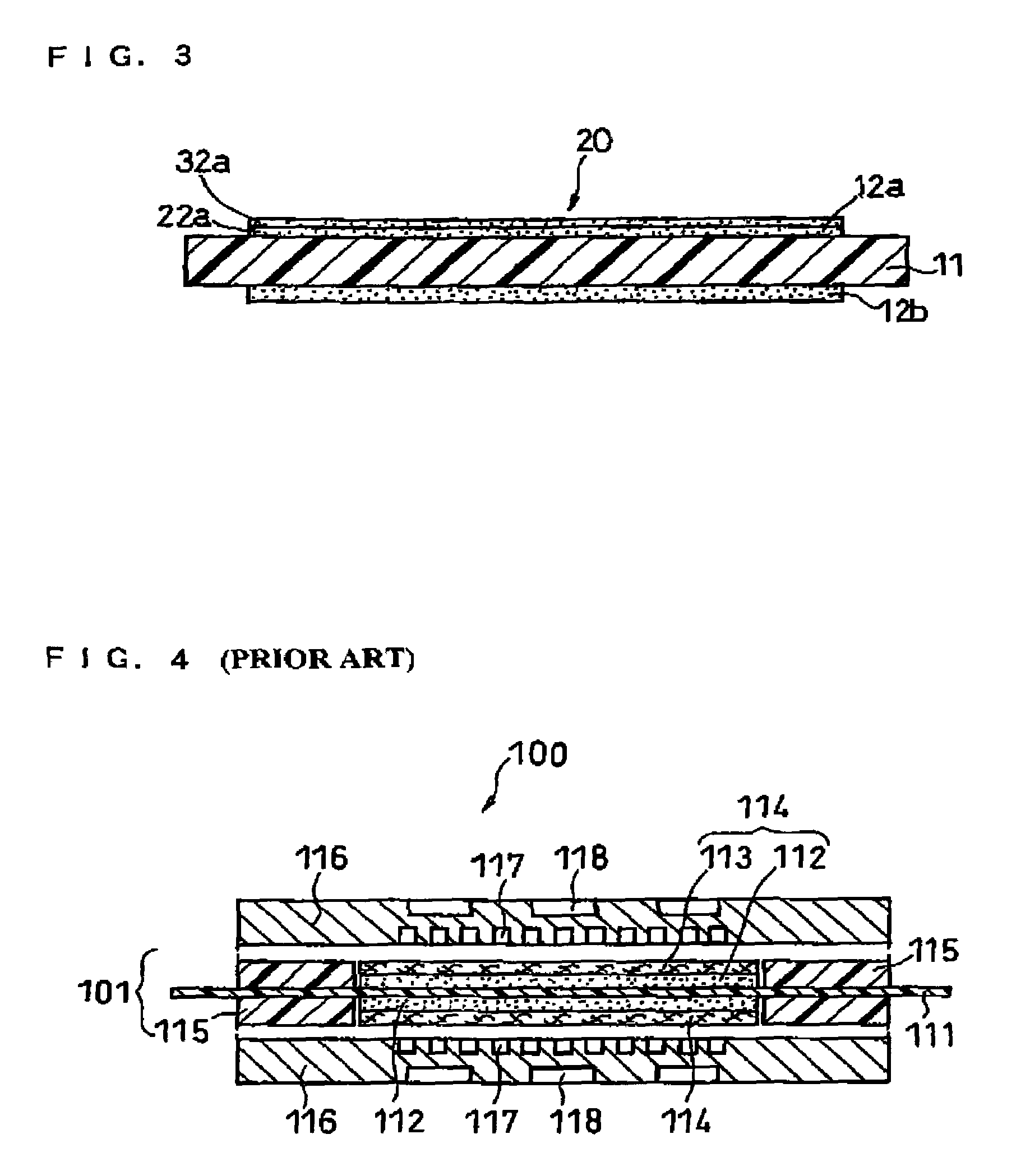
Examples
example 1
COMPRATATIVE EXAMPLE 1
[0107]A catalyst-coated membrane, a membrane-electrode assembly and a unit cell were produced in the same manner as in EXAMPLE 1 except that a cathode catalyst layer having a ratio (WP / WCat-C) of 0.4 and a monolayer structure was formed.
example 2
[0108]A catalyst-coated membrane, a membrane-electrode assembly and a unit cell were produced in the same manner as in EXAMPLE 1 except that a cathode catalyst layer including the following three layers (three-layer structure) was formed: a first layer (innermost layer) having a ratio (WP / WCat-C) of 1.0 and containing platinum in an amount of 0.12 mg / cm2 (⅕ of the total amount of the platinum contained; a second layer (intermediate layer) having a ratio (WP / WCat-C) of 0.6 and containing platinum in an amount of 0.24 mg / cm2 (⅖ of the total amount of the platinum contained); and a third layer (outermost layer) having a ratio (WP / WCat-C) of 0.4 and containing platinum in an amount of 0.24 mg / cm2 (⅖ of the total amount of the platinum contained).
example 3
[0110]A catalyst-coated membrane, a membrane-electrode assembly and a unit cell were produced in the same manner as in EXAMPLE 1 except that the ratio (WP / WCat-C) in the first layer (innermost layer) of the cathode catalyst layer was adjusted to 0.8.
PUM
| Property | Measurement | Unit |
|---|---|---|
| electromotive force | aaaaa | aaaaa |
| specific surface area | aaaaa | aaaaa |
| specific surface area | aaaaa | aaaaa |
Abstract
Description
Claims
Application Information
 Login to View More