
N-heteroaryl indole carboxamides and analogues thereof, for use as glucokinase activators in the treatment of diabetes
a technology of n-heteroaryl indole carboxamide and analogues, which is applied in the direction of biocide, drug composition, metabolic disorder, etc., can solve the problems of high risk of diabetic complications, poor treatment effect, and many patients losing the ability to respond to treatment. achieve the effect of restoring and/or maintaining weight loss
- Summary
- Abstract
- Description
- Claims
- Application Information
AI Technical Summary
Benefits of technology
Problems solved by technology
Method used
Image

Examples
embodiment 1
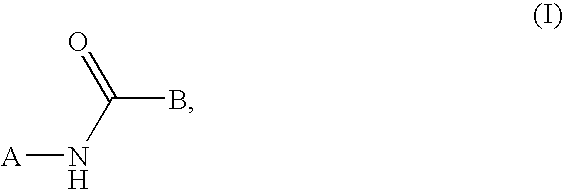
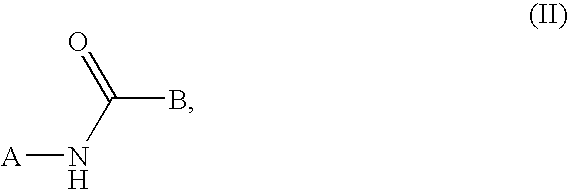
epresented by the general formula (I),
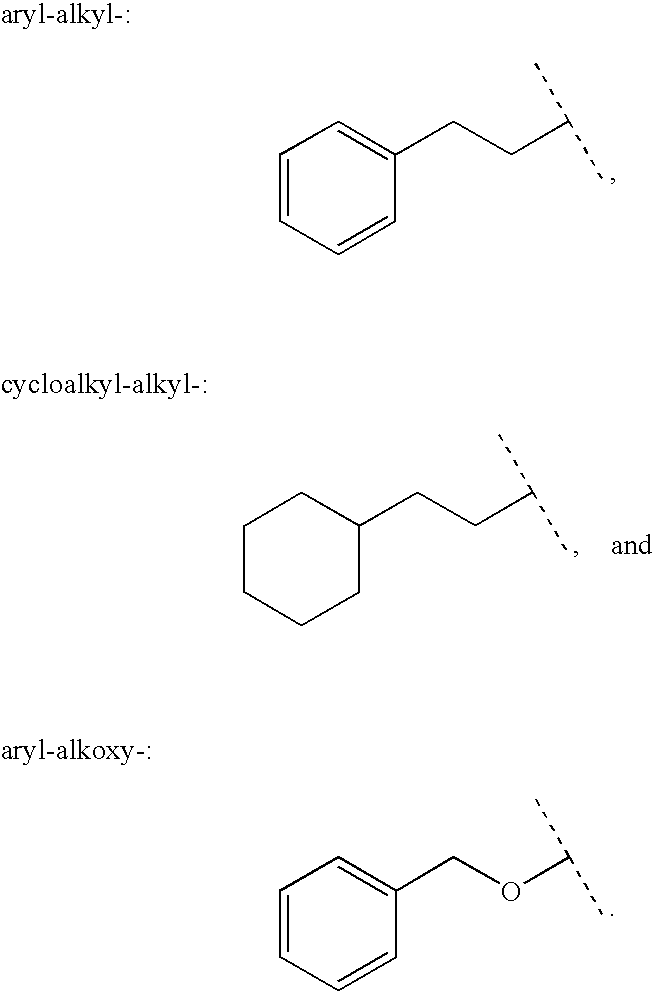
[0102][0103]R1, R2, R3, R4, R6, and R7 are independently selected from the group consisting of[0104]hydrogen, halogen, nitro, cyano, hydroxy, carboxy, —CF3; or[0105]—NR10R11; or[0106]C1-6-alkyl, C2-6-alkenyl, C2-6-alkynyl, C3-8-cycloalkyl, C3-8-cycloalkyl-C1-6-alkyl, aryl-C1-6-alkyl, heteroaryl-C1-6-alkyl, C1-6-alkoxy, aryl-C1-6-alkoxy, heteroaryl-C1-6-alkoxy, aryloxy, heteroaryloxy, C1-6-alkylthio, arylthio, heteroarylthio, aryl-C1-6-alkylthio, heteroaryl-C1-6-alkythio, C1-6-alkylsulfonyl, C1-6-alkylsulfinyl, arylsulfonyl, heteroarylsulfonyl, aryl, heteroaryl, C1-6-alkyl-carbonyl, —C(O)—O—C1-6-alkyl, carboxy-C1-6-alkyl, hydroxy-C1-6-alkyl, carboxy-C1-6-alkyloxy, amino-C1-6-alkyl, C1-6-alkylamino-C1-6-alkyl, di-(C1-6-alkyl)amino-C1-6-alkyl, C1-6-alkylsulfamoyl, di(C1-6-alkyl)sulfamoyl, C1-6-alkylsulfinamoyl or di(C1-6-alkyl)sulfinamoyl each of which is optionally substituted with one or more substituents independently selected from R12; or[0107]...
example 1
1-Cyclopentyl-1H-indole-3-carboxylic acid thiazol-2-ylamide
[1112]
[1113]Methyl indole-3-carboxylate (1 g, 5.7 mmol) was dissolved in dry NMP (5 mL) under nitrogen, Bromocyclopentane (11.4 mmol) was added followed by NaH (60%) (274 mg, 11.4 mmol). The mixture was heated to 70° C. for 2 hours. After cooling to room temperature the reaction mixture was quenched with acetic acid (1 mL) and the mixture was separated between diethyl ether (50 mL) and water (50 mL). The organic phase was isolated, dried (Na2SO4) and solvent removed in vacuo.
[1114]The crude material was dissolved in ethanol (10 mL) and NaOH (400 mg, 10 mmol) dissolved in water (2 mL) was added and the mixture was heated to reflux for 3 hours. After cooling to room temperature, water (50 mL) was added and the pH adjusted to pH=2 by the addition of 1N HCl. The mixture was washed with diethyl ether (2×50 mL). The organic phase was isolated, dried (Na2SO4) and solvent removed in vacuo. To give the crude derivative of indole-3-ca...
example 2
Prepared in Accordance with the Procedure Described in Example 1
1-CycloHexylmethyl-1H-indole-3-carboxylic acid thiazol-2-ylamide
[1117]R5Br=Cyclohexylmethylbromide; NH2A=2-aminothiazole; Indole starting material=methyl indole 3-carboxylate
[1118]
[1119]1H NMR (DMSO-d6): δ 12.12 (s, 1H), 8.55 (s, 1H), 8.25 (d, 1H), 7.61 (d, 1H), 7.51 (d, 1H); 7.30-7.20 (m, 2H), 7.18 (d, 1H), 4.10 (d, 2H), 1.83 (m, 1H), 1.75-1.55 (m, 5H), 1.36-0.93 (m, 5H).
PUM
| Property | Measurement | Unit |
|---|---|---|
| volume | aaaaa | aaaaa |
| temperature | aaaaa | aaaaa |
| temperature | aaaaa | aaaaa |
Abstract
Description
Claims
Application Information
 Login to View More