
Method and apparatus for producing gallium arsenide and silicon composites and devices incorporating same
a gallium arsenide and composite technology, applied in the direction of crystal growth process, polycrystalline material growth, radiofrequency control device, etc., can solve the problems of difficult layering of gallium arsenide and silicon composites, difficult to layer them together, and rather expensive gaas films or grown as gaas wafers,
- Summary
- Abstract
- Description
- Claims
- Application Information
AI Technical Summary
Benefits of technology
Problems solved by technology
Method used
Image

Examples
Embodiment Construction
)
[0065]In accordance with the foregoing summary, the following is a more detailed description of the preferred embodiments of some of the present inventions which are considered to be the best mode thereof.
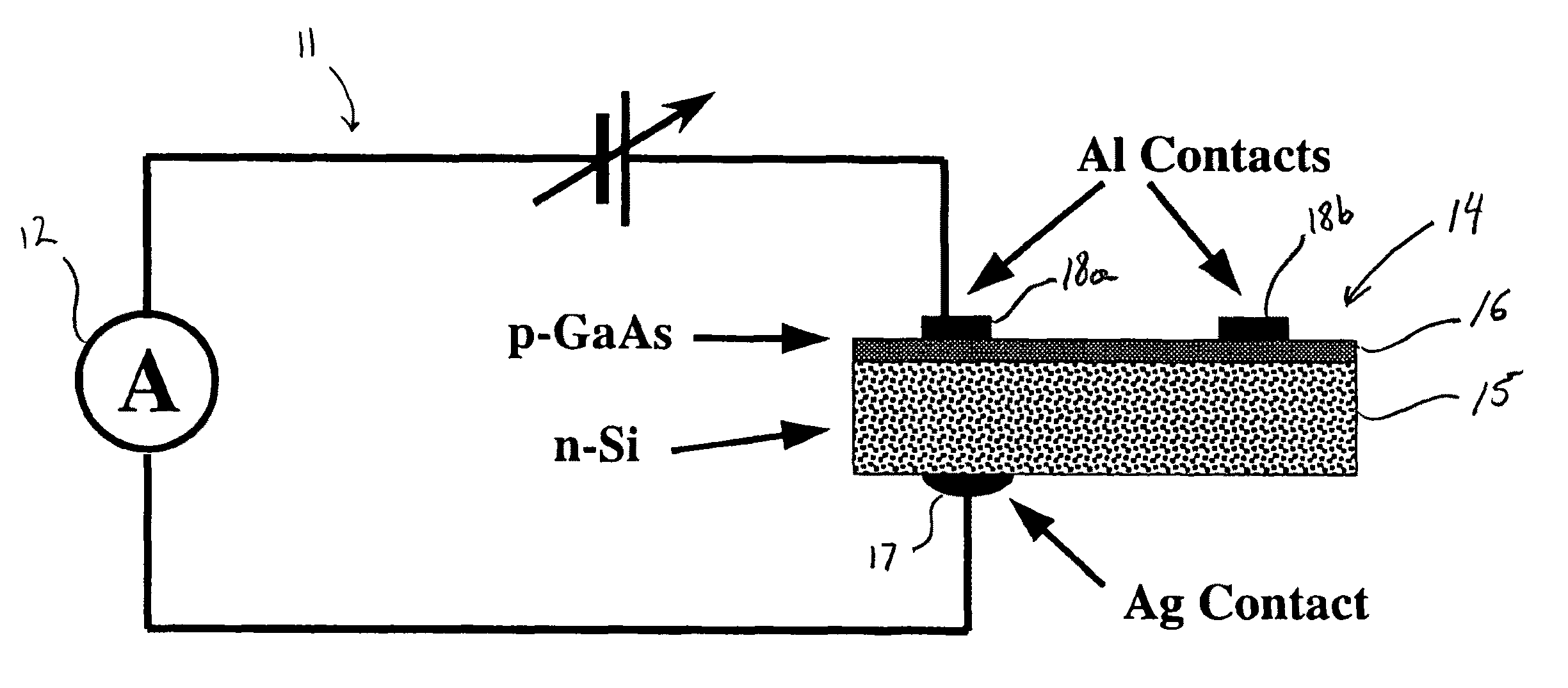
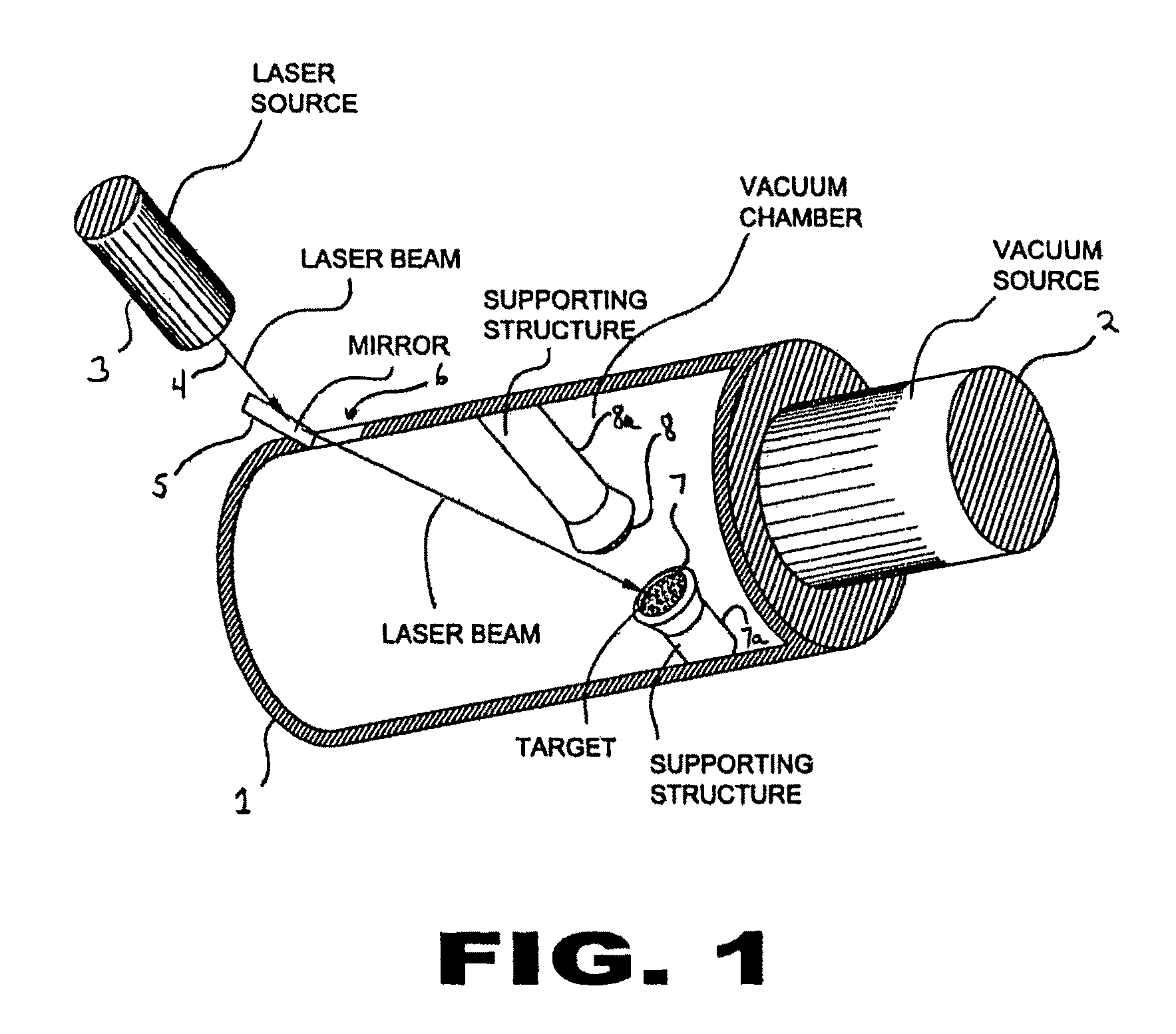
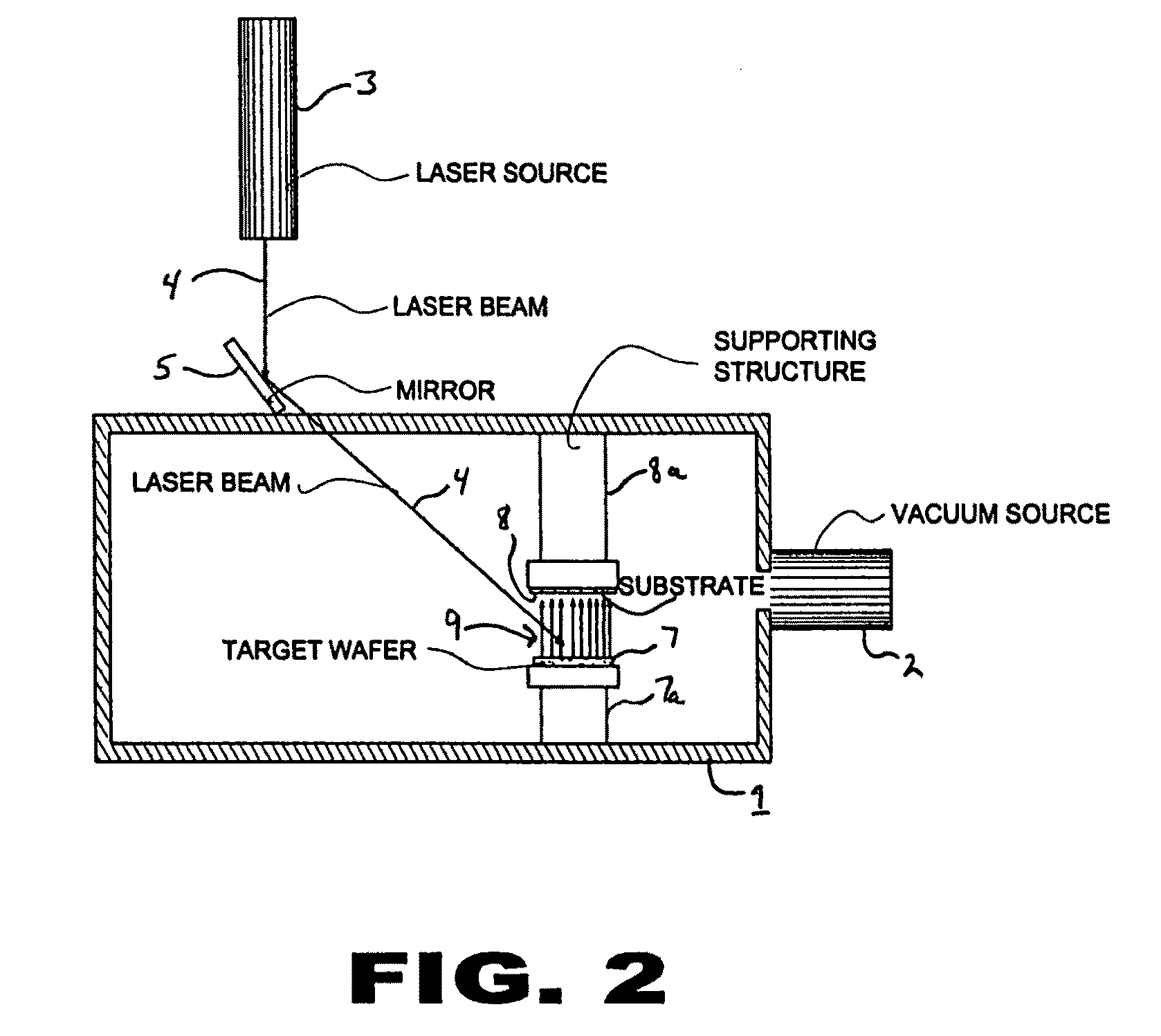
[0066]With respect to the preferred embodiment of the deposition of the present invention, the GaAs ablation used the 532 nm emission of a Nd:YAG laser (10 Hz repetition rate; 6 ns pulse) with a fluence of 0.79-0.84 J / cm2. The laser spor size was about 1.8 mm×2.5 mm (elliptical). The thicknesses of the films were approximately 0.5 μm. During the deposition of about one hour in duration, the substrate was not heated and the ambient pressure was kept at about 10-6-10-7 torr. X-ray analysis showed that the films contain crystallites and by means of an atomic force microscope (AFM), it is demonstrated that the film surfaces are fairly smooth. Using a monochromatic light source and by means of electrical contacts on the top and the rear of the sample, we measured the photocurrent (PC) ...
PUM
 Login to View More
 Abstract
Description
Claims
Application Information
 Login to View More