The resulting plaques narrow the arteries to interfere with the smooth flow of blood.
If this occurs within a coronary
artery, a heart
attack may result.
While
coronary heart disease patients are typically treated by drugs and dietary and exercise regimens, this may be insufficient for some patients.
Because catheters must be extremely small in cross section to pass through blood vessels, they are necessarily fragile.
A range of polymers like
silicone rubber, latex, and
thermoplastic elastomers are commonly used to make catheters because these materials are
inert and unreactive to body fluids and medical fluids into which they will come into contact during medical procedures.
But, such materials are also weak mechanically, and may fracture during handling, transport, or storage.
But, because catheters and guidewires may need to be one foot or longer for medical procedures, these protective tubes must be at least that long.
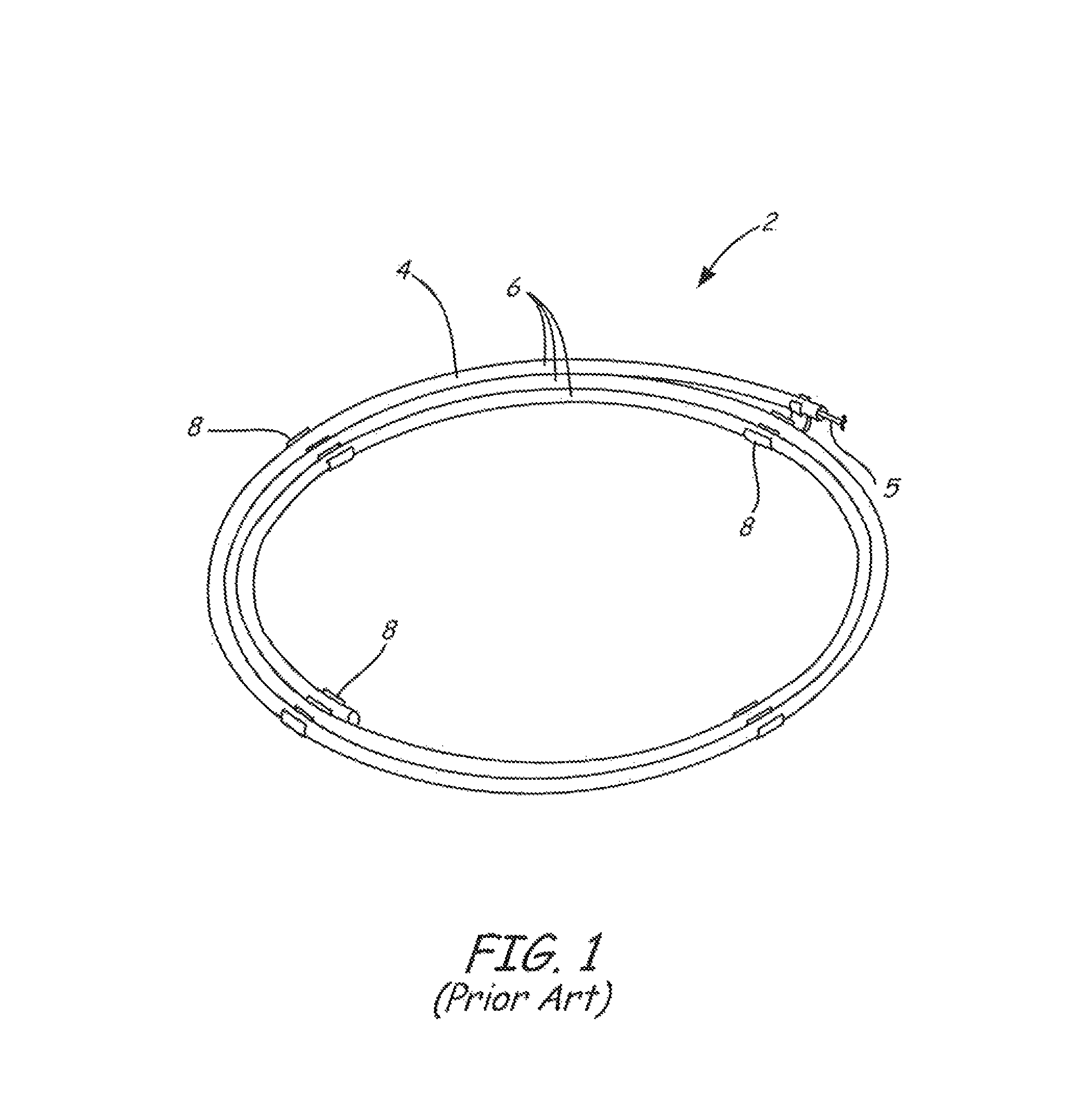
While this type of clamp fits around the entire tube, it does not allow the tube to be removed from the clamps very easily.
While this type of clamp allows coils of different
diameter to be formed, and enables a user to release the tubing from the clamps and then reform a coil of different
diameter, the clamps can accidentally become disengaged from the tubing during transport, storage, or handling.
While more secure than the open-faced mechanical clamp because such clips bond to the tubing outer wall, the
catheter tubing cannot be separated from these integrally molded clips to adjust the tubing in the field.
While all of these types of mechanical clamps will secure a
catheter tube into a wound coil, they are cumbersome to install around the tubing, and in some cases become easily dislodged in the field.
This may result in unwinding of the tube and possible damage to the
catheter inside it in the operating room or field.
This may compound the damage to the medical devices contained inside the tubing, and interfere with the sterile packaging containing the
coiled tubing.
A hollow catheter tube, on the other hand, can easily be kinked during the coiling process with resulting damage to the catheter contained inside the tube.
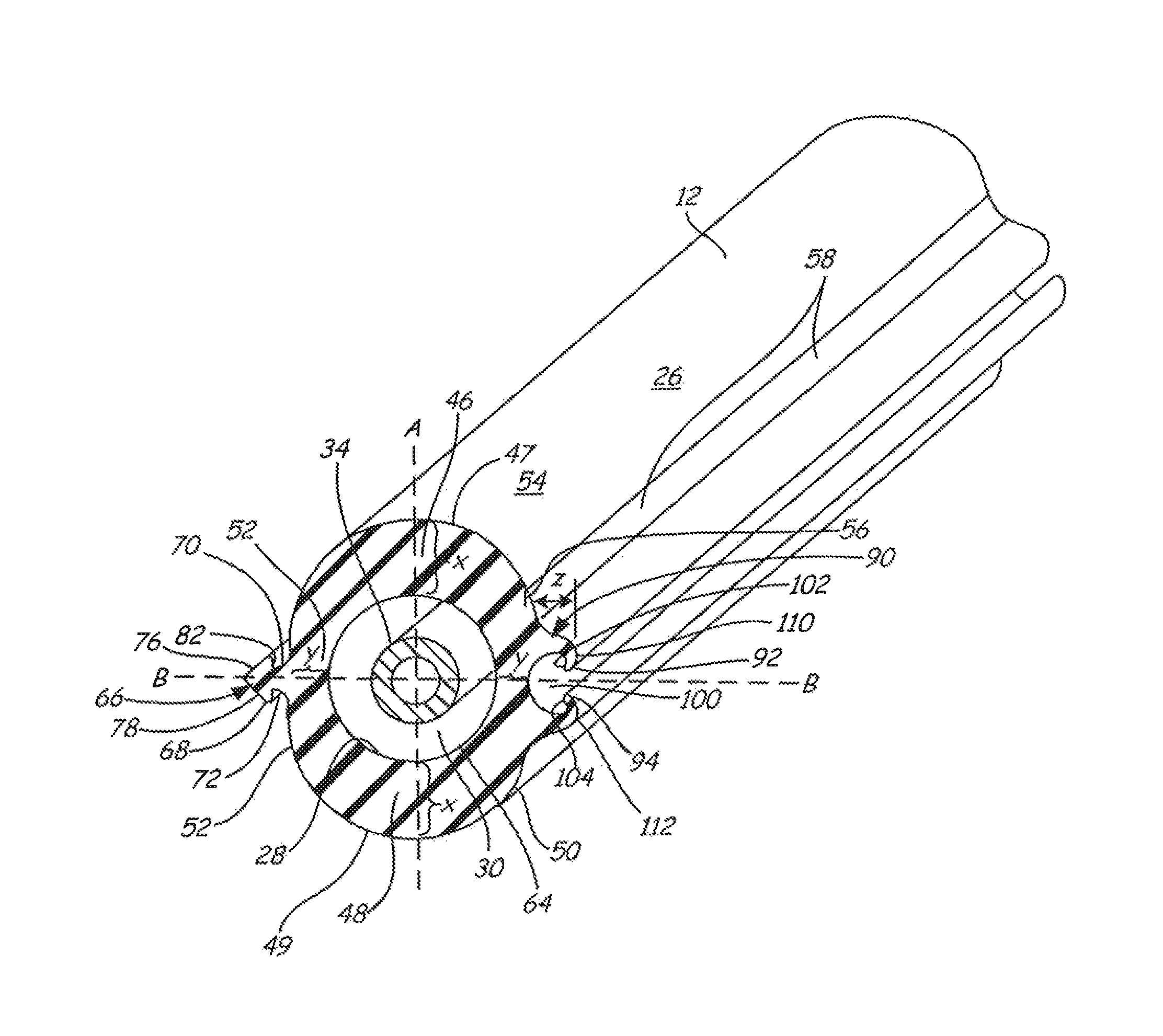
But, because the tubing of Stinnette is perfectly circular in cross section, the resulting tube coils may twist and easily rotate with respect to the fixed connection points.
This allows the windings in the tubing to rise up from their original planar coiled alignment during transport, storage, or handling, and result in the coil becoming unsecured.
This is a particular problem for medical devices like catheters or guidewires where they have been sterilized, coiled, and placed in sanitary packaging at the factory.
If the coil becomes unsecured inside the
package, it cannot be resecured in coiled alignment without opening the sanitary
package.
The catheter or guidewire can also become damaged inside the unraveling coils.
This is why, in part, the
medical device industry relies upon separate external clamps for securing protective tubing into coiled alignment in
spite of the cumbersome
assembly and expense of the clamps.
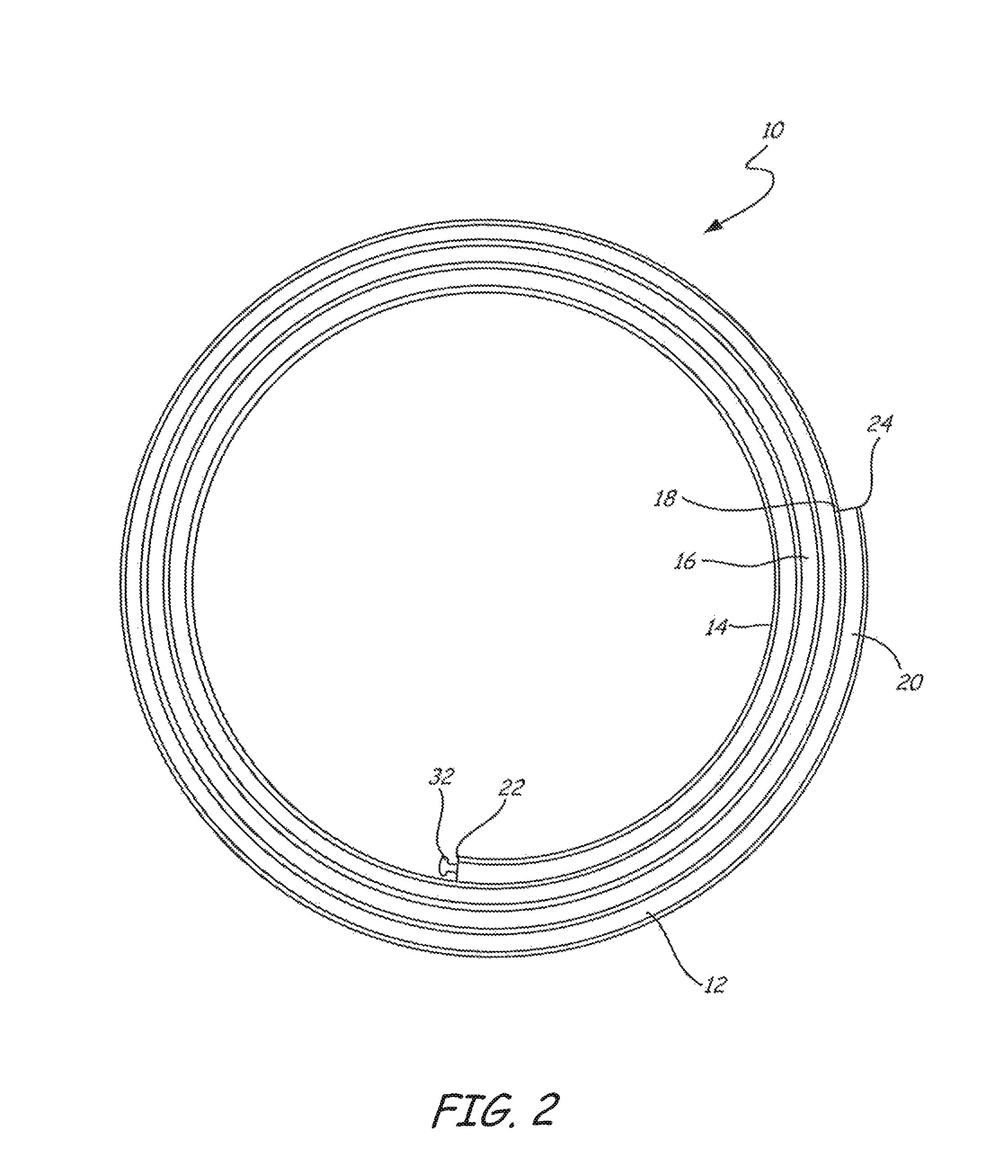
Such a
coiled tubing should inhibit individual coils from rotating with respect to each other, or rising from the substantially flat planar alignment that can cause the tubing to become unwound inside its packaging or during handling, and damage the
medical device or long, thin fragile product contained therein.



 Login to View More