This helps you quickly interpret patents by identifying the three key elements:
Problems solved by technology
Method used
Benefits of technology
Benefits of technology
The present invention provides a method for treating crude oil and petrochemical product tank bottoms using a paraffin modifier and a hydrocarbondiluent. The method results in a stable three-phase separation without the need for mechanical equipment such as centrifuges or decanters. The technical effect of this method is the improved separation and handling of tank bottom sludge.
Problems solved by technology
The reason centrifuges and the like cannot effectively recover the paraffin as inventory is because of the specific gravity and sensitivity to temperature of the paraffin.
Method used
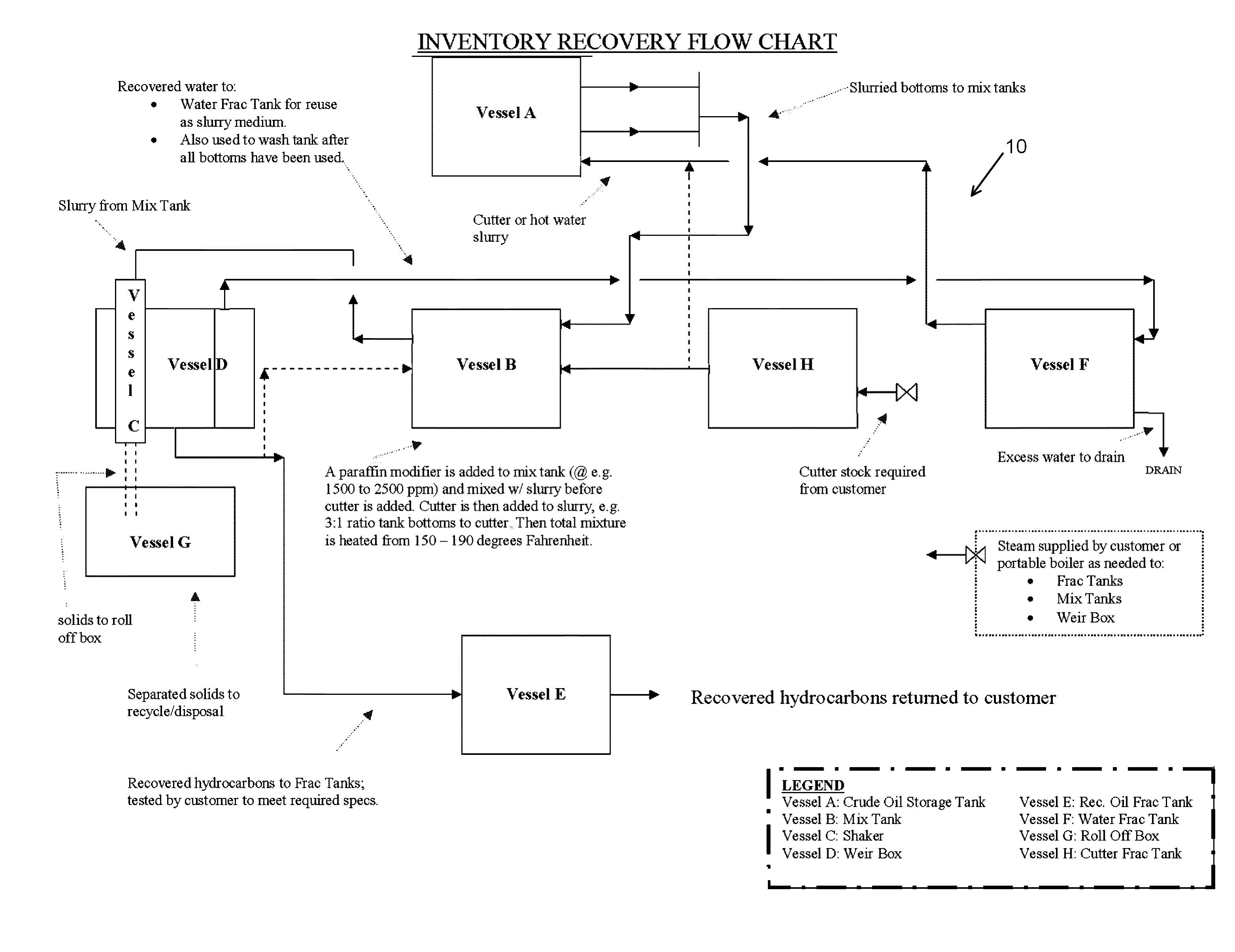
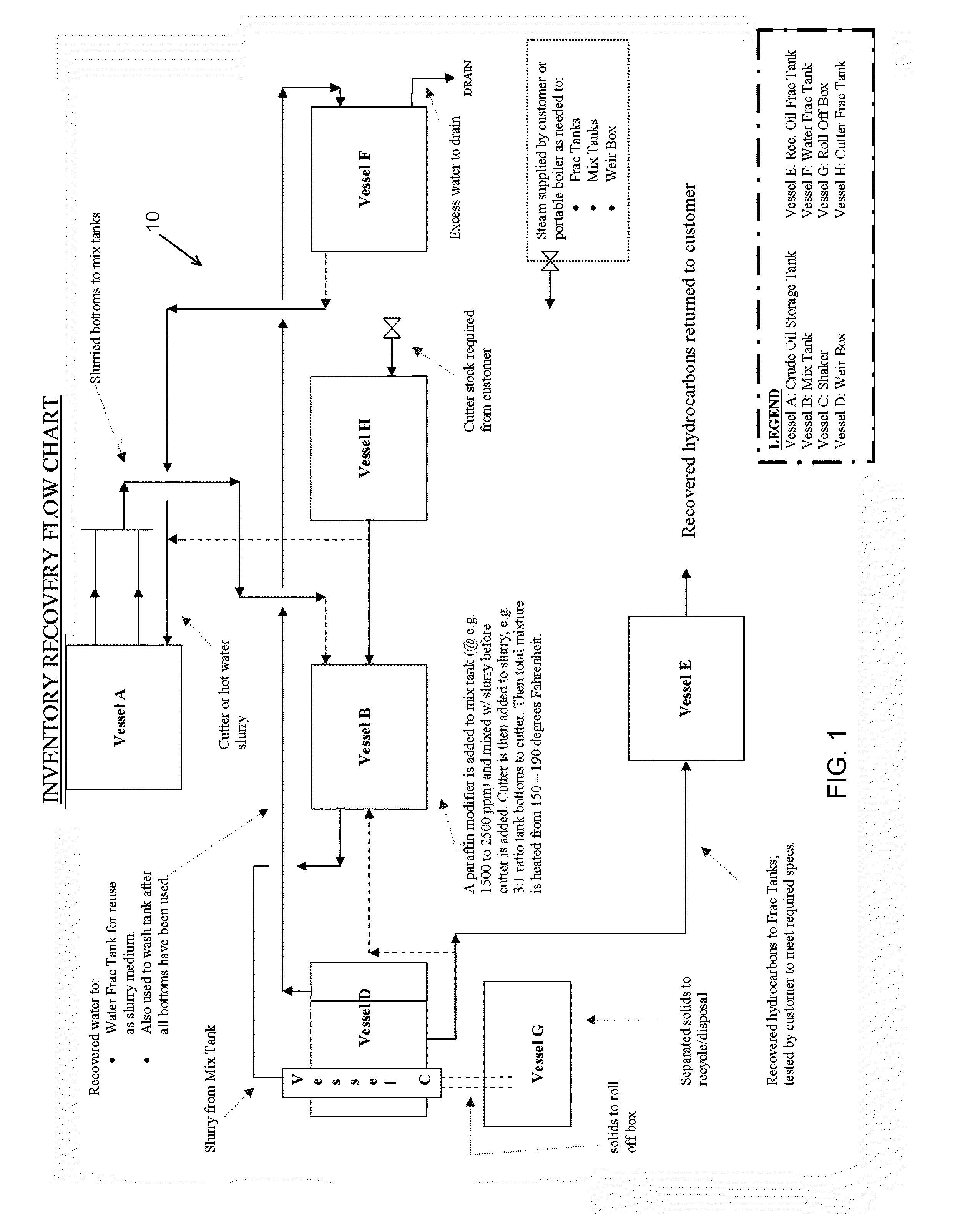
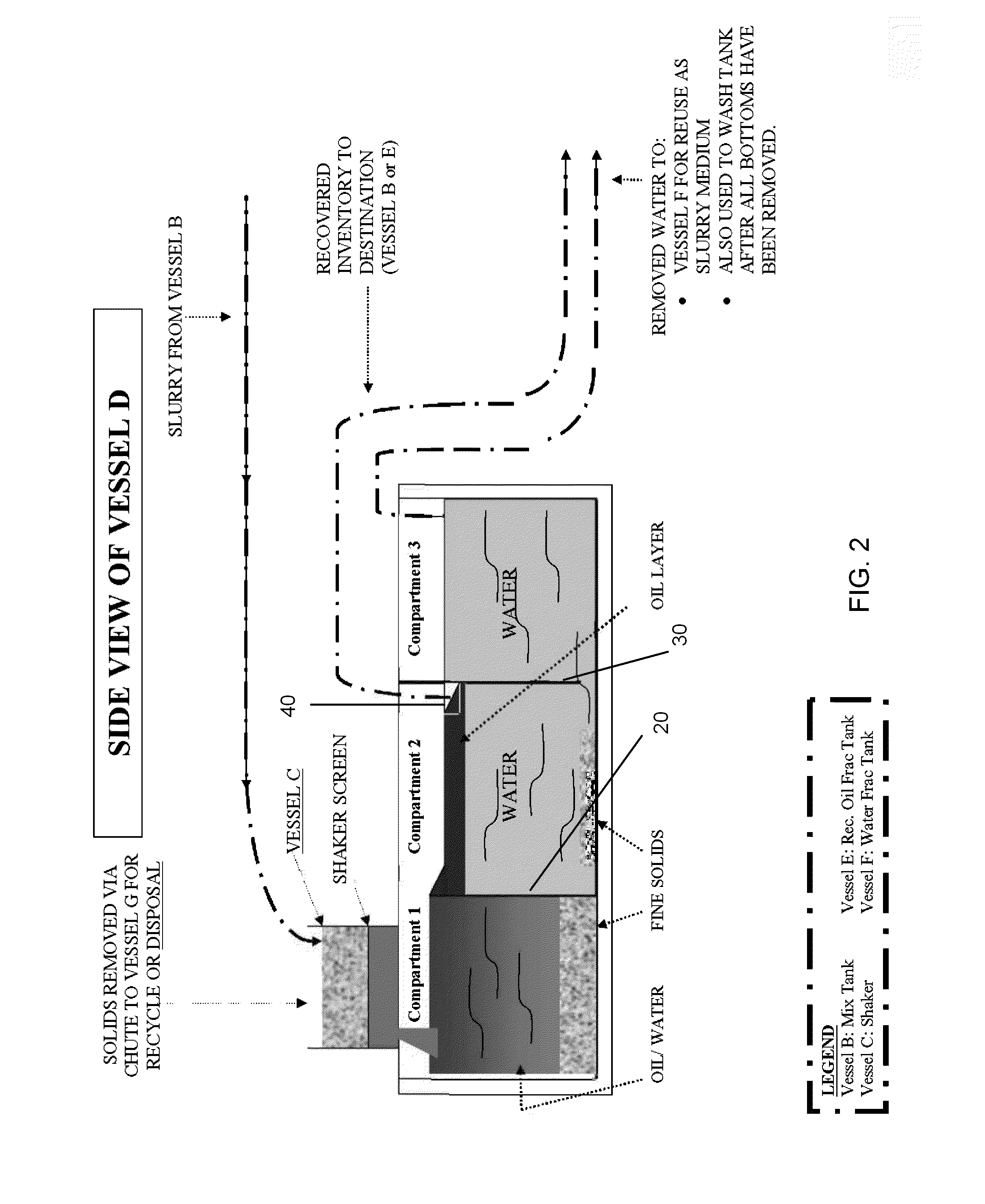
the structure of the environmentally friendly knitted fabric provided by the present invention; figure 2 Flow chart of the yarn wrapping machine for environmentally friendly knitted fabrics and storage devices; image 3 Is the parameter map of the yarn covering machine
View more
Image
Smart Image Click on the blue labels to locate them in the text.
Viewing Examples
Smart Image
Click on the blue label to locate the original text in one second.
Reading with bidirectional positioning of images and text.
Smart Image
Examples
Experimental program
Comparison scheme
Effect test
case study
Example 1
[0079]In a recent experimental case study, a crude oil tank storage terminal in South Louisiana, on behalf of their customer, put out for a bid a tank cleaning project. The storage tank known as TK-203, has a nominal storage capacity of 160,000 Bbls (189 ft. diameter). The crude oil sludge bottoms in Tank 203 were mainly heavy olefin paraffins, water and sediment. Tank 203 was gauged for the quantity of tank bottom sludge and the quantity of tank bottom sludge in Tank 203 was found to be: 11,311.5 Bbls (2,262 metric tons).
[0080]The customer decided upon the tank cleaning and inventory recoverysystem utilizing Malcera 508MM as the preferred method for cleaning Tank 203. The tank cleaning contractor utilized the following method to clean Tank 203.
Step 1:
[0081]The tank bottoms in TK-203 were slurried with hot diluent and pumped into a 440 barrel mix tank. The mix tank was equipped with four 10 hp electric motor operated mixers for mixing the heavy olefin tank bottoms, Malcera...
example 2
Conventional Tank Cleaning Project
Estimate
[0102]Estimated costs to remove and clean 212 foot diameter crude oil tank containing 21,000 barrels heavy Paraffin=$900,000.00
[0103]21,000 barrels divided by 4.8 barrels per cubic yard=4,375 cubic yards×$500 per cubic yard (ton)=$2,187,500.00 (if sent out as hazardous waste)
[0104]21,000 barrels divided by 4.8 barrels per cubic yard=4,375 cubic yards divided by 12 cubic yards per box=365 boxes
[0105]Transportation to disposal—365 boxes×$350.00 per box=$127,750.00
[0106]Transportation of boxes to job site—10 boxes×$300.00 per box=$3,000.00
[0107]Transportation of boxes to washout facility and return to vendor—10 boxes×$350.00=$3,500.00
[0108]Box Rental—10 boxes×$45.00 per box per day=$450.00 per day×40 days=$18,000.00
[0110]Total Cost of Cleaning & Disposal: $3,244,250.00
[0111]Loss of inventory: $1,014,450.00
[0112]Loss of revenue due to loss of inventory: $1,166,618.00
[0113]Estimated Total Cost: $5,425,3...
the structure of the environmentally friendly knitted fabric provided by the present invention; figure 2 Flow chart of the yarn wrapping machine for environmentally friendly knitted fabrics and storage devices; image 3 Is the parameter map of the yarn covering machine
Login to View More
PUM
Property
Measurement
Unit
Pressure
aaaaa
aaaaa
Capacitance
aaaaa
aaaaa
Capacitance
aaaaa
aaaaa
Login to View More
Abstract
A method for treating crude oil and petrochemical product tank bottoms treats the tank bottoms sludge with a paraffin modifier that converts the tank bottom sludge, in the presence of a hydrocarbondiluent (cutter stock) and heat, into three separate phases. The resulting three phase separation is stable enough that there is no need for the use of any mechanical equipment such as centrifuges or decanters to enhance the separation.
Description
CROSS-REFERENCE TO RELATED APPLICATIONS[0001]Priority of my U.S. Provisional Patent Application Ser. No. 61 / 185,114, filed 8 Jun. 2009, incorporated herein by reference, is hereby claimed. Priority of my U.S. Provisional Patent Application Ser. No. 61 / 352,218, filed 7 Jun. 2010, incorporated herein by reference, is hereby claimed.STATEMENT REGARDING FEDERALLY SPONSORED RESEARCH OR DEVELOPMENT[0002]Not applicableREFERENCE TO A “MICROFICHE APPENDIX”[0003]Not applicableBACKGROUND OF THE INVENTION[0004]1. Field of the Invention[0005]The present invention relates to crude oilproduct recovery. More particularly, the present invention relates to a method for treating crude oil and refined products, tank bottoms, tank bottom treatment and inventory recoverysystem, utilizing an asphaltene and paraffin modifier.[0006]2. General Background of the Invention[0007]One of the most challenging issues at refineries, crude oil terminals and production sites is the development of new ways to minimiz...
Claims
the structure of the environmentally friendly knitted fabric provided by the present invention; figure 2 Flow chart of the yarn wrapping machine for environmentally friendly knitted fabrics and storage devices; image 3 Is the parameter map of the yarn covering machine
Login to View More
Application Information
Patent Timeline
Application Date:The date an application was filed.
Publication Date:The date a patent or application was officially published.
First Publication Date:The earliest publication date of a patent with the same application number.
Issue Date:Publication date of the patent grant document.
PCT Entry Date:The Entry date of PCT National Phase.
Estimated Expiry Date:The statutory expiry date of a patent right according to the Patent Law, and it is the longest term of protection that the patent right can achieve without the termination of the patent right due to other reasons(Term extension factor has been taken into account ).
Invalid Date:Actual expiry date is based on effective date or publication date of legal transaction data of invalid patent.


 Login to View More