
Methods for the treatment and diagnosis of bone mineral density related diseases
a bone mineral density and disease technology, applied in the field of bone mineral density related diseases, can solve the problems reducing bone mineral density, and and achieve the effect of reducing bone mineral density
- Summary
- Abstract
- Description
- Claims
- Application Information
AI Technical Summary
Benefits of technology
Problems solved by technology
Method used
Image

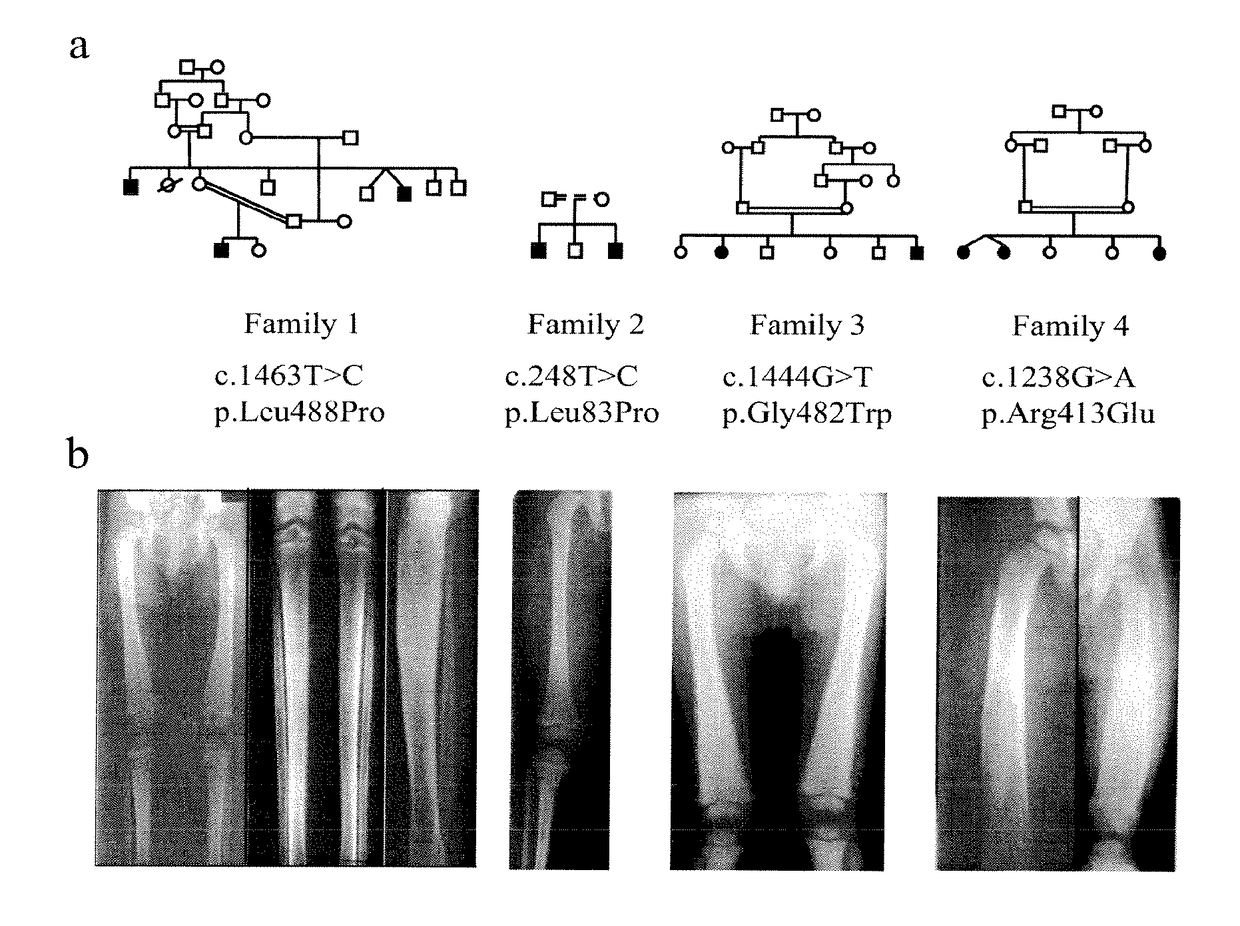
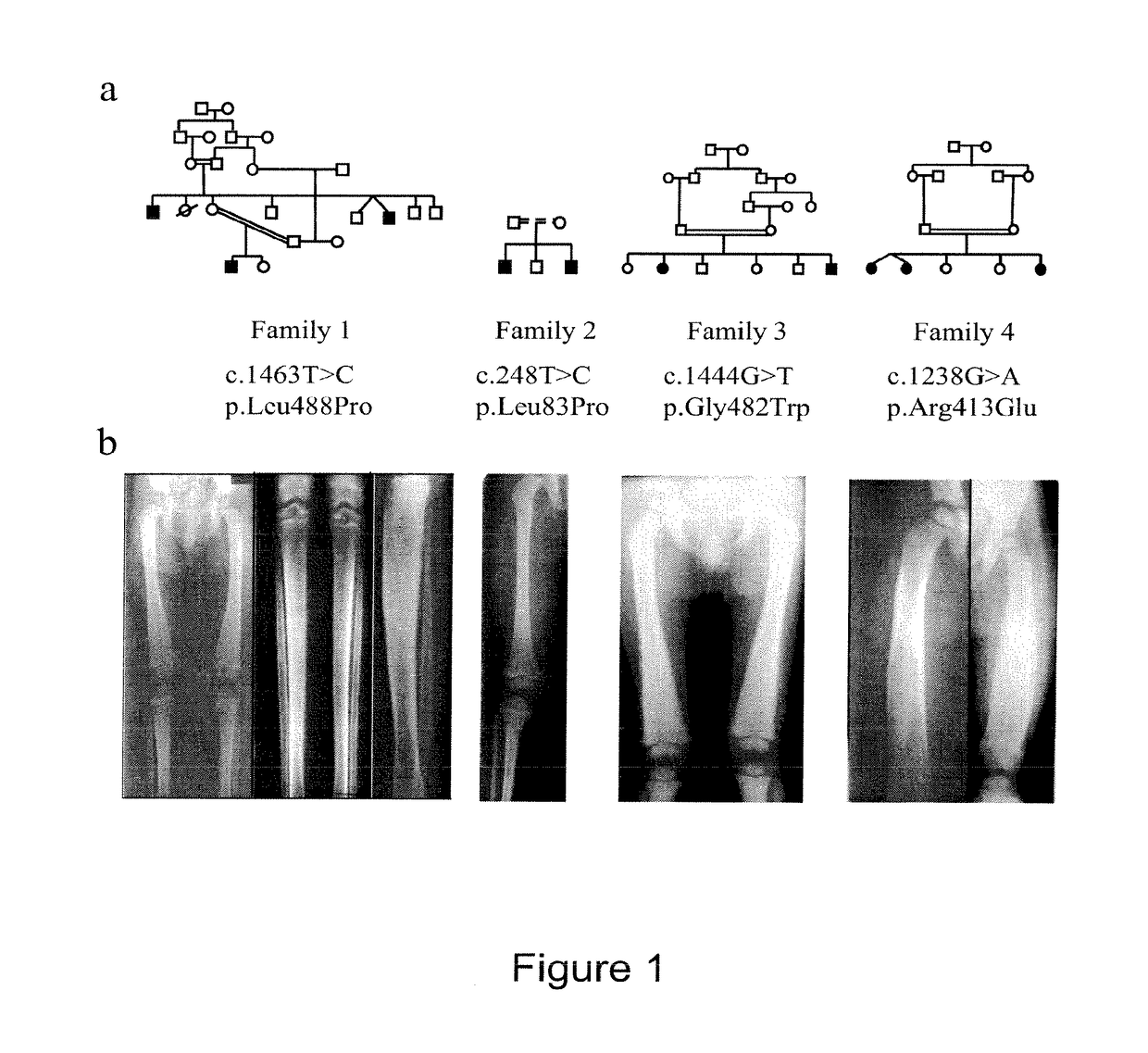
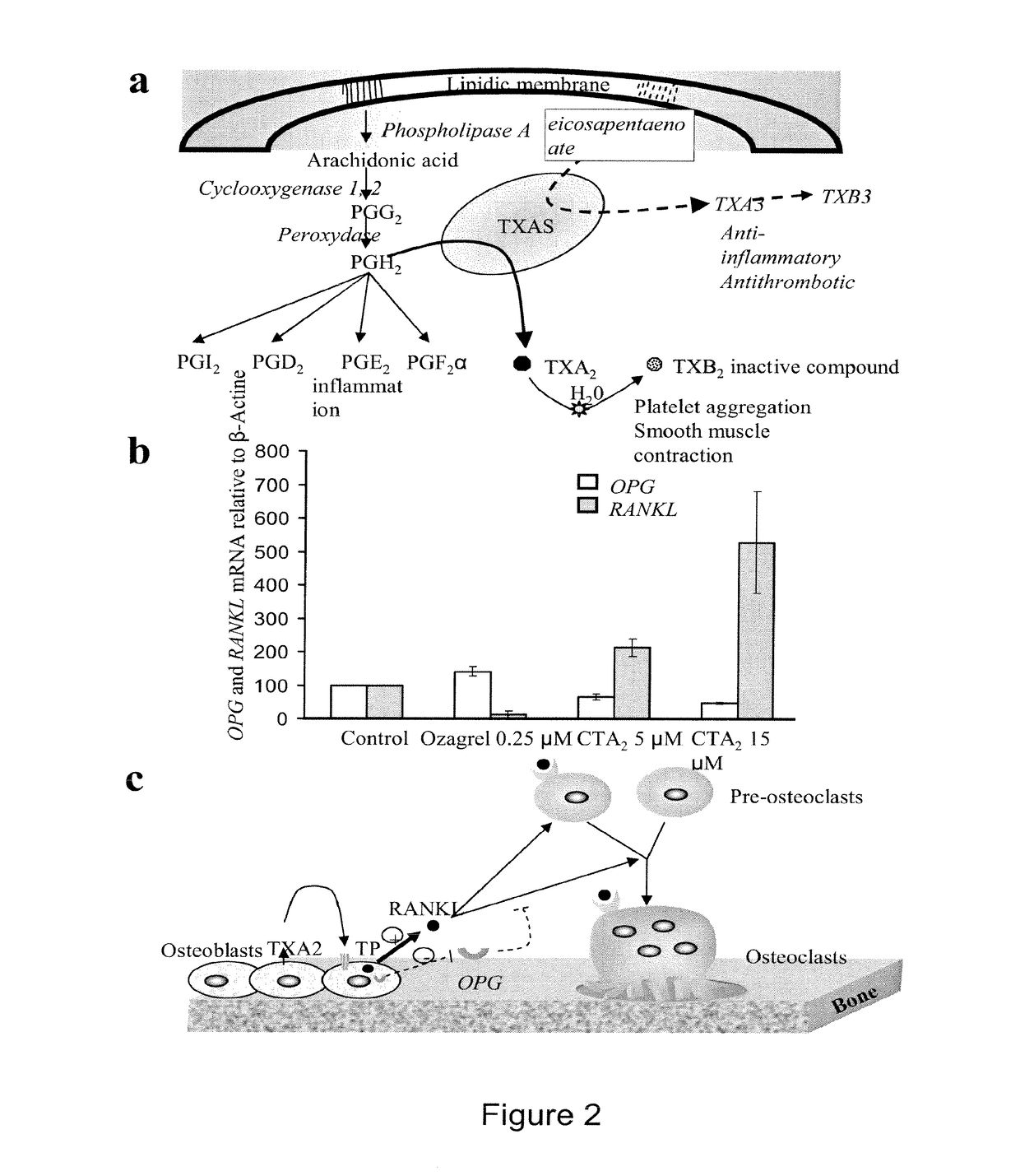
Examples
example 1
Material & Methods
[0152]Affected Individuals:
[0153]We studied 10 affected individuals belonging to 4 inbred families. Criteria diagnostic for inclusion were: i) severe anemia requiring blood infusions and ii) skeletal changes such as diaphyseal dysplasia with increase bone density, abnormal long bone modeling, cortical hyperostosis and normal metaphyses and epiphyses. DNA samples were obtained after signed informed consent;
[0154]Mutation Detection:
[0155]A series of 17 intronic primers was designed to amplify the 4 non-coding and 13 coding exons of the TBXAS1 gene. The amplification products were purified and sequenced using the fluorescent dideoxy-terminator method on an automatic sequencer (ABI 3100)
[0156]RT-PCR:
[0157]Total RNAs were extracted from human muscle, primary culture cells (osteoblasts, chondrocytes and fibroblasts) and from cord blood cells transdifferentiation into osteoclasts using the RNeasy Mini Kit (Qiagen). cDNA were synthesized by priming with random hexamers in ...
example 2
[0183]In this example, several thromboxane inhibitors are tested for their ability to treat diseases associated with a decreased bone mineral density, in various models and in human patients.
[0184]Thomboxane Inhibitors[0185]Ozagrel is a thromboxane synthase inhibitor (Cayman Chemical) It is administered orally to adults at a dosage of 800 mg / day.[0186]Picotamide is a dual-acting thromboxane receptor antagonist and thromboxane synthase inhibitor (Plactidil®, from Novartis). It is administered orally to adults, twice per day, at a dose of 600 mg.[0187]Seratrodast is a thromboxane receptor antagonist (Takeda, Abott). It is administered orally to adults at 80 mg / day.
[0188]Diseases Associated with a Decreased Bone Mineral Density
[0189]1) In Vitro Model
[0190]Primary cultures of human osteoblasts are cultured in the presence or absence of the thromboxane inhibitors.
[0191]The following variables are measured:[0192]levels of TCB2 are assayed by ELISA;[0193]levels of RANKL / OPG are assayed by ...
PUM
 Login to View More
 Abstract
Description
Claims
Application Information
 Login to View More