
Purposes of epididymis specific antibiotic peptide Bin1b in spermiotiliosis
A bin1b, sperm technology, applied in the direction of peptide/protein components, medical preparations containing active ingredients, pharmaceutical formulas, etc., can solve the problem of no discovery or disclosure of correlation
- Summary
- Abstract
- Description
- Claims
- Application Information
AI Technical Summary
Problems solved by technology
Method used
Image

Examples
Embodiment 1
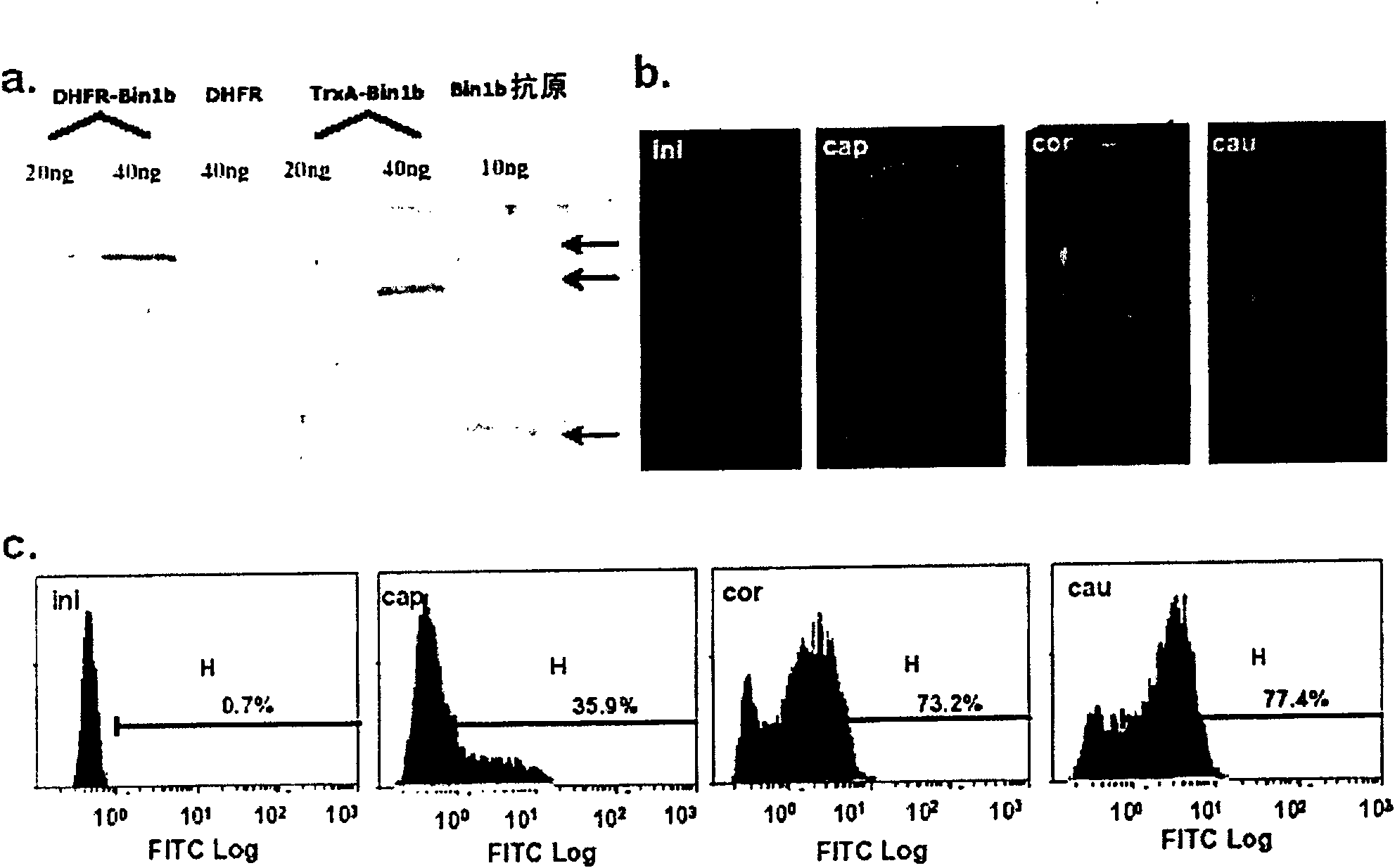
[0050] Bin1b antibody preparation and immunolocalization on epididymis-derived sperm:
[0051] Using the method described in the examples of WO02 / 68463, the cDNA corresponding to 45 amino acid residues and 135 bp bases of the mature Bin1b gene was obtained, as follows:
[0052] 135bp base cDNA:
[0053] GGAATCAGAAACACCGTGTGCTTCATGCAGCGGGGCCACTGTAGGCTCTTCATGTGCCGTTCTGGGGAGAGAAAGGGGGATATTTGCTCTGACCCCTGGAACAGATGCTGCGTATCCAGTTCCATTAAAAACAGATGA (SEQ ID NO: 1)
[0054] 45 amino acid residues
[0055] GIRNTVCFMQRGHCRLFMCRSGERKGDICSDPWNRCCVSSSIKNR (SEQ ID NO: 2)
[0056] The 145bp fragment was inserted into the PET-28a cloning vector (purchased from Invitrogen). The recombinant protein was expressed and purified with the Novagen pET expression kit (the kit was purchased from Invitrogen). The antibody against the recombinant protein was prepared according to the method described in the reference Hu, Y.X. et al. Get effective polyclonalantisera in one month. Cell Res. 12, 157-160 (2...
Embodiment 2
[0060] Bin1b gene eukaryotic transfection:
[0061] Bin1b gene was cloned in pCMV-tag expression vector. T84 cells at 1×10 5 Cell density spread in 35mm culture dish, when the cell growth is 60-80% confluent, use liposome lipofectin transfection reagent to transfect. After transfection, the cells were screened with the selective antibiotic G418 (concentration 400ug / ml), and the operation process was according to the reference Jiang, J.L. et al. The involvement of HAb18G / CD147 in regulation of store operated calcium entry and metastasis of human hepatoma cells. J. Biol. The method described in Chem.276, 46870-46877 (2001) was carried out.
Embodiment 3
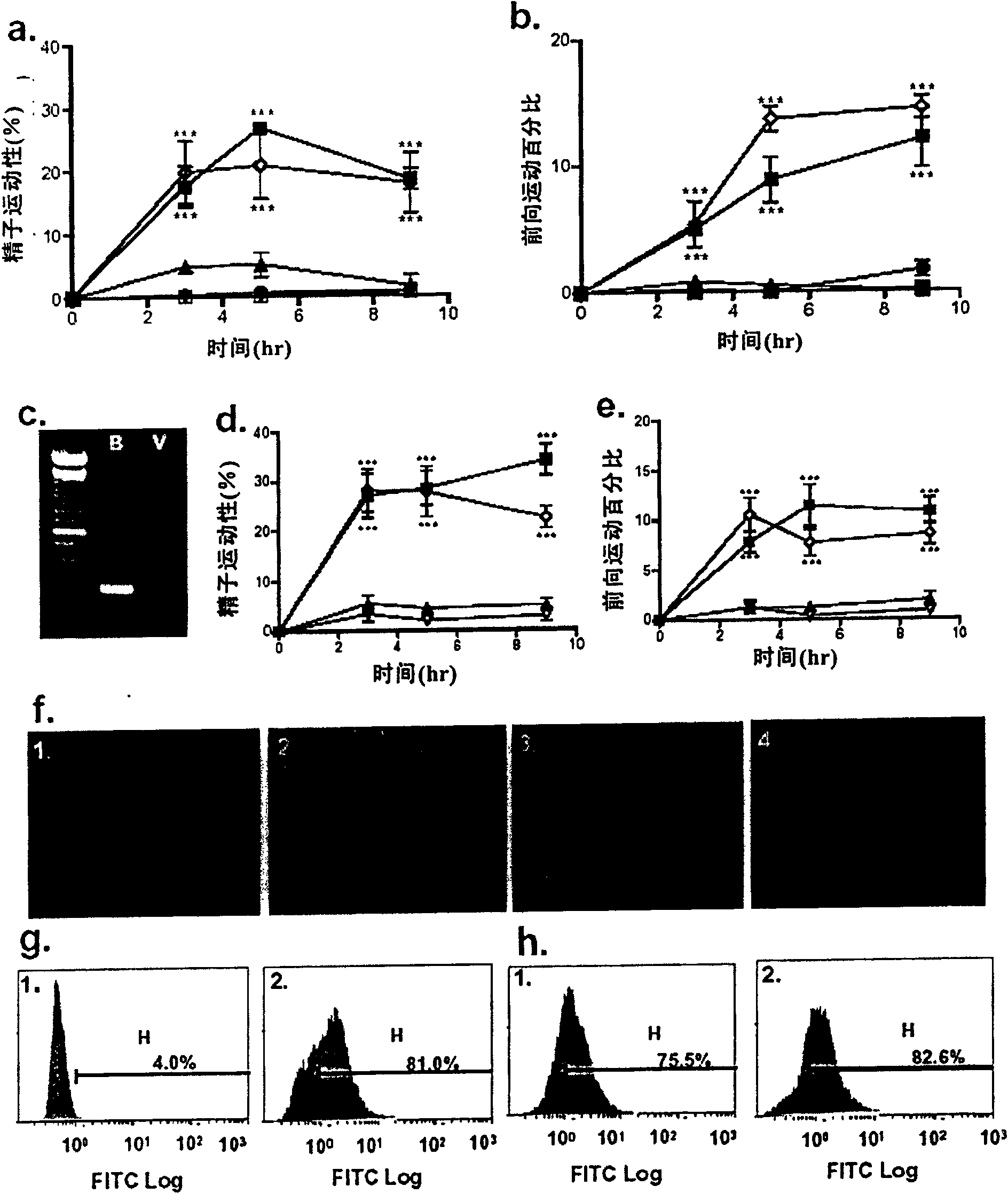
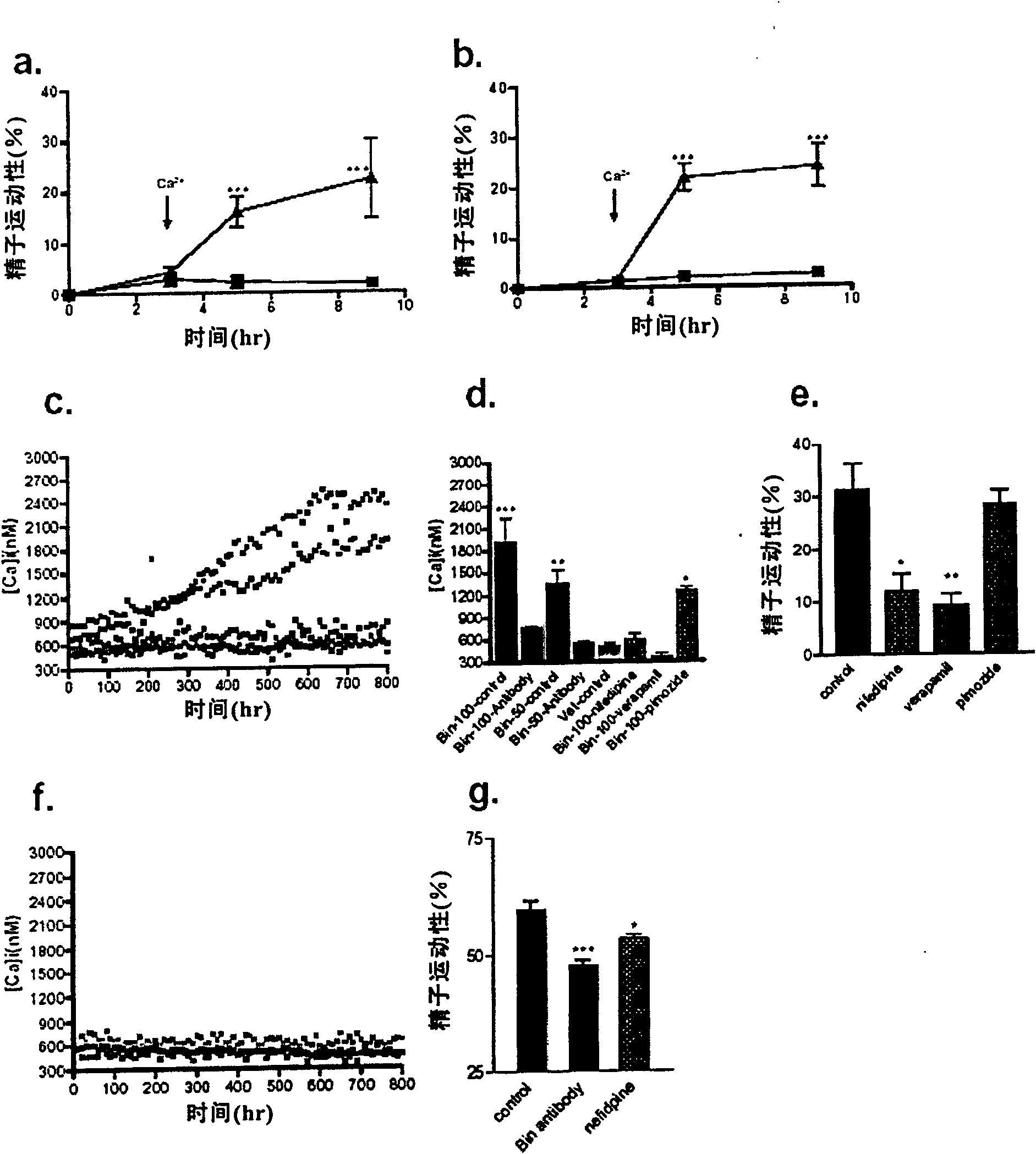
[0063] Promoting effect of Bin1b on sperm maturation
[0064] 1. Experimental method
[0065] Sperm-epithelial cell co-culture
[0066] Immature epididymal head spermatozoa were collected from adult SD rats (3 months old). The head of the proximal epididymis was gently minced and placed in 0.4 ml of incubated sperm culture medium (123 mM sodium chloride, 4 mM potassium chloride, 2 mM calcium chloride, 0.4 mM magnesium sulfate, 0.3 mM disodium hydrogen phosphate, 25 mM carbonic acid Sodium hydrogen, 5mM glucose, 12.5mM sodium lactate, 0.5mM pyruvate, 8ug phenol red, 4mg / ml bovine serum albumin, final pH 7.4, viscosity 310mOsm / kg.) 5 minutes to diffuse the sperm into the medium. The sperm concentration was adjusted to 60 million / ml. Methods for isolating and culturing epididymal epithelial cells were described previously. After confluence of epithelial cells (four days after culture), the culture supernatant was removed two hours before co-culture cell experiments. 3 microl...
PUM
 Login to View More
 Abstract
Description
Claims
Application Information
 Login to View More