
Preparation method for disinfection algicide for swimming pool
A technology of swimming pool bactericidal algaecide and post-treatment agent, applied in the direction of sterilization / microdynamic water / sewage treatment, etc. Excellent environmental compatibility and skin compatibility, excellent biodegradability, low ecotoxicity effect
Patent Information
- Authority / Receiving Office
- CN · China
- Patent Type
- Applications(China)
- Current Assignee / Owner
- Publication Date
- 2008-02-13
- Estimated Expiration
- Not applicable · inactive patent
Smart Images
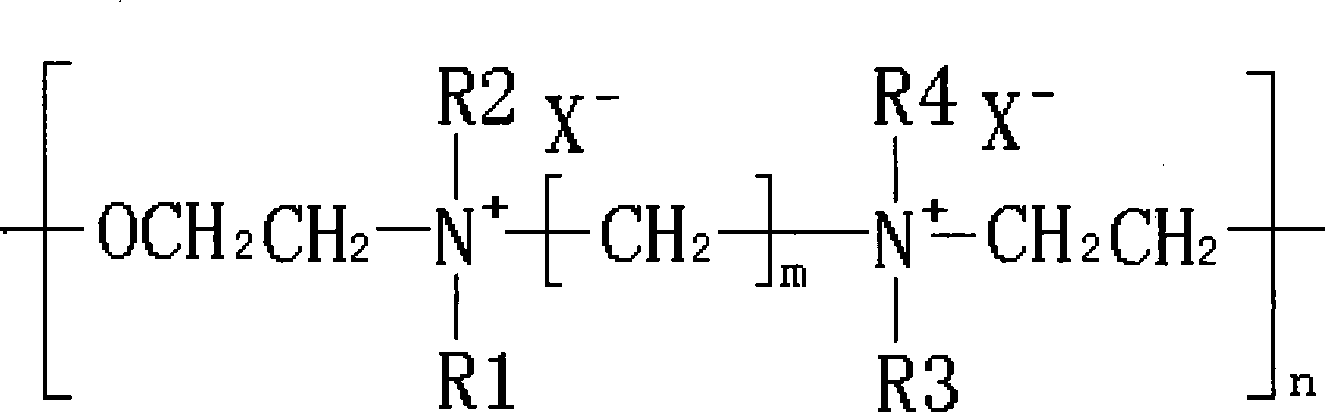
Figure 1 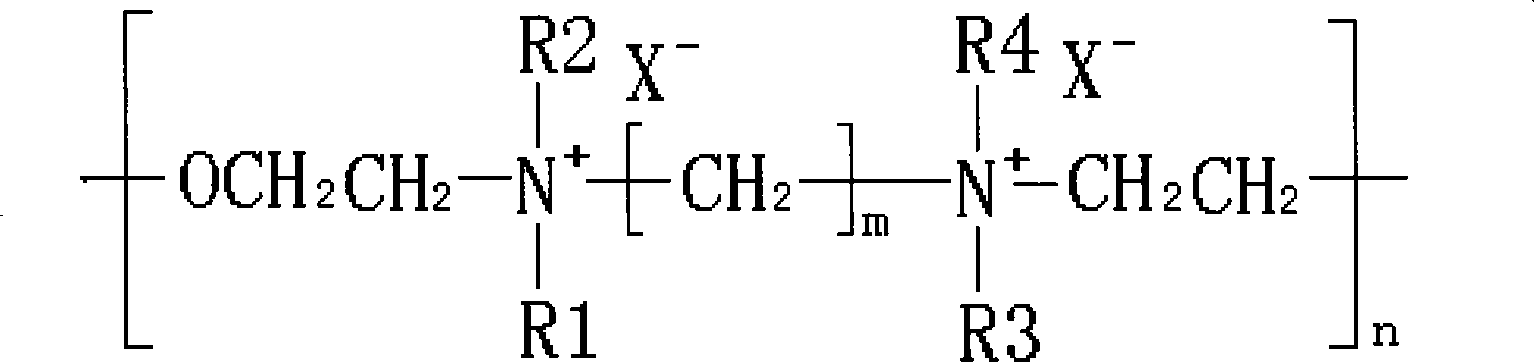
Figure 2
Abstract
Description
technical field
[0001] The invention relates to a preparation method of a swimming pool sterilizing algicide. Background technique
[0002] Currently, chlorine gas, chlorine dioxide, and sodium hypochlorite are commonly used as sterilizing and algicidal agents for swimming pools. Because chlorine gas is irritating and dangerous to the human body, it must be sterilized and algae-killing only when the swimming pool is closed; although the danger of sodium hypochlorite has been greatly reduced, the The irritation still exists; chlorine dioxide is non-irritating to the human body, but it is difficult to prepare and the product is unstable in storage. Contents of the invention
[0003] The technical problem to be solved by the present invention is to provide a preparation method of a highly efficient, non-toxic and safe swimming pool bactericidal algicide.
[0004] In order to solve the above-mentioned technical problems, the technical solution adopted in the present invention...
Examples
Embodiment 1
[0016] Add 600g of deionized water and 3.5mol of dichloroethyl ether into the reactor, replace it with nitrogen until the oxygen content is less than 100ppm, turn on the stirring, raise the temperature to 60°C, and start to drop tetraethylethylenediamine (3.51mol in total), After the diamine is dripped, slowly raise the temperature to 80-95°C, keep the temperature constant for 20 hours, take a sample and control it, if the pH is less than 6.0, lower the temperature to below 50°C. Add a 30% aqueous solution containing 3.0 g of sodium bisulfite, stir for 2 hours, and adjust the pH to 7.0 with sodium hydroxide to obtain the finished product.
Embodiment 2
[0018] Add 600g of deionized water and 3.44mol of dibromoethyl ether into the reactor, replace it with nitrogen until the oxygen content is less than 100ppm, turn on the stirring, raise the temperature to 50°C, and start to drop tetramethylpropylenediamine (3.50mol in total), After the diamine is dripped, slowly raise the temperature to 100-105°C, keep the temperature constant for 10-15 hours, take a sample and control it, if the pH is less than 6.0, lower the temperature to below 50°C. Add 30% aqueous solution containing 1.0 g of sodium sulfite and 1.5 g (30%) of sodium borohydride solution, stir for more than half an hour, and adjust the pH to 7.0 with sodium hydroxide to obtain the finished product.
Embodiment 3
[0020] Add 600g of deionized water and 3.60mol of dibromoethyl ether into the reactor, replace it with nitrogen until the oxygen content is less than 60ppm, turn on the stirring, raise the temperature to 75°C, and start to drop tetramethylpropylenediamine (3.40mol in total), After the diamine is dropped, the temperature is slowly raised to 110-120°C, kept at a constant temperature for 8 hours, and controlled during sampling. If the pH is less than 6.0, the temperature is lowered to below 50°C. Add a 30% solution containing 2.0 g of sodium thiosulfate, stir for more than 1 hour, and adjust the pH to 7.0 with sodium hydroxide to obtain the finished product.