Check patentability & draft patents in minutes with Patsnap Eureka AI!

Photoelectric conversion element, photoelectrochemical cell, and pigment used therein

A technology of photoelectric conversion elements and pigments, which is applied in the field of pigments, can solve the problems of production and molecular modification limitations, and achieve high photoelectric conversion efficiency and excellent durability

Active Publication Date: 2016-08-17
FUJIFILM CORP
View PDF21 Cites 0 Cited by
  • Summary
  • Abstract
  • Description
  • Claims
  • Application Information

AI Technical Summary

Problems solved by technology

However, silicon is an inorganic material and naturally has limitations in terms of yield and molecular modification

Method used

the structure of the environmentally friendly knitted fabric provided by the present invention; figure 2 Flow chart of the yarn wrapping machine for environmentally friendly knitted fabrics and storage devices; image 3 Is the parameter map of the yarn covering machine
View more

Image

Smart Image Click on the blue labels to locate them in the text.
Viewing Examples
Smart Image
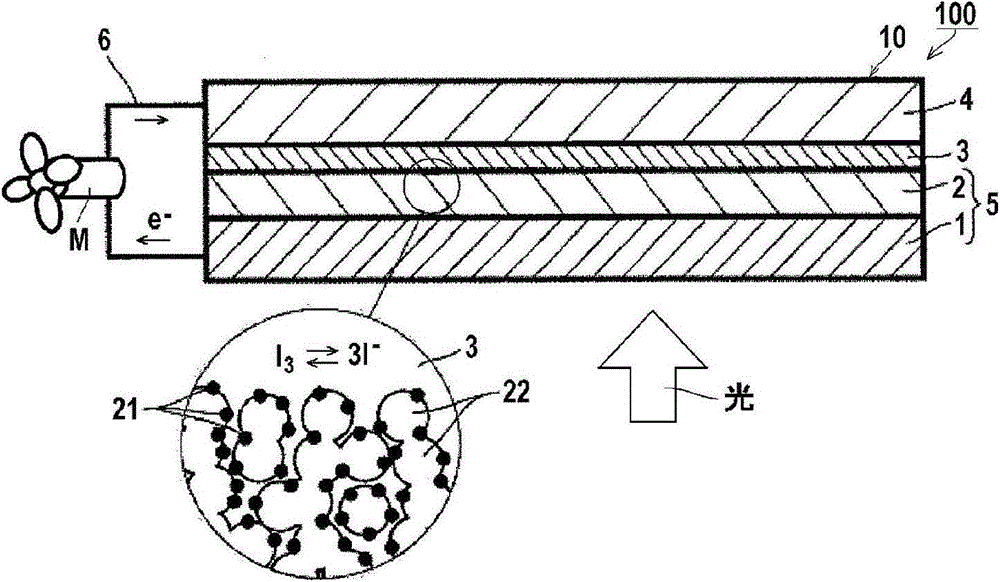
  • Photoelectric conversion element, photoelectrochemical cell, and pigment used therein
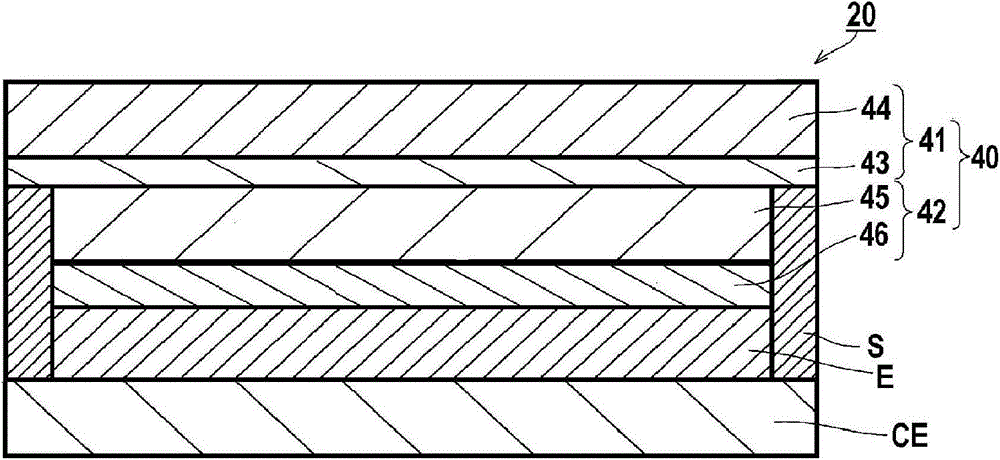
  • Photoelectric conversion element, photoelectrochemical cell, and pigment used therein
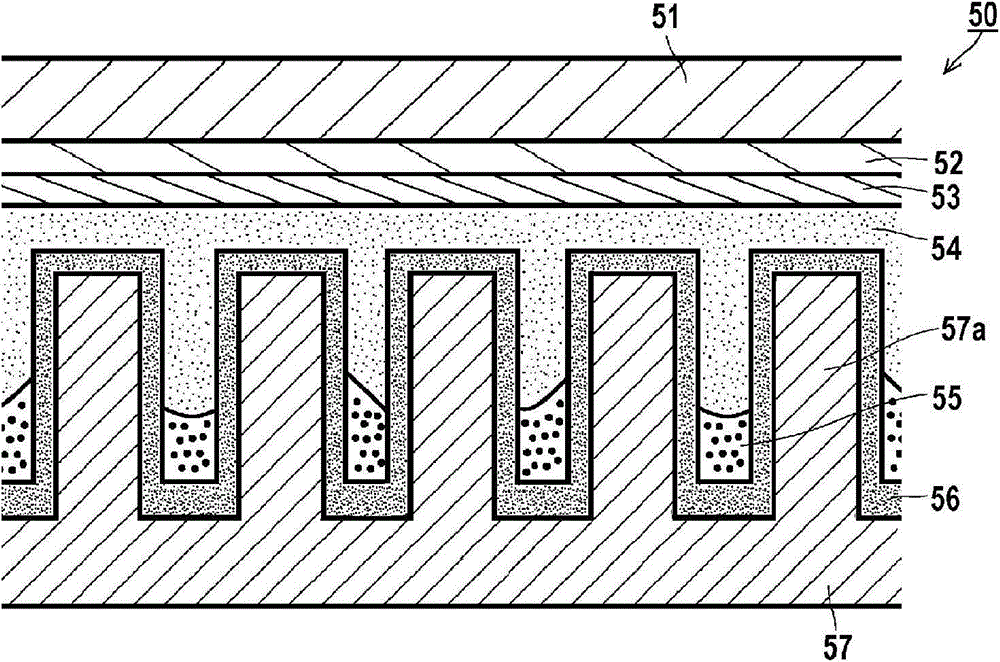
  • Photoelectric conversion element, photoelectrochemical cell, and pigment used therein

Examples

Experimental program
Comparison scheme
Effect test

Embodiment

[0252] Hereinafter, the present invention will be described in more detail based on examples, but the present invention should not be interpreted as being limited thereto.

Synthetic example

[0254] Intermediate D4-5 was synthesized using the route shown in Scheme 1.

[0255] [chem 22]

[0256]

[0257] Dye 4 was synthesized in the same manner as in the literature "Chem.Commun.", 2009, 5844. using intermediate D4-5.

[0258] The dyes 1 to 3 and the dyes 5 to 11 were synthesized in the same manner.

Embodiment 1

[0260] Various pastes for forming the semiconductor layer or the light scattering layer of the semiconductor electrode constituting the photoelectrode are prepared, and the dye-sensitized solar cell is fabricated using the paste.

[0261] [Preparation of paste]

[0262] First, a paste for forming a semiconductor layer or a light scattering layer of a semiconductor electrode constituting a photoelectrode was prepared with the composition of Table A below. In addition, in the following preparation, by adding TiO 2 It puts into a medium, stirs, prepares a slurry, adds a thickener to this, kneads, and obtains a paste.

[0263] [Form A]

[0264] Paste

TiO 2 particle

medium

thickener

Remark

1

1

nitric acid solution

CB

2

1,2

nitric acid solution

CB

TiO 2 1:TiO 2 2=30:70 (mass ratio)

3

1,S1

nitric acid solution

CB

TiO 2 The quality of Sl:paste 1=10:90 (mass ratio)

4

1,S1

nitr...

the structure of the environmentally friendly knitted fabric provided by the present invention; figure 2 Flow chart of the yarn wrapping machine for environmentally friendly knitted fabrics and storage devices; image 3 Is the parameter map of the yarn covering machine
Login to View More

PUM

PropertyMeasurementUnit
thicknessaaaaaaaaaa
aspect ratioaaaaaaaaaa
Login to View More

Abstract

The invention provides a photoelectric conversion element, a photoelectrochemical cell and a pigment used therein. A photoelectric conversion element, which is a photoelectric conversion element having a laminated structure in which a photoreceptor layer having a layer of semiconductor fine particles adsorbed with a pigment, a charge moving body layer, and an opposing The layered structure of electrodes, the photoelectric conversion element is characterized in that a metal complex dye represented by the following formula (1) is used as the dye. ML1L2X(1) [wherein, M represents a transition metal selected from ruthenium, osmium, iron, rhenium, and technetium. X represents NCS-, Cl-, Br-, I-, CN-, NCO-, H2O, or NCN2-. L1 represents a specific 3-dentate ligand, and L2 represents a specific 2-dentate ligand].

Description

technical field [0001] The invention relates to a photoelectric conversion element, a photoelectrochemical cell, and a pigment used therein. Background technique [0002] Photoelectric conversion elements are used in various photosensors, copiers, solar cells, and the like. The photoelectric conversion element has been put into practical use in various forms such as a photoelectric conversion element using a metal, a photoelectric conversion element using a semiconductor, a photoelectric conversion element using an organic pigment or a pigment, or a combination of these photoelectric conversion elements. Among them, a solar cell utilizing non-exhaustive solar energy does not require fuel, and its full-scale practical application is largely expected as a photoelectric conversion element utilizing inexhaustible clean energy. Among them, research and development of silicon-based solar cells has been conducted for a long time. Countries also have policy considerations to popul...

Claims

the structure of the environmentally friendly knitted fabric provided by the present invention; figure 2 Flow chart of the yarn wrapping machine for environmentally friendly knitted fabrics and storage devices; image 3 Is the parameter map of the yarn covering machine
Login to View More

Application Information

Patent Timeline
no application Login to View More
Patent Type & Authority Patents(China)
IPC IPC(8): C09B57/10H01L31/04H01M14/00
CPCC09B57/10Y02E10/542C09B23/105C09B23/14H01G9/2031H01G9/2059H10K85/344
Inventor 小林克薄达也谷征夫
Owner FUJIFILM CORP
Features
  • R&D
  • Intellectual Property
  • Life Sciences
  • Materials
  • Tech Scout
Why Patsnap Eureka
  • Unparalleled Data Quality
  • Higher Quality Content
  • 60% Fewer Hallucinations
Social media
Patsnap Eureka Blog
Learn More